Shared mission and goal
Lancang-Mekong Cooperation can build on the achievements of the past six years to promote sustainable development










Sustainable development is the soul of Lancang-Mekong Cooperation, which celebrated its sixth anniversary on March 23.
From economic development to public health, from agricultural cooperation to international poverty reduction, from water resources to the digital economy, and from green development to education cooperation, Lancang-Mekong Cooperation has made substantial achievements, and the Lancang-Mekong Sustainable Development Zone is the most remarkable one.
This zone is a new development sub-region formed after Lancang-Mekong Cooperation was launched six years ago, with sustainable development as its primary goal. The sub-regional geographical unit represented by Lan Mei, Lancang-Mekong in Chinese, shows water affinity at a glance. In China, it refers to the Lancang River Basin. Flowing out of the country, the river is known as Mekong River, the largest in Southeast Asia. As a cross-border river, Lancang-Mekong River is connected by mountains and rivers, all the way toward the sea, and is the connection of natural geography and humanistic and historical space.
Since ancient times, this region has experienced the vicissitudes of life, prosperity, and war. The end of the Cold War and the signing of the Paris Peace Agreements in 1991 enabled the region to finally step foot on the road to development. As early as 1992, China's Yunnan province joined the Greater Mekong Sub-region Economic Cooperation led by the Asian Development Bank, marking the start and preparation stage for the sustainable development of the Lancang-Mekong region. Since then, the Trans-Asian Railway initiated by the Association of Southeast Asian Nations and East Asian cooperation after the Asian Financial Crisis in 1997 have contributed to the region's sustainable development.
In the 21st century, the Lancang-Mekong region has entered the fast lane of development. However, Lan and Mei were separated. Various sub-regional cooperation mechanisms around the five Mekong Basin countries boomed. For example, the United States launched the Lower Mekong Initiative in 2009 and upgraded it to the Mekong-US partnership in 2020. Japan established Japan-Mekong Cooperation in 2008. And, the Republic of Korea also established Mekong-ROK partnership in 2011. The mechanisms led by those countries have a common feature: there is only Mei not Lan.
This situation continued until 2016, when the Lancang-Mekong Cooperation Mechanism was officially launched at the leaders' meeting held in Sanya, China's Hainan province. Mekong countries regard sustainable development as a fundamental development goal of regional cooperation. It is the joint evolution and sustainable development of Lancang and Mekong River basins. This great river basin space has been injected with new development momentum through the shared mission and goal of sustainable development. Lan and Mei are no longer separated. Lancang-Mekong cooperation mainly comes from endogenous impetus, Lancang-Mekong impetus. As a result, the goal and contents of sustainable development are generated within the Lancang-Mekong Sub-region.
Lancang-Mekong sustainable development cooperation has achieved fruitful results in the past six years. For example, the overall development level of the Lancang-Mekong region was low. Thus, countries should improve their development level and foreign trade. During the COVID-19 pandemic, the trade volume between China and the five Mekong countries-Cambodia, Laos, Myanmar, Thailand and Vietnam-in 2021 was nearly $400 billion, up about 23 percent year-on-year, accounting for 46 percent of the trade volume between China and ASEAN. It was conducive to their economic recovery and regional prosperity.
The most distinctive aspect of Lancang-Mekong sustainable development cooperation is the cooperation on water resources. China has tried to guarantee the water resources supply of downstream Mekong Basin countries, creatively provided hydrological information on the Lancang River, jointly implemented practical cooperation projects, such as Lancang-Mekong Sweet Springs Action Plan, Actions to Revitalize Lancang-Mekong Water and Benefit the People, and Demonstration of Comprehensive Typical Small Watershed Management. The countries worked together to meet the challenge of climate change and improve their water resources management capacity. These include many "small and beautiful "projects advocated by President Xi Jinping, such as over 30 rural safe drinking water demonstration projects.
However, Lancang-Mekong Cooperation has not been all smooth sailing. There have been challenges and risks since the second year. Since 2017, the US has stepped up its strategic containment against China, implemented the Indo-Pacific strategy to counter China's Belt and Road Initiative, and made Mekong countries the focus of its competition with China. Since 2020, the Mekong region has become one of the regions hit hardest by the COVID-19 pandemic. Since 2021, Myanmar's political situation has once again experienced turbulence. The country's development has fallen into a chaotic period, directly affecting regional cooperation. In 2022, the crisis in Ukraine has aggravated global tensions and geopolitical risks, directly affected food security, energy security and financial security in the region.
The formation and development of the Lancang-Mekong Sustainable Development Zone are valuable. Lancang-Mekong countries have primarily solved the endogenous power problem of regional sustainable development.
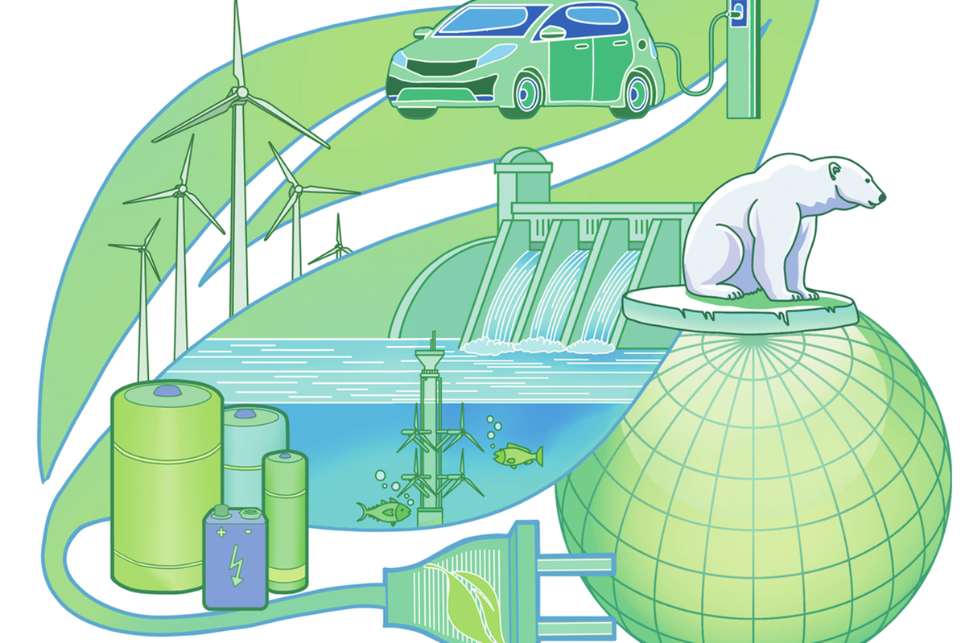
The common goal of sustainable development has strengthened the recognition of the integrated development of Lan and Mei. The Lancang-Mekong Cooperation Mechanism commits to achieving the goals of the 2030 Agenda for Sustainable Development of the United Nations. It has formulated detailed cooperation plans with local characteristics. Lancang-Mekong countries are constantly making adjustments according to the development of the situation. For example, after the pandemic outbreak, China quickly launched medical material assistance to Lancang-Mekong countries, provided numerous vaccines and enhanced public health cooperation. Lancang-Mekong countries can coordinate the relationship between upstream and downstream, large and small, inside and outside countries, and form peaceful cooperation and competition.
In a word, Lancang-Mekong's sustainable development framework has been developed with stability. It has strengthened its resilience in coping with various challenges.
In the future, Lancang-Mekong Cooperation will focus on the fresh development of the "Golden Five Years". Golden rules for the healthy growth of the Lancang-Mekong Sustainable Development Zone can be settled. First, given the increasing global security risks, the growth of Lancang-Mekong Sustainable Development Zone can emphasize the coordination between sustainable development and sustainable security. Second, because of difficulties in the global governance process, the zone's growth should adhere to both the upper and the lower goals. The upper goal is to ensure the environmental protection of the Lancang-Mekong region, and the lower goal is to improve people's living standards in the region. The growth index system of the Lancang-Mekong Sustainable Development Zone can also be established. Third, calling for firm progress and demonstration guidance, the Global Development Initiative put forward by President Xi at the UN General Assembly in 2021 should highlight the Lancang-Mekong Sustainable Development Zone. The construction of the zone will promote the building of the Lancang-Mekong community with a shared future for people in the region.

The author is a professor of the School of International Studies and deputy director of the Institute of Area Studies at Peking University.