Smartening up the villages
Digitally empowered Chinese villages have come into the global limelight, as rural residents embrace technology









City life is more appealing to modern people than country life. Across most high-income countries, more than 80 percent of the population lives in urban areas, and the population flocking to the cities is still on the rise.
In 2019, 82.5 percent of the population in the United States was urban, and the percentage is likely to reach 90 percent soon. Despite the tranquility rural life offers, people eventually end up settling down in the cities. It goes without saying that traditional rural life has its share of hardships.
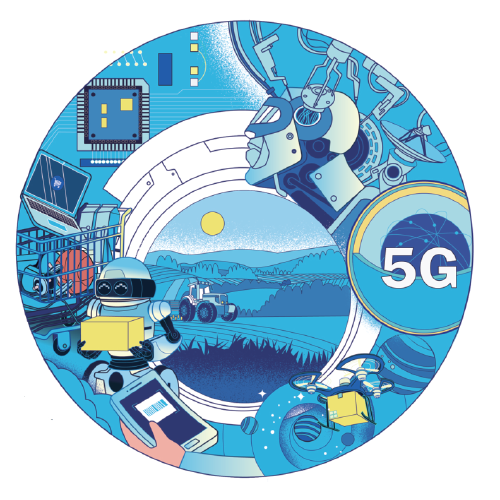
However, things are changing quietly as digital and smart technologies are transforming the agricultural industry. Solar greenhouses equipped with numerous sensors are automatically activating irrigation mechanisms on detecting any change in soil moisture content or activating cooling when the greenhouse temperature is too high. Moreover, a new generation of farmers could learn about real-time market information and make their best possible business decisions.
The country's 14th Five-Year Plan (2021-25) has put forth "an initiative to build a digital China".
Facilities such as mobile payments, urban public services and online education powered by expanding 5G networks have not only made people's daily lives easier, but also created new business models for city dwellers. However, rural inhabitants lag far behind in adopting a digital lifestyle, because of the following factors.
The vast majority of the elderly living in rural areas don't know how to use a smartphone. By the end of 2019, there were 250 million people aged 60 and above in China, 130 million of whom were rural inhabitants. The popularization and evolution of mobile internet technologies are happening swiftly, leaving the elderly in an unfavorable situation.
Lack of application scenarios has also made rural areas lag behind in adopting a digital lifestyle. Moreover, rural dwellers prefer offline activities to online ones. For instance, a traditional hongbao (red envelop containing money, usually as a Lunar New Year gift) bears far more sense of ceremony in rural areas than a digital hongbao.
China's urban and rural areas used to be two different worlds in which cities provided the industrial products and villages the farm produce. And industrial development was promoted by increasing the price of industrial products and lowering the price of farm produce. Such an unsustainable development model was corrected on the heels of the end of the planned economy in China.
Right now, promoting coordinated and balanced development between urban and rural areas is the only way for China to realize common prosperity. China will, by no means, allow the "digital divide "to once again cut its urban and rural areas apart.
According to the 2022 Government Work Report, China will "advance the digitization of industries, and build smart cities and digital villages", and progress is being made in this direction.
As mobile applications become more user-friendly, an increasing number of senior residents living in rural areas no longer need assistance for smartphone usage. In November 2020, the State Council issued the Implementation Plan on Effectively Solving the Difficulties of the Elderly in Using Intelligent Technology. The plan focuses on helping senior citizens use technology in seven kinds of scenarios, such as during day-to-day travel, medical treatment, recreational activities and seeking civic services.
With joint support from the government and businesses, digital transformation is driving a major revolution in China's villages. When the internet first arrived in the villages, some farmers took full advantage of it to sell their farm produce across the country. Today, in addition to farm produce, the villages have become a critical source of premium content for the internet, not only attracting worldwide attention, but also creating a large number of job opportunities for wanghong (internet celebrities or influencers) in villages.
This new trend is reshaping Chinese villages. Just by turning on the mobile phone, people are able to see the world for themselves-Chinese villages have never been closer to the world. Powered by digital technology, agricultural production has become smarter. An unmanned aerial vehicle for plant protection could cover 3.33 hectares of land per hour when first put into commercial use in 2016, equivalent to the workload of 50 farmers.
In 2020, while planting cotton in the Xinjiang Uygur autonomous region, a plant protection UAV could serve 13.33 hectares per hour, and the figure is rising fast. Earlier, each plant protection UAV required one operator, but now an operator can control multiple UAVs, with hourly workload exceeding 30 hectares.
And this is only the start. Blockchain technology, artificial intelligence and the metaverse are rebuilding the agricultural value chains. "One traceability QR code for each item" is turning the whole-process tracing of food quality and safety from an idea into reality. Moreover, numerous applications, invisible from public sight, are profoundly changing the agricultural industry.
Take the seed sector as an example. Since gene sequencing and genome editing technologies were introduced into the sector, the computing power used in the breeding process has surged by hundreds of times thanks to artificial intelligence, big data and cloud computing technologies, so that the forecast accuracy of models is increased and breeding efficiency substantially raised.
Traditional villages have provided space for humanity to live in and prosper. However, traditional agricultural production and rural society have apparent space constraints. Despite the limitations to human capabilities, humanity has never stopped the pace of seeking progress. From the "slash-and-burn" farming method to farm tractors, and then to wide application of digital technologies in agriculture, Chinese villages are evolving with ever-enriching forms and content, with human freedom constantly expanded. Digitally empowered Chinese villages are coming into the global limelight.
The author is a researcher of the Rural Development Institute at the Chinese Academy of Social Sciences.