Natural-born engagement
China's involvement with Latin America is an outcome of globalization, not a strategy targeting the US' 'backyard'










The process of economic globalization that intensified from the 1980s onwards caused significant changes in the world's economic landscape. Over the past 40 years, the formerly industrialized countries of the West have experienced strong de-industrialization, while the previously predominantly agricultural countries in East and Southeast Asia have become important industrial hubs, and Latin American countries, such as Brazil, Mexico and Argentina, abandoned their import substitution industrialization and opened up their economies. Mexico has linked its economy to integration with the United States and Canada.
On the other hand, Brazil and Argentina witnessed the loss of industrial competitiveness and began to depend on the export of commodities, such as soy, meat, ores and oil. Regardless of the degree of added value, all countries have entered the new world economic order brought about by applying neoliberal policies in different parts of the world.
Globalization has resulted in a restructuring of value chains. The formerly industrialized economies concentrated their economies in the most technologically intensive sectors. In this logic, the leading multinational companies abandoned significant parts of production and focused on higher added value segments, such as research, development, innovation, marketing, commercialization and financial strategies.
Countries with abundant labor resources in East and Southeast Asia received the most labor-intensive parts of production, either by hosting branches of multinational companies, outsourcing part of their activities, or even organizing subcontracting companies, especially those responsible for assembling devices and other goods for the global companies that are innovation leaders. The production chains of the information and communication sector in particular developed in the last decades within this paradigm.
This production structure has had a substantial impact on trade flows around the world. It is worth reflecting on the Brazilian foreign exchange situation in the period from 1990 to the present day. When the country opened its economy at the beginning of that decade, the US' share of Brazilian exports was 24.6 percent. Europe accounted for 33.7 percent, Asia 16.8 percent. In 2021, the biggest destination for exports was Asia, with 46.4 percent (China alone represented 31.3 percent of the total), followed by Europe, 13 percent, and the US, 11.1 percent.
There were also changes in Brazilian imports. In 1990, Europe was the most prominent partner, with 23.5 percent, followed by the US, 20.3 percent and Asia, 10.2 percent. In 2021, Asia accounted for 35.6 percent (China accounted for 16.1 percent), Europe 23.4 percent, and the US, 18 percent.
The main explanation for this change lies in globalization, which has shifted production and demand. In this process, a vital part of the production of Western multinational companies moved to China. Soon, the need for raw materials, energy, and food that mainly went to the US and Europe also moved there. This situation applies to other countries with China as their biggest partner such as Chile, Argentina and Peru.
Returning to the case of Brazil, China's demand provides the sources to increase imports from other countries, including the US. In 2021, Brazil's trade surplus with China was $34.7 billion, while its deficit with the US was $8.3 billion.
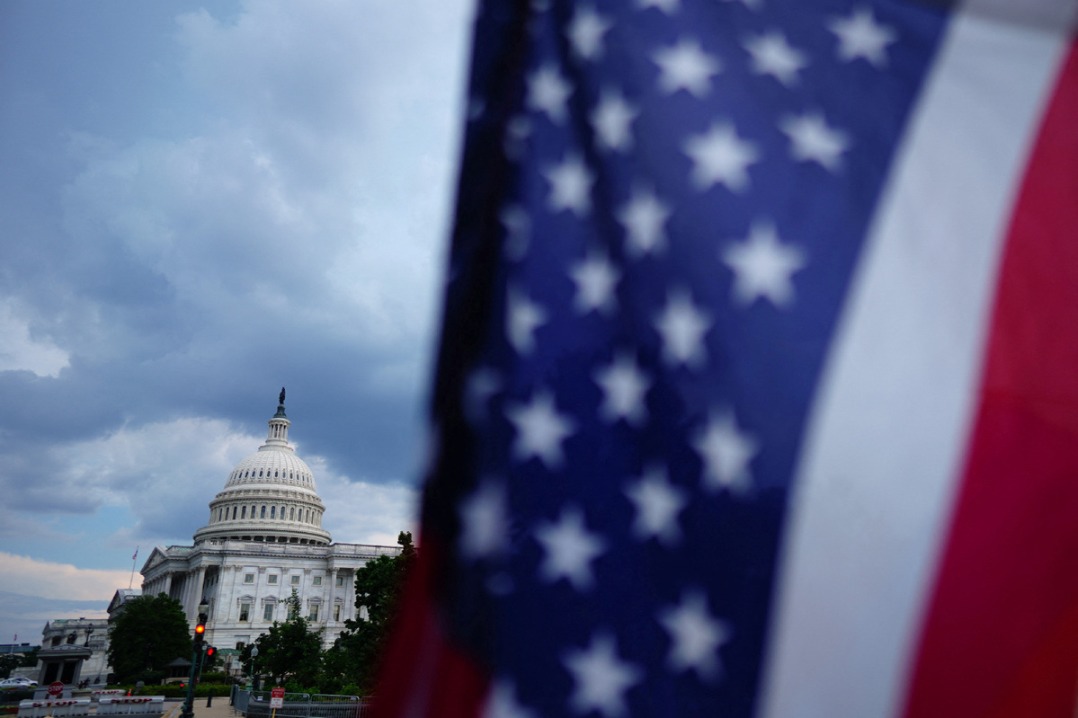
However, this greater engagement by China with Latin American countries is viewed with suspicion by the US, as they erroneously see the Chinese presence as part of a hegemonic strategy in a region that the US considers its backyard. The US apprehensions come just as China is organizing a successful development strategy that moves beyond its role as the factory of the world to become a hub of technology and innovation. But this engagement is not a geopolitical output, but the outcome of the course of the globalization process.
When the US did not feel threatened by China's development, its diplomats viewed China's engagement with the region positively. In 2006, the then under-secretary of state for the Western Hemisphere Thomas Shannon consulted Chinese authorities on the country's interests in Latin America.
This perception changed after President Barack Obama launched the "pivot to Asia" strategy in 2011, and it has intensified since then, whether with Donald Trump or Joe Biden in the White House. In March 2022, General Laura Richardson, in a congressional hearing, warned that the biggest challenge of the US Southern Command is the presence of China and the investment projects under the framework of the Belt and Road Initiative in Latin America.
It should be pointed out that amid these concerns, the US government and its institutions cannot offer Latin American countries viable financing and investment options, because they have a very negative view of public projects that can boost economic development in Latin American countries. The US government is far more likely to release money to crack down on illegal immigration from Mexico and Central America than to commit to carrying out projects that can tackle the root causes of immigration, such as poverty and unemployment.
Suppose the US government was not dominated by the Cold War mentality and the zero-sum logic. In that case, it could understand that China's presence in Latin America is a factor of economic stability and could help overcome these two major problems that boost illegal immigration to the country.
Today, the US no longer finds the same reception for its exclusivist discourse in the region. Many countries have established a solid trade relationship with China and would not like to make a "Sophie's choice "between two highly harmful options, as cooperation is the better choice.
The US government should understand that a prosperous Latin America is also in the interests of the US, and that China is boosting the local economy rather than competing with a geopolitical logic. This posture is no secret. It is enough to carefully read China's Policy Paper on Latin America and the Caribbean published in 2016.Instead of zero-sum games, it is necessary to see the virtues of synergy in this context.
The author is a professor of international political economy at Sao Paulo State University. The author contributed this article to China Watch, a think tank powered by China Daily.
The views do not necessarily reflect those of China Daily. Contact the editor at editor@chinawatch.cn