



A tale of two cities during lockdowns









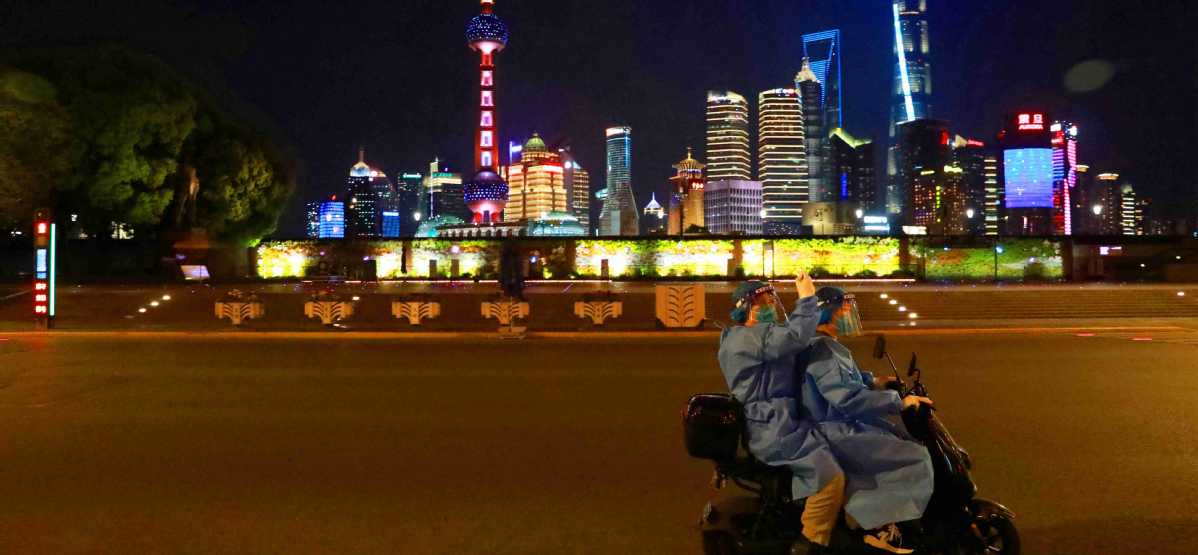
The news of the lockdowns in Shanghai this month brings back many memories of my time in China's largest city and leading financial centre. I lived there for many years and was still there when COVID-19 was detected in Wuhan and had left for London just before the Spring Festival in 2020.
It was already clear in early 2020 from China that strong measures would be needed to contain the virus and I saw encouraging data on the very low numbers of deaths thanks to all the measures China was then taking. When I arrived in London, flights from China were still operating, but soon after were suspended. It took a while for London to implement health policies to protect its people against the virus.
As the virus spread in London, my communications changed from worrying how friends in Shanghai were getting on to those friends worrying how things were in London as lockdowns began in the UK. These continued in various forms in 2020 and 2021 and there were important lessons to be learned from the successful policies followed in China. But the approach in London was different and has remained so when in contrast with the zero tolerance policies that are in effect in Shanghai now.
Different from older style living communities and very modern high-rise apartment complexes in Shanghai, London houses and flats are a short distance to the street where there was no enforcement to stay at home. Instead, advice was given to vulnerable groups - such as the over 70s and those with compromised immune systems - to stay home. Others could exercise for limited periods outdoors and go to shop at essential stores that remained open while many other shops including clothes shops, electronics and household furnishings closed. Working from home was expected except for essential services. Studying at home was also expected as school and universities close their doors. Home delivery services soared.
Londoners experienced some lockdowns where all cafes, restaurants and pubs were closed; other lockdowns where takeaway services were allowed; and other periods in which sitting in outdoor areas of the venue were allowed. The government tried to minimize the length of restrictions guided by the number of COVID cases, amount of hospital admissions and amount of deaths. Essentially, a key goal was to protect hospitals from being overwhelmed.
London had no policy of quarantining in group facilities those who tested positive for COVID–19. Instead, the policy was to self-isolate at home to prevent spread and only admit patients who had serious cases - like the popup hospitals erected in China, a few Nightingale temporary hospitals were set up named after the famous nurse, Florence Nightingale. The only use of quarantine in groups was for international arrivals from designated countries, but it was a policy that did not last long.
Shanghai is around three times bigger than London and more densely populated. The Omicron variant can spread much more quickly in those circumstances. Such a crowded city makes it difficult for people who have COVID but are unaware because they are not displaying any symptoms to voluntarily self-isolate.
As a metropolis of 25 million people, Shanghai's population also is 36 percent aged 60 or older. Among this group, 62 percent of people had completed two-doses of vaccination, but only 38 percent had received a booster shot, which is not yet sufficient to fend off the virus' risk. If the spread is left unchecked there might be an unbearable death toll for the elderly people, particularly those with chronic underlying diseases. It is essential to do mass testing quickly and ensure the isolation of those found infected. This is the best chance to contain and eliminate the virus relatively quickly. If not, the virus could spread to many other parts of China with severe economic and health impacts.
China's strict policies led to few deaths and to the reopening of economic activity rapidly whilst the UK endured a longer period of depressed economic activity which needed support for large numbers of furloughed workers by the government until October 2021. Sadly, the UK saw high levels of COVID-related deaths and an additional unexpected health impact that waiting lists for medical treatments and operations have grown to record levels. There will be a formal enquiry into the UK government’s handling of the COVID pandemic at some point, but they have already faced accusations of failing to act quickly enough while simultaneously earning praise for the extensive vaccination program which ultimately allowed the removal of restrictions.
It is difficult to draw comparisons between different culture, but the impact of various types of lockdowns with levels of severity are not necessarily as effective as a mass lockdown with mass testing and quarantines. A mass lockdown may produce unique challenges to locals, but can be quickly relaxed once the outbreak is suppressed. I feel confident that my friends in Shanghai will see a return to normalcy quickly under China's zero-tolerance COVID policies.
Colin Speakman is an economist from the UK and an international educator specializing in China.
The opinions expressed here are those of the writer and do not necessarily represent the views of China Daily and China Daily website.
If you have a specific expertise, or would like to share your thought about our stories, then send us your writings at opinion@chinadaily.com.cn, and comment@chinadaily.com.cn.





