Next generation of farming









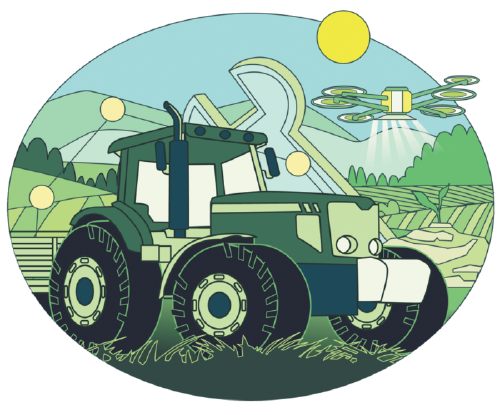
Modern agriculture requires inputs such as modern farms and agricultural machinery, fine breeds, advanced agronomic expertise, as well as farmers who have mastered advanced production and operation techniques. Maximum economic benefits can be achieved only when these factors are compatible with each other. Currently China's agriculture is plagued by some mismatches between the production factors.
First, there is a mismatch between farmland and agricultural machinery. The mechanization rate of agriculture in China's mountainous regions is less than 50 percent, as small and scattered plots and uneven farmland on slopes make it impossible to use large machines. Small farming machines are not popular either for the same reason.
Second, there is a mismatch between agronomy and agricultural machines. Take corn for instance, the sowing area of corn in China is 1.76 times that of wheat, whereas the cross-regional mechanized harvesting area of corn is only 42.58 percent of the figure for wheat due to the non-standardization of corn planting agronomy in various regions. Some corn fields are cultivated on ridges while others are on flat ground and different row spaces exist, hindering the use of machines.
Third, there is a mismatch between seed breeding and farming machines. For a long time, insufficient consideration has been given to the suitability of mechanized farming during seed breeding. For instance, a research team once developed a variety of "super rice "that yielded 15 to 20 percent more grains than traditional rice. However, the rice grows to two meters high so no compatible harvest machine was available and the rice could only be harvested manually, pushing up the cost.
Fourth, there is a mismatch between farmers and machines and other modern production factors. Currently, less than 20 percent of Chinese farmers are aged 35 years or below, and 85 percent of them only have primary or secondary school education. They lack the skills and knowledge to master new technologies, equipment, and the modern market system.
Moreover, China needs to tackle some bottlenecks in the development of its agricultural machinery, such as the mechanized harvesting of cruciferous vegetables, plants belonging to the solanaceae and cucurbitaceae families, and green beans; some components of agricultural machines such as friction plates and hydraulic pumps are mainly imported from overseas due to poor quality of similar products made domestically. China also has weak links in intellectual property rights of key components.
In addition, the fact that smallholders account for the majority of China's farmers has limited the use of machines. In 2020, each Chinese farmer on average had only 10.83 mu (about 0.7 hectares) of farmland, compared with 1,107 mu in the United States, and 2,104 mu in Canada in 2019. China's smallholder agriculture means low efficiency for farming machines. For instance, a 60-mu wheat land just needs 3.52 hours to finish the mechanical harvesting job, but if it is divided into 15 sections, it will take 5.94 hours to do it.
To improve these weak links in agricultural mechanization, and, above all, to improve the compatibility between agricultural machinery and farmland, agronomic practices, seed breeding and farmers, efforts should be made in the following aspects.
First, speed up the transformation of farmland to adapt more arable land to mechanized agriculture by making fields larger, flatter and longer. Second, when approving new seed varieties, the suitability of mechanization should be taken as an important evaluation index. Third, set unified standards for mechanized farming for major agricultural products such as rice, wheat, corn, potato, cotton, and sugar cane. Fourth, enhance the cultivation of high-caliber professional farmers, and encourage agricultural schools and private education institutions to provide training for new types of agriculture operation entities to meet the development demand of modern agriculture.
Research and development efforts also need to be enhanced to break the technological bottlenecks in the development of agricultural machinery. This can be done by identifying the areas where bottlenecks exist in the development of agricultural machinery based on big data technology. Research should be strengthened on key technologies concerning agricultural machinery and viable solutions found to address these key bottlenecks as quickly as possible.
In addition, to promote the large-scale operation of farmland, smaller and scattered plots can be merged into larger ones. To increase the efficiency of mechanized farming, the integration and concentration of farmland through the transfer of land contracting rights can be encouraged. The development of commercial services for farming machine usage should be encouraged, and large-scale farming through rural land transfer promoted. Governments should support large-scale farm operators with favorable policies on agricultural machinery, land and financial services.
Last, the subsidy policies for the purchase and use of farming machines should be optimized. In recent years, China's low-end farm machine market has become rather saturated and some farming machines are lying idle after being purchased. Efforts should be made to optimize the information system of farming machine purchase subsidies to improve their accuracy. Also, governments should improve institutional design and clarify thresholds in policy implementation to win the trust of farmers on related policies and increase their sense of gain.
Zhang Yunhua is a research fellow and deputy director-general of the Rural Economy Research Department at the Development Research Center of the State Council. Zhang Zongyi is a professor of Jiangsu University and director of the Institute of Agricultural Equipment Development Strategy. The authors contributed this article to China Watch, a think tank powered by China Daily.
The views do not necessarily reflect those of China Daily. Contact the editor at editor@chinawatch.cn.