



Heavenly harvests sought from space seeds









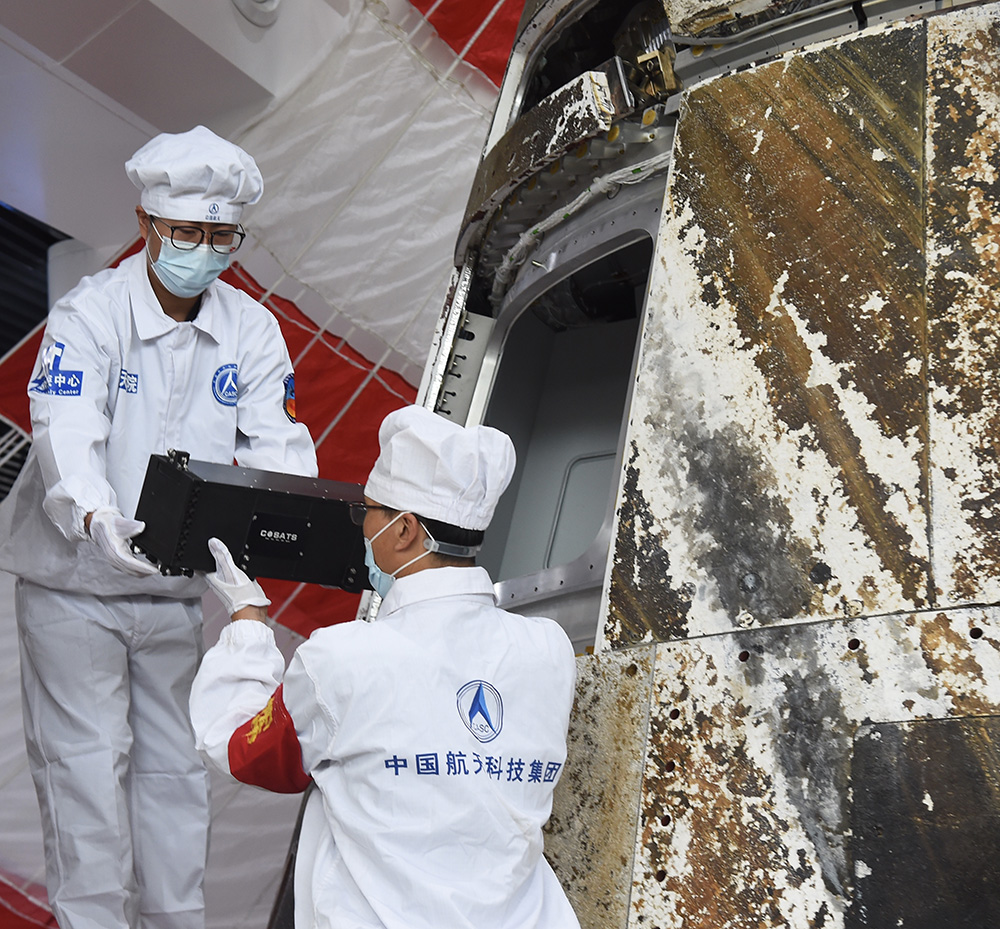
When China's Shenzhou XIV spaceship returns to Earth later this year, it will bring home some unusual packages-including brewer's yeast grown in space.
The yeast was grown as part of a 6-month experiment aboard the Tiangong space station.
Scientists say that microorganisms exposed to deep space undergo genetic mutations that may result in superior strains.
Alongside the yeast, the other packages returning from China's latest long-duration space journey include rice, soybean and vegetable seeds and a variety of bacterial species essential to food preservation.
The selection was made by Beijing Capital Agribusiness& Foods Group, which aims to breed plants and microorganisms in orbit and use them in the manufacture of food and beverages.
The process of space breeding refers to exposing seeds to cosmic radiation and microgravity to create genetic mutations.
Once they are returned to Earth, scientists will examine and evaluate the mutations. Some can be positive, conferring properties favored by farmers such as greater yields, shorter growth periods and better resistance to disease.
Food grown in space is safe for human consumption.
Zhao Hui, an expert with the China Academy of Space Technology, said that the mutations in space-bred seeds occur only to their own genetic material.
Generating desirable traits is another feature of the process.
Liang Sili, an academician with the Chinese Academy of Sciences, researched the process after he tasted a green pepper grown from seeds bred in space.
"It contained more vitamins than earthbound peppers. And it was delicious," Liang said.
China has been pioneering the use of space-bred seeds in farming.
Currently the world's most populous country, China conducted its first space breeding experiment in 1987, launching packets of seeds on a satellite and bringing them back to Earth after exposure to cosmic radiation.
Since then, hundreds of plant seeds have traveled on dozens of retrievable satellites and Shenzhou spaceships.
Over the past three decades, the country's space breeding program has produced more than 300 crop varieties and 700 new types of plants, ranging from vegetables and fruits to flowers. A total of 2.8 million hectares have been planted with the new varieties, an area roughly the size of Massachusetts in the United States.
Space seeds have increased grain production by 1.6 billion kilograms and generated economic benefits of 240 billion yuan ($35.6 billion), said Zhao, who is also the secretary-general of China's Space Breeding Industry Innovation Alliance.
In central Henan province, Liu Shunde is one farmer who has benefited from space technology. In 2016, he sent 13 grams of leek seeds into orbit for 12 days aboard a recoverable science satellite.
After four years of ground-based research, the space-induced leek mutations created a new variety that proved more resistant to the cold and disease. Liu's business has since developed fast, with larger planting areas, higher yields and increased income.
Similar success stories have been reported nationwide, and space breeding has come to represent an innovative approach to helping farmers improve productivity.
Experiments have been conducted on all flight missions during the essential technology verification phase of China's space station project. Thousands of seeds and microorganisms were carried into space and brought back to Earth by Shenzhou XII and Shenzhou XIII.
Zhao believes that as the space industry progresses, humans will send more seeds into space and create a "space oasis" in the future, which may help provide new solutions to global agricultural development, biodiversity protection, as well as climate change.


- Prototypes of Long March 10 rocket and Mengzhou spaceship conduct flight test
- Xinjiang through my eyes: Horse racing in Zhaosu
- Xinjiang through my eyes: The prairie doctor
- New study paves way to eco-friendly refrigeration
- Sports fans score big as drone soccer blends tech with teamwork
- Authorities zoom in on film piracy












