Experts stress need to repair China-US ties









2022 saw further deterioration, but also sign of hope with presidential summit
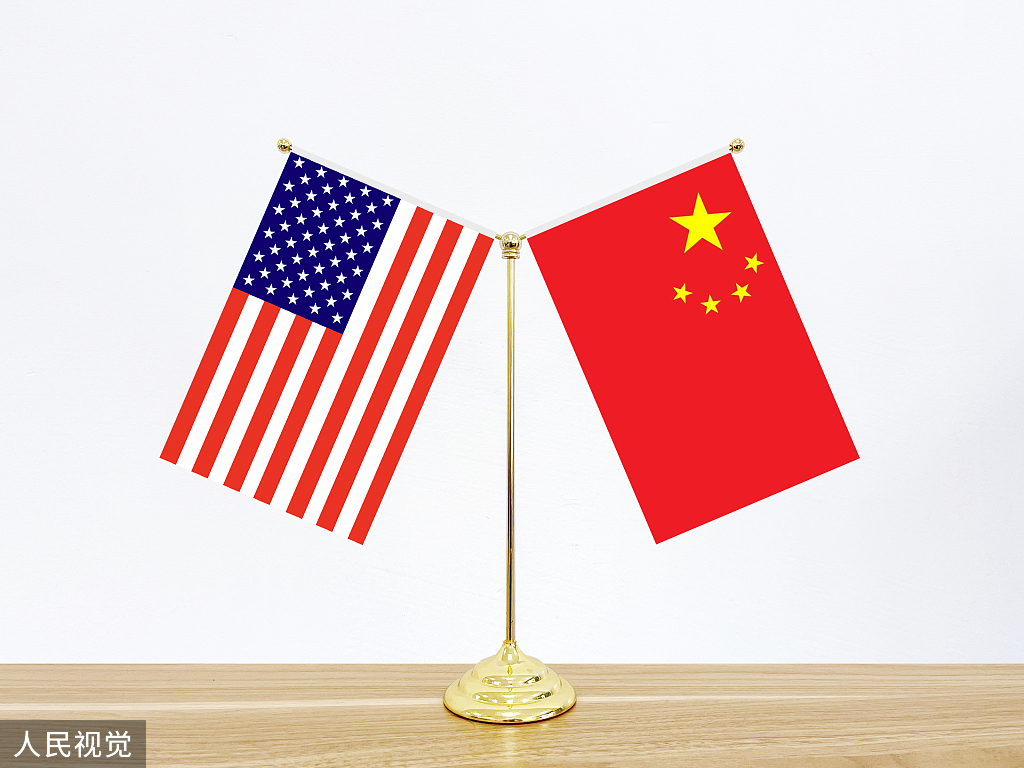
The year 2022 turned out to be more eventful than ever for China-US relations, which experts believe are in a "dangerous downward spiral", with trust dipping still lower, making it imperative for both countries to implement the consensus reached by their presidents at their first in-person summit.
It started with Washington's diplomatic boycott of the 2022 Beijing Winter Games in early February, a move that Beijing said was "politicizing sports". Then there was the rollout by the US of a China policy in May and a national security strategy in October that singled out China as "America's most consequential geopolitical challenge" to "outcompete".
While the United States has been tightening export controls on technology trade or passing legislation targeting China throughout the year, the most explosive event came in August, when US House Speaker Nancy Pelosi flew to Taiwan despite strong opposition from China, which warned that her "provocative move "would escalate tension across the Taiwan Straits and in bilateral relations.
The troubled relationship started to show signs of recovery on Nov 14, when President Xi Jinping and US President Joe Biden met face to face in Bali, Indonesia, providing strategic guidance for steering bilateral relations back to a healthy and stable track.
But whether relations improve in 2023 and beyond will depend on how the two sides translate the presidential consensus into practical policies and concrete action, and how Washington will reckon with a "China threat" that experts believe has been "overblown" for US domestic needs.
On Friday, days before the end of 2022, in a phone call with US Secretary of State Antony Blinken, who is scheduled to visit China shortly, State Councilor and Foreign Minister Wang Yi again urged the US to stop "containing and suppressing "China's development, a call that he had made on various occasions throughout the year.
"My overall assessment of the state of the relationship is, in one word, terrible," said Stephen Roach, former chairman of Morgan Stanley Asia.
"Things have gone from bad to worse from the Trump administration to the Biden administration, and this is a surprise and a disappointment for those of us who are hoping for a more constructive turn of events," the US economist told China Daily.
Roach said the fear in the US about the intentions and capabilities of China is one that is "a reflection of our own vulnerability and political polarization".
He said that because the two countries are on a path of escalating tensions, it is urgent to adopt measures to ease these tensions, including restoring mutual trust with easy actions such as relaxing visa requirements.
Susan Shirk, a research professor and chair of the 21st Century China Center at the University of California, San Diego, said that in the US, domestic political priorities have pushed policymakers to overreact to any perceived "China threat".
The two countries are caught in a competitive downward spiral that if not reversed could drastically damage the two countries and the rest of the world, Shirk wrote in The Wall Street Journal on Dec 15.
"If the two governments can build on the Bali meeting to start a process of negotiated give-and-take that generates momentum toward detente, it could restore a modicum of goodwill between the two societies and counteract the domestic drag toward the bottom in US-China relations," Shirk wrote.
US foreign policy suffers from an "unhealthy focus" on China as a "threat" that plays out in American domestic politics, said Jon Taylor, professor and chair of the department of political science and geography at the University of Texas at San Antonio.
"China has become the focus for many of the ills afflicting the US, both real and imagined. Both political parties have found it useful to 'blame China' for a host of problems," Taylor said. "Attacking someone for looking 'weak' on China has become a political campaign tool."
Chas W. Freeman, former US assistant secretary of defense for international security affairs, said that the Xi-Biden meeting was a significant step toward stabilizing the most important bilateral relationship in the world, but it's going to take time to stabilize relations in the short term.
"We must hope that the diplomatic dialogue our leaders have scheduled for next year will prove more fruitful than previous encounters," Freeman told China Daily.
The clash between the US and China is inadvertently creating a set of probable consequences, including failure to rise to the challenge of managing planetwide problems such as climate change, crop failures and pandemic diseases; the decoupling of national economies; and the snapping of supply chains, Freeman said.
David Firestein, the inaugural president and chief executive officer of the George H.W. Bush Foundation for US-China Relations, said in a podcast that bilateral relations were "still at a low-water mark", with the level of mutual trust "probably lower than any time" since before diplomatic relations were established in 1979.
Firestein said Bush believed two things about US-China relations: that the bilateral relationship is the most important in the world and that virtually no significant global problem can be resolved in the absence of coordination and cooperation between the two countries.
"Whether we like it or not, we're kind of bound to each other, the two nations," Firestein said.
huanxinzhao@chinadailyusa.com