Tax- and fee-cut policy sustainable









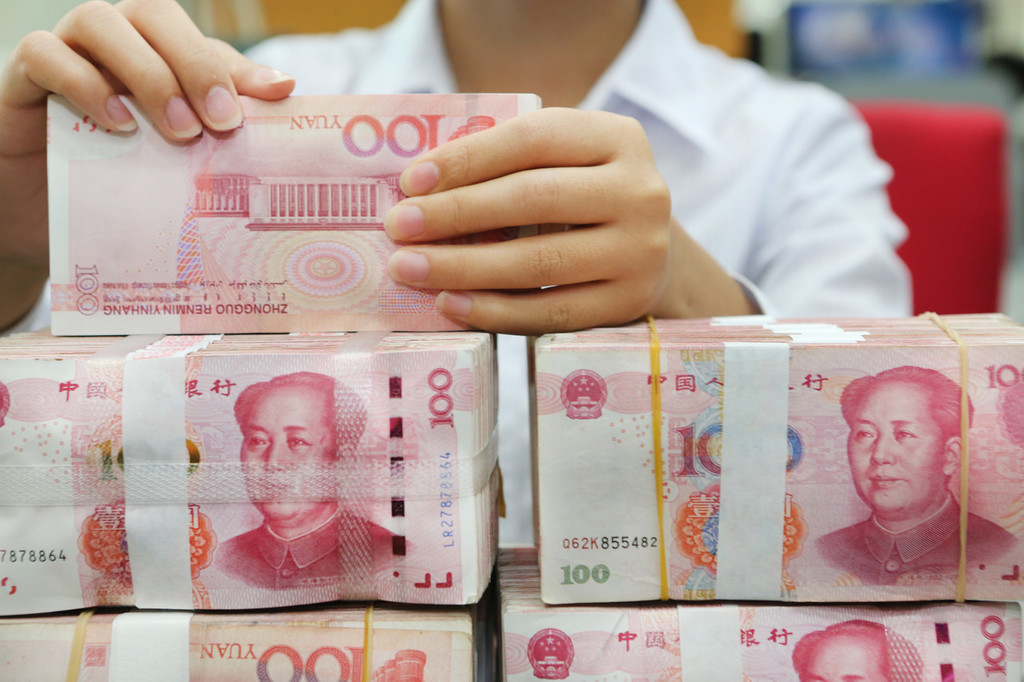
The Chinese government has been cutting taxes and fees since 2018 to reduce the burden of enterprises so they can expand their businesses and thus help boost the economy. And in 2021, the Central Economic Work Conference encouraged more value-added tax (VAT) credit refunds to maintain microeconomic stability.
Comprising tax cuts and VAT credit refunds, the favorable package has become an important part of China's microeconomic and fiscal policy, which is aimed at deepening supply-side structural reform, promoting high-quality development, easing the burden on enterprises and energizing the market players.
According to the State Taxation Administration, as of Nov 11, 2022, the new tax and fee reductions, VAT credit refunds, and tax and fee deferrals had exceeded 3.7 trillion yuan ($537.63 billion). Among them, taxpayers enjoyed 789.6 billion yuan in tax cuts, over 2.3 trillion yuan in VAT credit refunds — 3.5 times that of last year — and 679.7 billion yuan in tax and fee deferrals.
These favorable policies have increased the flow of money for small and medium-sized enterprises, thus easing the pressure on them and offering them an opportunity to boost their competitiveness and promote innovation.
But the tax and fee cuts also have increased the government's fiscal burden. Worse, governments at all levels are under immense financial pressure because of the COVID-19 pandemic. After all, in the almost three years since the pandemic broke out, the revenues of the central, as well as all provincial, city and local governments have increased on average by only 1.27 percent. In contrast, the growth rate of tax and fee cuts was as high as 62.95 percent during the same period. No wonder it is becoming increasingly difficult for fiscal revenue to support the tax and fee cut policy.
But the above difficulties are temporary, caused mainly by the pandemic. With the easing of the anti-pandemic policy, China's economy will be firmly on the recovery track and thus be able to sustain the tax and fee reduction policy.
Take for example the VAT credit refunds, which account for the biggest percentage of the total sum. By refunding taxes on goods that haven't been sold, VAT credit refunds can ease the constraints created by the slow trickle of cash on the company, shorten the idle time of money, and improve the efficiency of capital.
Besides, as the economy recovers, enterprises with unsold goods will soon clear their inventories and make some profits and therefore can help to gradually return the early tax to the government. Thus, VAT credit refunds will provide timely support to the companies hit hard by the pandemic and yet they will not shrink the space for fiscal revenue.
Based on my research, from April to September last year, 55 percent of enterprises have repaid part of the early tax refunds and 26 percent have repaid the full amount. The manufacturing, wholesale and retail sectors have done better than the transportation and hospitality industries in terms of repaying the tax refunds. Still, the repayments are well below expectations. For example, by the end of September, companies had repaid only about 200 billion yuan, merely 10 percent of the previous tax refunds, to the tax authorities.
The good news is that it is relatively easy for micro, small and medium-sized enterprises (MSMEs) to repay the tax refunds much faster. Despite being a mainstay of tax reimbursements, MSMEs have gradually emerged out of trouble and spurred the market. In turn they can contribute to the fiscal revenue by paying due taxes in the future.
Therefore, China needs to further improve the tax and fee reduction program, and implement proactive fiscal policy to energize enterprises, particularly MSMEs.
First, it is important to use algorithms to help governments at all levels constantly monitor tax reimbursements, and conduct stress tests on finance to reduce risks and safeguard people's livelihoods. And national and provincial fiscal departments should share the cost of tax refunds for some poor areas in cities and counties, and ease their financial strains.
Second, it is important to support MSMEs using VAT credit refunds. The policy has proved highly effective for MSMEs, for many of them have overcome all the odds, with some paying back the tax and credit refunds. VAT credit refunds have the potential to not only alleviate the hardships of MSMEs, but also make fiscal policy more sustainable.
Third, there is a need to strengthen supervision of some big businesses to ensure the tax and credit refunds can be recovered fully and timely. Some companies have immensely benefited from huge amounts of tax and credit refunds but paid nothing or little to the tax and financial authorities, making the tax and fee cut policy financially unsustainable. Thus, strict supervision of enterprises is needed to root out potential risks and get the repayments on time.
The views don't necessarily represent those of China Daily.
The author is associate director of the School of International Trade and Economics, University of International Business and Economics.
If you have a specific expertise, or would like to share your thought about our stories, then send us your writings at opinion@chinadaily.com.cn, and comment@chinadaily.com.cn.