Abused, erased, but forgotten no more









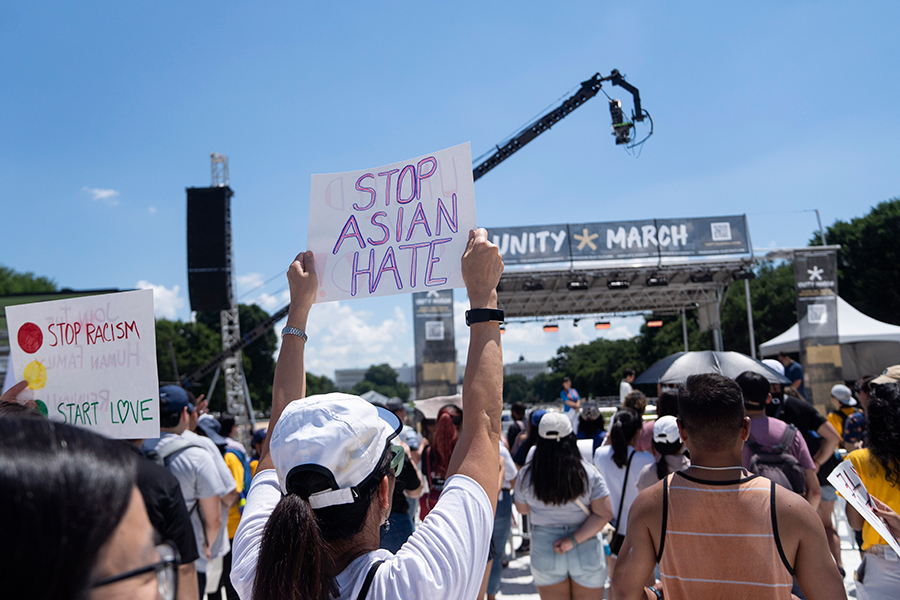
Editor's note: Growing racism against Asian Americans is far from a new phenomenon, as we detail with coverage of efforts to preserve local history in San Francisco. And online abuse serves as a reminder of the urgency to tackle the deep roots of discrimination in the US.
Efforts to shed light on a bitter slice of history for Asian Americans resonate amid rising racism
Overlooking San Francisco's Golden Gate Bridge and surrounding an art museum, the scenic Lincoln Park in a now wealthy and privileged neighborhood was once a burial ground for thousands of Chinese immigrants who helped build the city more than 100 years ago.
To this day, the remains of hundreds of bodies still rest beneath the green turf of the Lincoln Park Golf Course, with many residents and golfers unaware of their presence.
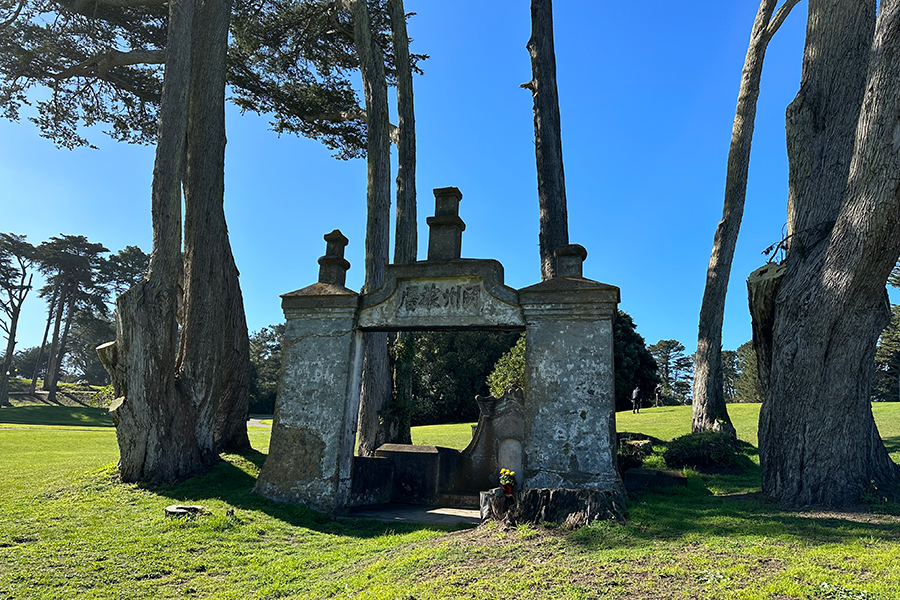
A weather-beaten funerary monument, near the first hole of the golf course, is the last standing structure that hints at the past of the park as a graveyard.
The Chinese inscription on the structure, covered with patches of lichens and faded paint, indicates "a temporary resting place for sojourners from Guangzhou".
The early Chinese immigrants originally wanted to be buried in their hometowns because it's the Chinese tradition that no matter how far they travel, their bodies should return to their homes.
However, their wishes were never fulfilled as the burial ground, known as City Cemetery, was transformed into a public park and golf course in the early 20th century.
Thanks to some local historians and Chinese communities, the cemetery has recently been designated as the city's first archaeological landmark.
The monument also has been marked as "Kong Chow Sojourners Tombs" (Kong Chow means Guangzhou) in Google Maps. Two users have left five-star reviews for the location and posted photos.
Yellow chrysanthemums, symbolizing grief in Chinese culture, and burning incense were seen in front of the "Kong Chow" shrine, a tradition to pay tribute to the deceased.
"I'm a frequent visitor to the Legion of Honor Museum, but I had never known here is the resting place for my ancestors until recently," said Yuyan Li, a first-generation immigrant from Guangdong province who lives not far from the park.
'Feeling sad'
"I feel so sad that they couldn't return to their roots and are permanently rested here. And I feel even sadder when I learned they were discriminated against when they were alive and erased from the history after they died," the graphic designer told China Daily.
City Cemetery was a large burial ground for marginalized groups who couldn't pay for burials. It's estimated that more than 10,000 Chinese residents were buried in the cemetery during its operation from 1870 until 1898. The Chinese took up half of all burials, making it the largest and most significant burial ground for San Francisco's Chinese communities.
After the site was reclassified as a municipal park in 1909, users of the cemetery were given six months to disinter the remains of their buried dead.
It is not clear how many were removed because no records have survived. But historians estimate that at least 10,000 are still buried at Lincoln Park, many of them Chinese.
The forgotten history of City Cemetery reflects the mistreatment of Chinese immigrants who helped build the city but were often excluded from the narratives of the city's history.
Chinese laborers first arrived in San Francisco in the 1850s during the Gold Rush era, and immediately faced racism and discrimination in every aspect of their lives, including employment, housing, education and culture.
Many of the discriminatory policies at that time sought to undermine the progress of Chinese immigrants by banning them from schools and the levers of power. For example, an 1860 policy prohibited Chinese students from attending public schools with white students, and an 1870 law barred anyone of Chinese descent from employment in any government work.
The city also passed more than a dozen ordinances from 1873 to 1883 cracking down on Chinese laundries, leading to the infamous riots of 1877, which left four people dead and 20 laundry houses destroyed.
Last year, San Francisco formally apologized to Chinese immigrants and their descendants for past atrocities amid a national trend of recognizing the history and contributions of Asian Americans.
The Chinese community and San Francisco Heritage, a nonprofit organization, initiated efforts to preserve the history of City Cemetery about two years ago during rising anti-Asian hate and violence across the country.
San Francisco Supervisor Connie Chan, a first-generation Chinese immigrant, introduced a resolution to designate the site as a historic landmark in April 2021. Mayor London Breed signed it into law in October 2022 after it was unanimously passed by the board of supervisors.
Chan said she hoped the landmark designation would help people remember "the blood and tears our Chinese immigrants shed as part of the power that has built San Francisco into the great city it is today".
Landmark designation
Woody LaBounty, interim president and CEO of San Francisco Heritage, said this site is "a sacred space that deserves to be commemorated" and a landmark designation would be an important first step.
With the historic landmark status, the activists said the site could be better preserved with more attention and potential funding. For marginalized groups, landmarking a forgotten place such as the "Kong Chow" monument and City Cemetery is a restorative act of social justice, they said.
Facing opposition from some golfers who were concerned that the landmarking would interfere with the maintenance of their playing grounds, the activists received support from Allison Vanderslice, principal environmental planner for the city.
The site captures the cultural diversity of early San Francisco and is "significant for its ability to add to our understanding of history and also its cultural associations and its funerary structures", she said.
Since 2021, the Chinese community has held ceremonies for Chongyang Festival (Double Ninth Festival), and Qingming Festival (Tomb Sweeping Day), when the Chinese pay their respects to the elderly and the deceased, respectively, at the Kong Chow monument. They were the first such ceremonies in decades.
Chan hopes that Chinese Americans and community organizations will return to the monument each year to celebrate such traditional festivals.
Li, the graphic designer, said she planned to attend the next ceremony, which usually includes prayers, the burning of incense and the offering of food. "It would be a personal moment for me to honor my ancestors' struggle and sacrifice in this land," she said.