US envoy urges more exchanges of people









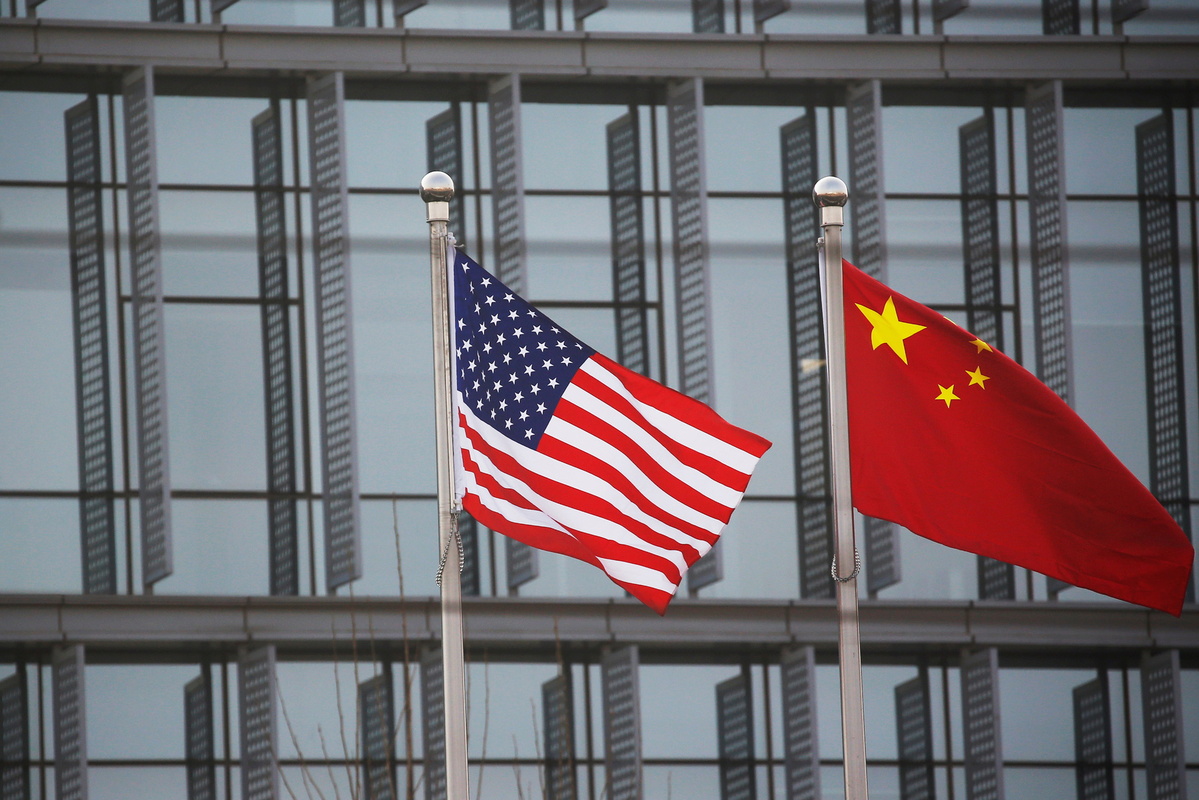
United States Ambassador to China Nicholas Burns had a tight schedule last month, traveling extensively from Shenyang in the country's northeast to Hangzhou farther south, while in between back to Beijing to present his credentials to President Xi Jinping.
His advice to fellow Americans? Well, learn Chinese and bring more US students to China.
"I have only one personal goal," Burns said in an online discussion with the Stimson Center on Tuesday. "That is, we want to learn Mandarin," he said, adding that he has discussed this with his wife, Libby.
"We're struggling — first-year students of Mandarin — and it is so helpful just to have a few phrases when you travel to a place like Hangzhou, Guangzhou or Shenyang," said Burns, who was confirmed for the ambassadorial post in December 2021 and arrived in Beijing in March 2022.
During the one-hour "in-depth discussion of US-China relations", Burns discussed a wide range of issues at the center of the world's most consequential bilateral relationship.
Most of his comments on competition with China, tariffs, human rights, cross-Strait relations and other topics toed the official line of Washington, but Burns highlighted a point that has been sidestepped over the past few years: people-to-people exchange.
"We're trying to deepen our channels between the two governments, and that includes the other branches of government, the legislative branch as well as the executive," Burns said.
"On the citizens' side, as you know, people-to-people diplomacy is really the ballast in any relationship," Burns added.
Citing what he called "startling data", the envoy said there are about 295,000 Chinese students in the US.Meanwhile, there are only 350 US students on Chinese campuses, because of the COVID-19 pandemic, compared with thousands a decade ago.
Late last month, Burns traveled to a new campus of New York University Shanghai, a US higher education program created in China 10 years ago. "Enjoyed discussing US-China relations with students, faculty, and leadership," he wrote in a post in both English and Chinese on social media on April 25.
The ambassador also visited the prestigious Tsinghua University in Beijing, where there are about 70 US Schwartzman scholars, and after being serenaded at his residence by The Shanghai Quartet, a string group that formed in 1983, Burns wrote on April 22, "Music truly is a bridge between the American and Chinese people."
"But we need more of this, and we need it between our students, certainly, we need tourist travel. And we certainly need business travel, because that is kind of the foundation if you will, of any relationship between two countries," he said.
Over the past few years, there had been reports that many Chinese students and scholars were "deported, denied visas, interrogated and harassed for no reason, with the chilling effect overshadowing the educational and people-to-people exchanges between the two countries", Qin Gang, then Chinese ambassador to the US, said in an interview with Forbes on April 29 last year.
"Nothing should cut off people-to-people contacts and friendship. We shouldn't let disinformation, lies and prejudice stand in the way of our people-to-people relations and shouldn't let them create isolation and division between our two peoples," Qin wrote in an article published in International Studies that same month.
Burns also acknowledged that while many people have been worrying about the decoupling of the economy, a similar situation in societal engagement would be detrimental to US interests.
"We've had a decoupling of our societies over the last three years. It's not healthy. It's not smart," he said.
"Despite the fact that our administration has really focused on the competitive aspects in large measure in our relationship, we do want to see students travel back and forth; we ought to want to see young Americans learning Mandarin, learning the culture and history of this country," he said.
Just as Burns was speaking, a group of Chinese business representatives traveled to Washington to attend the SelectUSA Investment Summit this week, but many Chinese companies registered for the event were unable to attend because their visas were denied, according to Xu Xueyuan, charge d'affaires of the Chinese embassy in the US.
"Senior US officials have also said on many public occasions that the relationship with China is not a zero-sum game, and that the US has no intention to see a decoupling. We welcome that, but also should say the US' actions have not fully reflected their words," Xu said.
Xu made the remarks at a reception hosted by the China General Chamber of Commerce-USA on Monday. The Chinese delegation of about 50 businesses is the third-largest overseas delegation attending the annual event.
In the online discussion, Burns also said that Beijing and Washington need better and deeper channels, particularly at a time "when you've got big problems" and major disagreements in the relationship.
"We've never been shy of talking, and we hope the Chinese will meet us halfway on this," he said.
Liu Pengyu, a spokesman for the Chinese embassy in the US, noted that China and the US have maintained "necessary" communication, whose value and significance lies in enhancing mutual understanding, managing differences and promoting cooperation.
"Communication should not be carried out for the sake of communication," Liu told China Daily.
"We call on the US side to show sincerity, to work together with China, and to take concrete actions to create the conditions and atmosphere needed for communication and help bring China-US relations back to the right track," Liu said.