Expert sees US' economic approach to China as deceptive









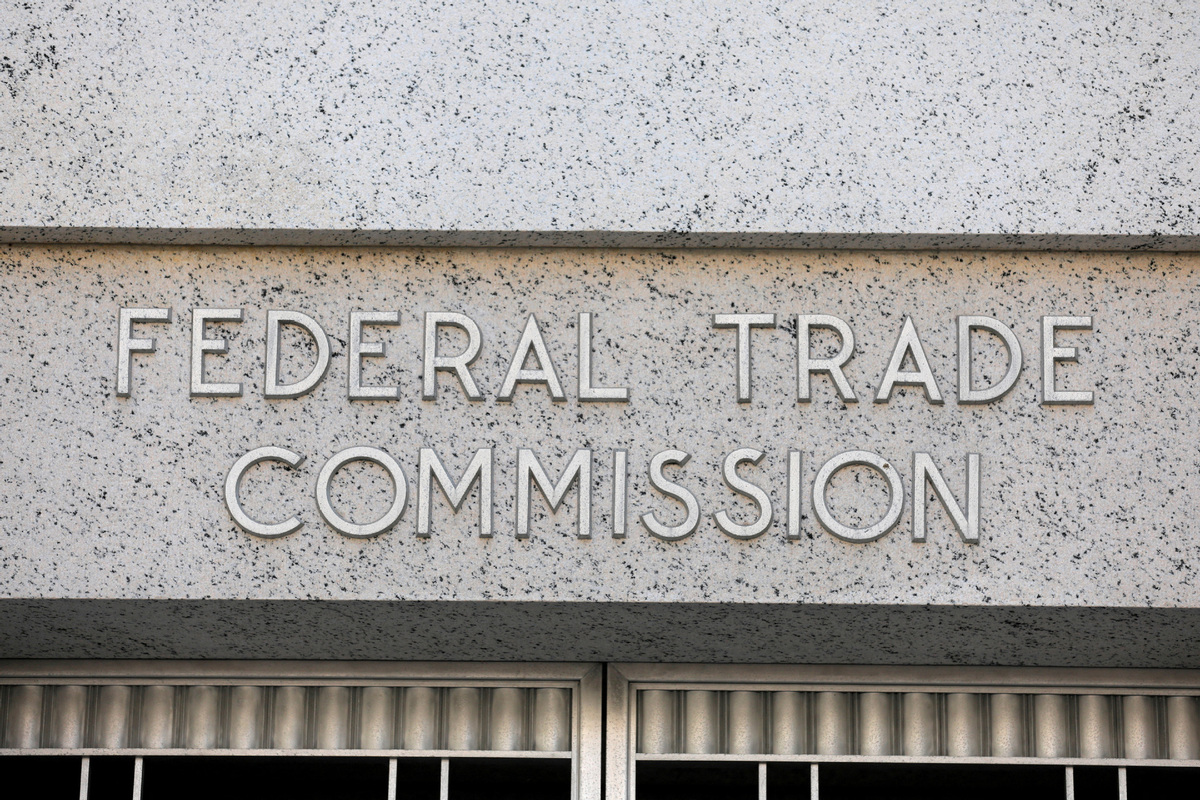
While the US defends its economic policies toward China as fair and nonpunitive, an expert in Washington says that the approach is protectionist and considered illegal in multilateral trade law.
"The stark truth about the US trade and industrial policies is that while Washington would much prefer that these policies are liberal and lawful, it has no compunction following through with them even if they are protectionist and illegal in the eyes of multilateral trade law," said Sourabh Gupta, a senior fellow at the Institute for China-America Studies. "And this is the reason that a gap has opened up between what the Biden administration says and what it does, particularly with regard to China."
In a speech at Johns Hopkins University on April 20, US Treasury Secretary Janet Yellen expressed her desire to foster a positive economic relationship with China. She emphasized that the US would prioritize national security interests and democratic values, even if it meant making tough economic decisions.
Yellen made it clear that the US' actions toward China were driven solely by those concerns and not aimed at gaining a competitive advantage.
During a joint news conference on April 26 with South Korean President Yoon Suk-yeol, who was visiting the US on a state visit, President Joe Biden addressed his administration's semiconductor subsidiaries, clarifying that their purpose was to strengthen US manufacturing and job opportunities rather than harm China. He emphasized that the measures were not intended to be used as a tool of aggression toward any country.
Gupta noted that while Biden and Yellen said the goal was not to economically outdo China or suppress and decouple from it, "there's a lot of mistruths".
"I think most of the measures that have been taken … since 2018 when Trump initiated his national security tariffs on steel for the past five years, most of the measures have been to decouple from China, although not across-the-board decoupling, but selectively decoupling from China," said Gupta.
He also said that the US aimed to decouple from China even in many areas "far beyond just pure military areas".
"A lot of clear civilian areas of technology are being denied to China with the intent to suppress China
because of economic competition," said Gupta. "And therefore, the US will not be an enabler in any context to help China's technological rise, even if that is civilian technological rise."
He said that the breadth and extent of technologies that are being placed under economic controls, export controls and technology denials "far exceeds that which is for a purely military nature or national security nature".
Gupta cited the electric-vehicle industry, which he said is "nowhere close to being a national security threat in any circumstance".
The Biden administration is taking steps to boost the American market for electric vehicles and reduce the auto industry's dependence on critical raw materials from China.
The International Energy Agency (IEA) revealed that China produces 75 percent of the world's lithium-ion batteries, a crucial component in most electric vehicles.
China also dominates the market for battery components, including lithium, cobalt and graphite, with more than half of the world's capacity to process and refine those materials located in China.
In contrast, the United States accounted for 10 percent of global electric-vehicle production and 7 percent of battery capacity as of last year.
The Inflation Reduction Act passed in the US Congress in 2022 includes a massive tax break for electric vehicles made at least partially in the US. The tax credit for batteries used in electric vehicles requires that the raw materials come from the US or from countries that have signed trade agreements with the US.
"This has absolutely nothing to do with national security, everything to do with America First or populism or protectionism and competition against China," Gupta pointed out. "Electrified vehicles, and more broadly the electrification of transportation grids, are also a huge win-win gain for the environment.
"Yet, rather than engage in fair market exchange in this sector, the US would rather implement tilted policies, including preferential consumer purchase subsidies, that deliberately skew the market, provide an unfair competitive advantage to American producers over Chinese producers and decouple a noncritical supply chain from that of China's."
On April 27, US national security adviser Jake Sullivan stated that the United States' goal is to minimize risk and expand its relationship with China rather than sever ties.
That statement came as the Biden administration strives to clarify its economic stance toward China and alleviate concerns of European allies that have become apprehensive about the US' increasingly aggressive approach.
The US says it is seeking to strike a balance between maintaining a strong stance on national security concerns and promoting healthy economic relations with China.
Gupta said that Sullivan's speech was directed to US allies and partners and his remarks were "focused on the ‘China minus' economic coalitions that the Biden administration has been striving to construct".
"Sullivan's comments that the administration is still committed to the WTO (World Trade Organization) and the shared values upon which it is built is flat-out inaccurate. Numerous US measures, including against China, have been found by neutral third-party panels to violate WTO rules flagrantly. But rather than make the necessary corrections, the US has essentially dug its feet in," he said.