Japan discharge plan moves ahead









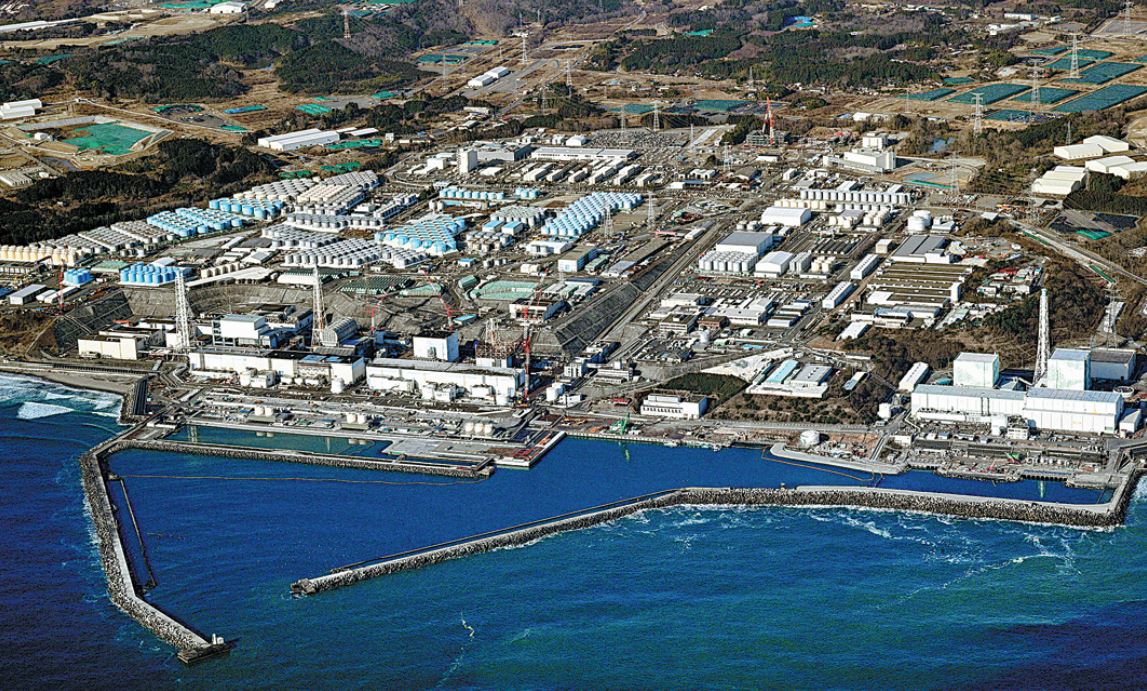
Japan moved closer to its planned discharge into the sea of contaminated water from a crippled nuclear power plant, as Tokyo Electric Power Co began sending seawater on Monday afternoon into an underwater tunnel built for the water's release.
The tunnel had already filled with some 6,000 metric tons of seawater by noon on Tuesday, according to Tokyo Electric Power, the plant's operator.
The media did not learn about the procedure until Tuesday morning. Japan's wastewater discharge plan has brought steady protests from neighboring countries, Pacific island communities and civil society groups in prefectures that will be affected most, such as Fukushima, Iwate and Miyagi.
Tokyo had promised that it would submit to a comprehensive review by the International Atomic Energy Agency that is expected later this month. The IAEA has repeatedly conducted inspections in Japan since February last year, and its final task force left the country on Friday.
On Tuesday, speaking at an IAEA board of governors meeting in Vienna, Austria, Zhang Kejian, chairman of the China Atomic Energy Authority, said it is "extremely irresponsible" for Japan to proceed with its discharge plan.
"In disregard of the legitimate concerns of its own citizens and other countries, Japan has not yet made a scientific and credible statement on the concerns of all parties, nor has it fully consulted with other parties involved including neighboring countries," Zhang said.
Japan should accept strict international supervision and not distort the report submitted by IAEA's technical working group, Zhang added.
However, since Tokyo's announcement of the discharge plan in 2021, the country has been going forward with the plan, saying there is no alternative to discharging the water into the ocean.
The tunnel, which was completed in April, will guide contaminated water from the crippled Fukushima Daiichi power plant to a point about 1 kilometer offshore to discharge the water. The release system is almost complete, except for a reservoir that will store contaminated water before its release. Tokyo Electric Power has said all construction work will be completed by the end of this month.
More than 1 million tons of water used to cool the plant's damaged reactors — enough to fill about 500 Olympic-sized swimming pools — has been stored in huge tanks at the plant. The nuclear plant was badly damaged by a magnitude 9 earthquake and tsunami in March 2011.
According to the Japanese government, the releases will be harmless, because after being treated via the Advanced Liquid Processing System, radioactive tritium — a radioactive isotope of hydrogen — will be the only radionuclide in the water.
According to Zhang, the composition of the water is complex and the disposal period is of unprecedented length. There is no technology for effectively treating the number of nuclides in the contaminated water, and some nuclidesa distinct kind of atom or nucleus characterized by a specific number of protons and neutrons — may be spread by ocean currents and have unpredictable impacts on marine ecology and human health, Zhang added.
According to a Greenpeace report, there are no technical, engineering or legal barriers to securing storage space for ALPS-treated contaminated water. It is only a matter of political will, the report said, and ocean discharge is considered the cheapest option.
The report also described ALPS as a flawed technology because of its poor performance and inability to remove Carbon-14, a long-term radiological hazard.
In 2018, Kyodo News said in a report that radioactive substances such as Carbon-14, Iodine-129, Ruthenium-106 and Technetium-99 remained in the treated water. Tokyo Electric Power has said ALPS can remove all toxins except tritium.
As a result of the Kyodo report, 72 percent of the water in the storage tanks was required to be processed again, but questions remained over how effective that would be.