Japan's toxic water dumping will damage marine ecosystem









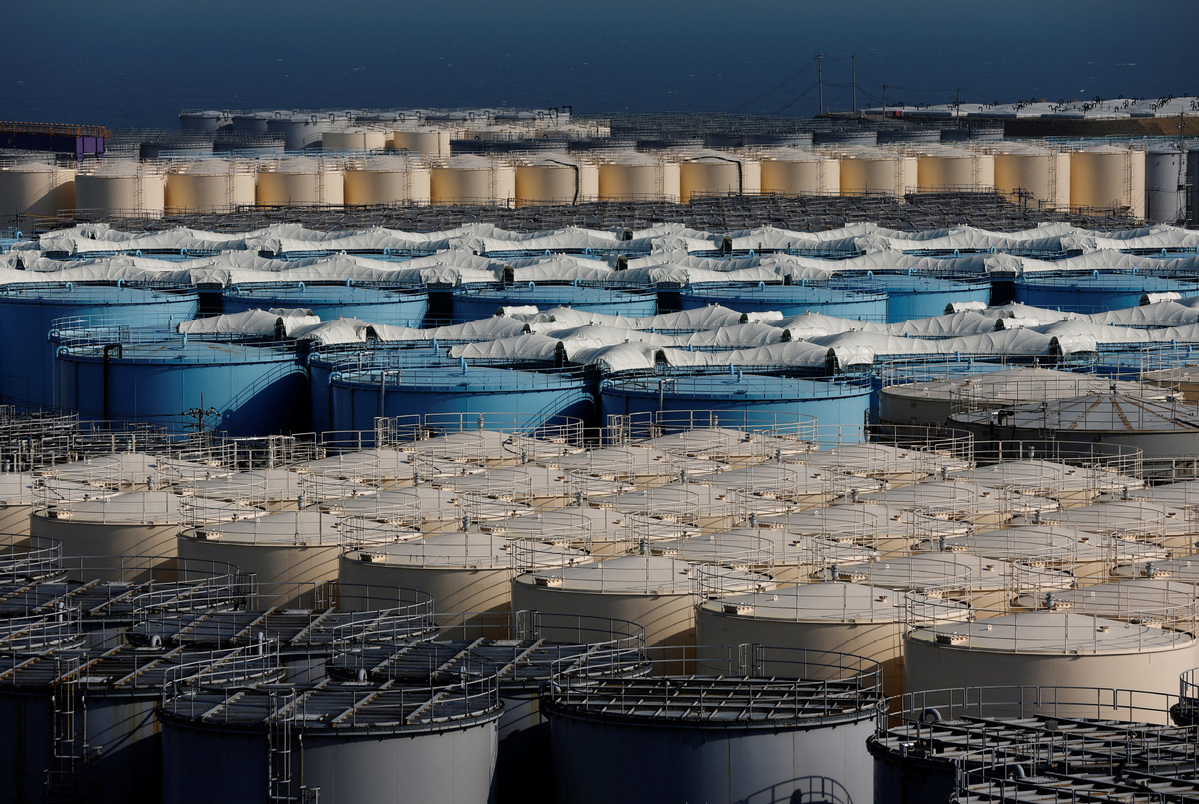
The Japanese government announced in January that it would start releasing the radioactive contaminated water from the damaged Fukushima Daiichi Nuclear Power Plant into the Pacific Ocean this spring or summer. Japan took this unilateral, irresponsible decision without holding any discussions with parties that could suffer the consequences of its action, especially because the contaminated water could cause serious damage to the marine environment and ecology, human health and seafood.
The international community therefore should stop Japan's attempt to present its contaminated water discharge plan as scientific and safe.
To win domestic support for dumping the radioactive water into the ocean, the Japanese government has set up an 80 billion yen ($580 million) fund to deal with the potential effects of its action on the fishing industry, of which 50 billion yen is to be used to subsidize soaring fuel costs and another 30 billion yen to store seafood.
Instead of solving the problem, the Japanese government and Tokyo Electric Power Company, the Fukushima nuclear plant owner, have been trying to skillfully steer public opinion on their side using various public relations stunts. They have released advertisements on TV, online platforms, and in newspapers — they have also put ads at railway stations — to promote their claim that it's "safe" to discharge the toxic water into the ocean. Their PR exercise has also targeted overseas students.
Unfortunately, the campaign seems to have been received well in Japan. For example, an Asahi Shimbun survey on March 18-19 showed that 51 percent of the respondents support the government's plan, with 41 percent opposing it. Cunningly, the Japanese government has been using the term "treated water" to refer to the nuclear-contaminated wastewater, in order to downplay its radioactive characteristics and potential hazards with the aim of confusing the public.
Japan's aggressive publicity has also reached the Pacific island countries. Japanese Foreign Minister Yoshimasa Hayashi paid an official visit to the Solomon Islands, Kiribati and the Cook Islands from March 18 to 22 in a bid to ease international pressure on Tokyo or at least muffle as many opposing voices as possible.
But despite the Japanese government trying to divert global attention from the potential harm the toxic wastewater can cause to the marine environment and ecology, it has not achieved its goal. One of Japan's latest moves to seek international support is an attempt to include statements such as the G7 member states have "welcomed" its approach to the release of the radioactive contaminated water into the sea. However, the attempt has apparently failed because the G7 summit's joint statement did not include any endorsement of Japan's plan. Instead, it said the G7 group supports the International Atomic Energy Agency's independent review to ensure the discharge process is in line with the IAEA's safety standards.
Earlier, the G7 Ministers' Meeting on Climate, Energy and Environment had squashed Japan's hope of securing unanimous support from the G7 for its planned wastewater discharge after Germany opposed it.
Yet the Japanese government has not given up its efforts to garner emotional support and create a favorable public opinion on its wastewater dumping plan. Although Tokyo is sparing no efforts to whitewash its toxic plan, the international community should understand the potential damage the radioactive wastewater could cause to human health, seafood, and the marine environment and ecology. In fact, the nuclear-contaminated water contains more than 60 radionuclides including tritium, carbon-14, cobalt-60, strontium-90 and iodine-129, which are hard to filter and will damage the digestive, nervous, cardiovascular and immune systems of humans, and even cause leukemia if ingested.
Besides, radionuclides are a threat to marine life. The radioactive wastewater, if released into the sea, will first deal a big blow to Japan's fishing industry and then poison seafood across the Pacific and other oceans. Also, the balance among marine species is closely related to their numbers, availability of food and growth. Radionuclides will change this balance, leading to the extinction of some species and destabilizing the entire marine ecosystem.
In accordance with general international law and the United Nations Convention on the Law of the Sea, Japan should inform and consult with countries that may be affected, and assess and monitor the environmental impact of the radioactive wastewater, cooperate with the international community, and take every possible measure to prevent contaminating the marine environment. But instead of doing that, Tokyo has been shunning its responsibilities using different pretexts.
Actions like the one Japan has decided on have had a negative impact on global governance, and could encourage some other countries to do the same. So the international community should ask Japan to halt its dumping plan till it provides further scientific proof of the safety of its contaminated water release plan, and carry out unbiased studies to assess the environmental impacts of the Fukushima plant's toxic water on marine life and ecology.
The author is a professor at the Institute of Japanese Studies, Nankai University.
The views don't necessarily reflect those of China Daily.