Trumped-up 'Chinese threats' key to manipulation of American public opinion, allies









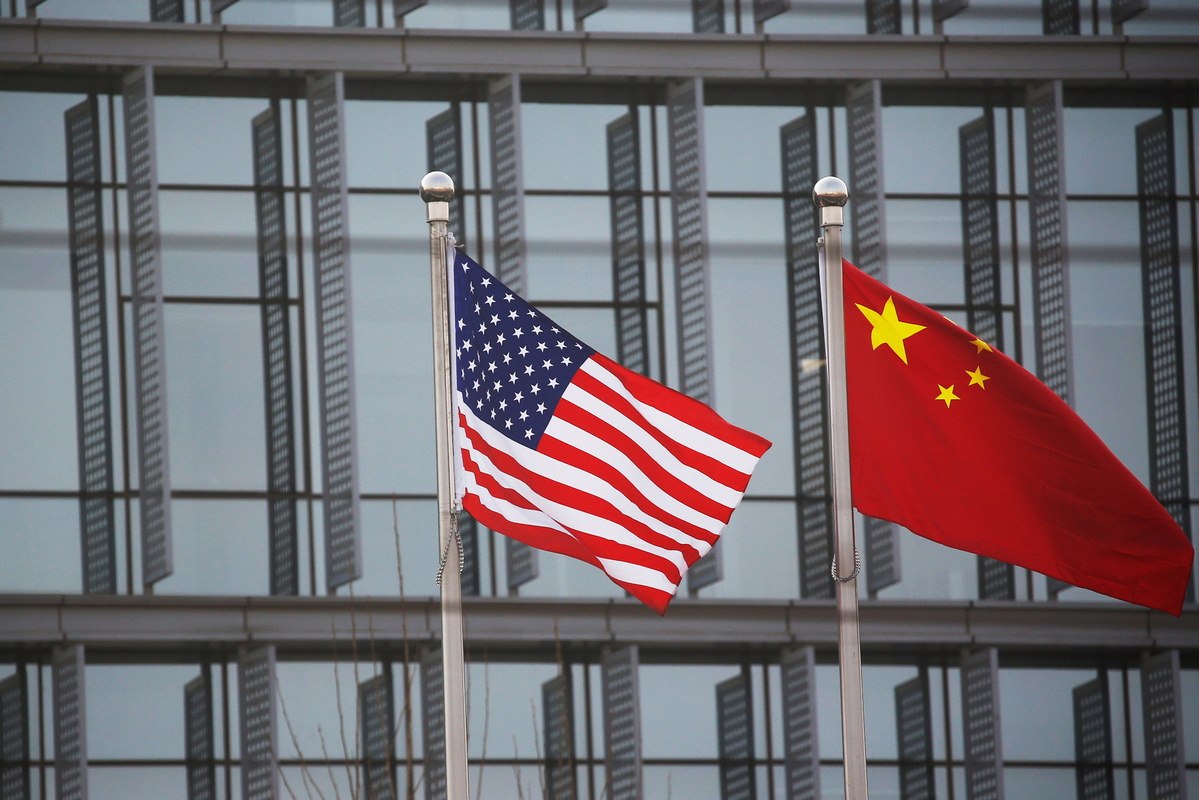
The latest editions of two annual Gallup polls confirmed a troubling fact: Americans don’t have much love for China, and that’s a euphemism. The results of the first poll show that a staggering 50 percent of Americans believe that China is their country’s “greatest enemy”, even before Russia, a mighty military power with whom the US is indirectly at war over Ukraine. This fear of China is even more pronounced amongst Republicans, an astonishing 76 percent of whom believe that China poses an existential threat to the US (versus 30 percent for Democrats).
The second poll revealed that 83 percent of Americans considered China unfavorably or mostly unfavorably. What is fascinating in this poll is the fact that, when asked for their views on the military and economic threats posed by China, respondents gave very consistent, and not in any way contrasted, answers to both questions (around 65 percent considered both China’s military and economic threats to be critical threats). This is unlikely to be a coincidence and would indicate that there is, for many, a visceral, across-the-board, aversion to China.
In short, China is perceived, as it would be in the context of a total war, to be a threat on all fronts – the number one threat overall for Americans - and their concerns about both China’s military and economic capabilities are but mere reflections of that general negative perception they have of China as a country.
Is it in the American psyche to always find for themselves a nemesis? Why does it seem so hard for the US to understand the meaning, and embrace the ideal of "peaceful coexistence?"
These misperceptions appear to be the result of a tragically vicious cycle. First, some politicians seek higher ratings by identifying a national, almost existential, threat, acting more "pro-American" than their opponents, and gathering mass support against that “enemy” based on a few fallacious arguments (think of the trade deficit with China and its alleged effect on unemployment - which by the way now is at a record low).
Biased Western media outlets (so biased against China that in 2008 they lamented that the organization of the Beijing Olympics was unacceptably “too perfect”) then peddle that hateful or fearful rhetoric in an attempt to fulfil their patriotic duty, the American public keeps being fed misleading narratives until the whole country's opinion turns sour on China (as it has noticeably done so since 2018), and politicians on both sides of the aisle, closing the circle, adopt an increasingly hawkish stance to secure their elections. As much as Biden seems tough on China, only a tiny portion of Republicans support his China policies.
How can China negotiate with a government, no matter Democrat or Republican, whose agenda and bargaining positions are based on pure fabrications and mere demagogy? It is easy to turn to history books and see what may happen when an entire country rallies behind its leaders in a nationalistic fight against an imaginary foreign threat. It's absolutely shocking and highly worrying to see such rising animosity directed at a peace-loving nation like China.
And to think it all started with the slogan, "China has taken advantage of America for too long." In view of how much wealth Chinese workers have made American companies, this was an outrageous statement. But again, history has proven time and again that all a government needs from that point on is to build a case based on loosely connected facts and fictions, which as always the US did very convincingly, twisting both domestic public opinion and its allies’ thinking, even now such as at the last G7 meeting in Hiroshima, compiling topics ranging from the threat to Taiwan, human rights, unfair trade practices, currency manipulation, etc. that were suddenly portrayed to be more relevant than ever.
Obviously, these were not so much of an issue when China was still struggling to emerge from poverty a few decades ago. In a speech given in May 2022 at the George Washington University, Secretary of State Anthony Blinken talked a lot about China, past and present, sending both positive and negative signals.
On one hand, he said that the US didn't wish to start a war, or a new Cold War, or block China from growing its economy. He then described how much progress China had made from a nation struggling with hunger and poverty to a major global power that has announced its ambition to create a sphere of influence in the Indo-Pacific and become the world's leading power (it is doubtful China ever said this). By saying this to its allies and other nations, the US is essentially asking, "given a choice, which of the US or China would you rather support?"
He then praised the talent, hard work, and ingenuity of the Chinese people for their remarkable achievements. However, he immediately added that China's outstanding progress was made possible by being given access to the “international order”, which he accused China of now seeking to undermine.
In his own words, "Beijing’s vision would move us away from the universal values that have sustained so much of the world’s progress over the past 75 years." Thus, Beijing would either need to comply with the US-written "international order," or face stiff resistance or full-fledged opposition from the US and other rich nations. In other words, China's growth should depend on the US’ blessings.