Belt and Road's global impact has been immense









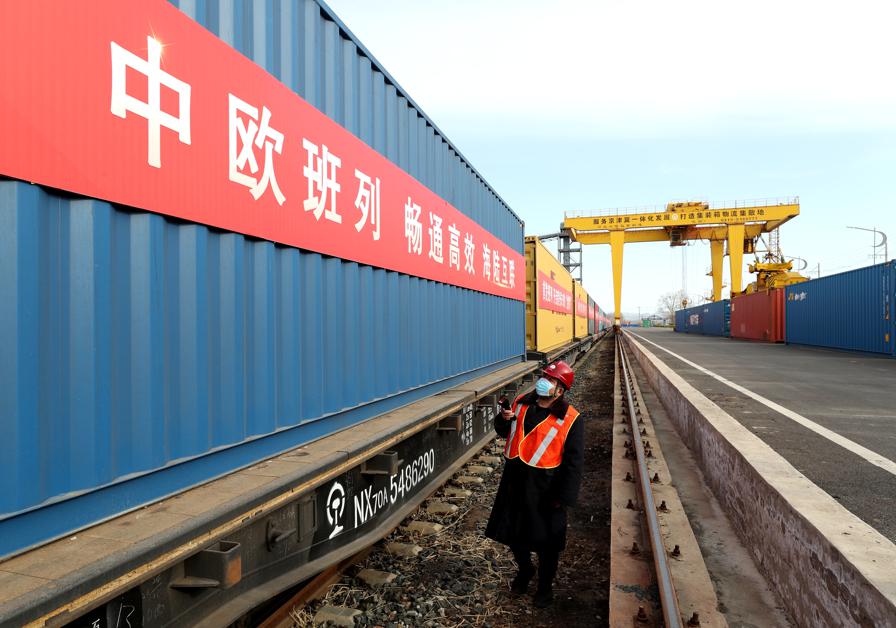
Ten years have passed since China launched the Belt and Road Initiative. Today, it is possible to better evaluate this global project, which comprises the Silk Road Economic Belt and the 21st Century Maritime Silk Road, and which facilitates inclusive development through international cooperation projects.
The numbers tell the story, so it is worth looking at the raw data. So far, a total of 152 countries and 32 international organizations have signed more than 200 cooperation documents with China under the framework of the initiative, according to the official Belt and Road website.
The success of the Belt and Road is a result of its principles of broad consultation, joint contribution and shared benefits.
Following these principles, China has taken into account the needs and interests of other participating countries, and has worked to seek common ground and shared interests with them. After all, the spirit of the BRI coincides with the two most important aspirations of nations: continuous and responsible development, and progressive improvement in the quality of people's lives. Both can be pursued through the establishment of win-win relationships among nations, and by collaborating on common ground to overcome cultural differences.
Following this compass, China has taken into account the needs and interests of the growing number of participating countries, and worked to find common ground and shared interests with them, promoting, among other things, the creation of a community with a shared future. In other words, with the BRI, China has shared growth opportunities with many countries, especially developing and least-developed countries, by improving, for example, their infrastructure facilities. In an interconnected world, it is essential to have sufficient infrastructure and efficient connections to ensure trade, people-to-people exchanges and investment.
Conceptually, the BRI is rooted in history, but it looks to the present, or better yet, to the future. It focuses on Asia, Europe and Africa, but it is open to all global partners. It embraces numerous countries and a variety of regions, includes developed and developing nations, and embraces diverse historical traditions, cultures, religions and lifestyles.
Indeed, in addition to its trade and economic aspects, it should not be forgotten that the initiative has been specifically designed to ensure peaceful global development. Contrary to what some Western propaganda claims, it is neither a geopolitical nor a military alliance. Instead, it is an open, inclusive and common development process, not an exclusionary bloc or an exclusive "club". It does not distinguish between participants based on their ideologies; nor does it adopt the logic of a zero-sum game. Reinforcing this, the BRI has been supported by three recent initiatives that China has proposed: the Global Development Initiative, the Global Security Initiative and the Global Civilization Initiative.
From 2013 to the present, the BRI, with policy coordination, infrastructure connectivity, barrier-free trade, financial integration and closer people-to-people ties as its main goals, has advanced with multiple concrete steps. The initiative and its core concepts have even been incorporated into important documents of international organizations, such as the United Nations, G20 and Asia-Pacific Economic Cooperation forum, and other international and regional organizations.
In concrete terms, the initiative has made significant progress in the construction of international economic cooperation corridors and passages, such as the New Eurasian Land Bridge and the China-Mongolia-Russia, China-Central Asia-West Asia, China-Indochina, China-Pakistan and Bangladesh-China-India-Myanmar economic corridors, with the aim of linking the Asian economic circle with the European economic circle.
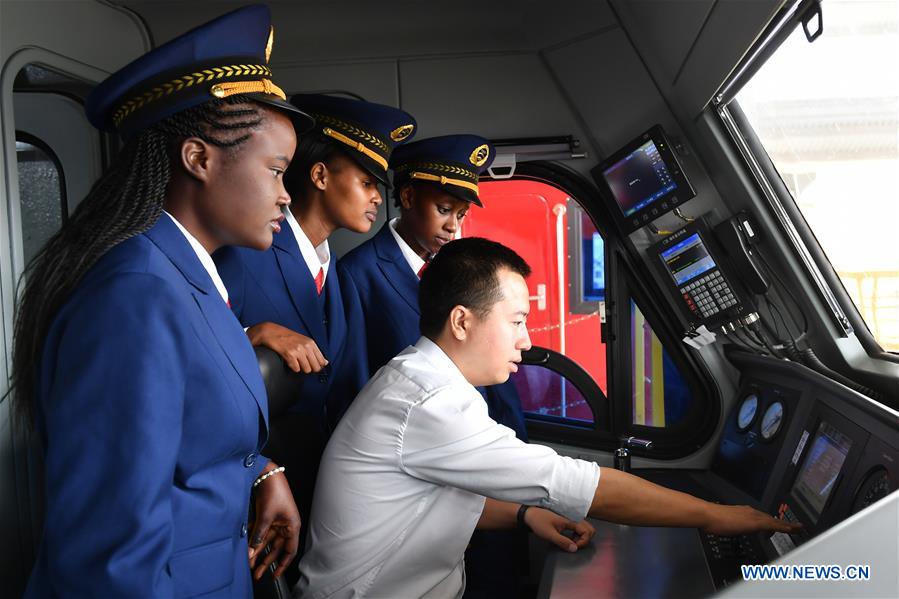
Significant progress has also been made in the construction of interregional and intercontinental railway networks, with cooperative projects such as the China-Laos Railway, the China-Thailand Railway, the Hungary-Serbia Railway and the Jakarta-Bandung High-Speed Railway.
As President Xi Jinping said via video link at the Second Eurasian Economic Forum of the Eurasian Economic Union, the ultimate goal of the Belt and Road Initiative is to explore new ways to enable countries near and far to achieve common development and to open a path of happiness that benefits the whole world.
At present, with the ever-lengthening shadow of the Ukraine crisis and the enormous geopolitical tensions, the BRI not only demonstrates China's vision, but also represents a real lifeline, being in fact a platform for global cooperation and the provider of solutions to improve the global governance system and make it fairer.
The BRI has been the most important political-economic international initiative proposed in the past decade. At a time when the United States under the administration of former president Donald Trump was adopting protectionist policies, instigating trade wars and introducing tariffs, China pointed the world to an opposite recipe, one focused on cooperation and collaboration among countries. This is why, looking at the last decade, the economy of China, through the BRI, has been the main engine of global economic growth.
For the record, the most recent country to apply for Belt and Road membership was Honduras on June 13, and that was less than three months after China and Honduras formally established diplomatic relations.
In short, the China-proposed initiative offers stability and better economic prospects for nations around the world, as they look forward to new agreements and projects and to overcoming challenges together.
The author is foreign associate professor of international studies at China Foreign Affairs University and a professor at the Italian International Institute's Lorenzo de Medici-Marist College. The views do not necessarily reflect those of China Daily.





- HK bets on integrated hub to enhance TCM profile
- China widens net in battle against graft
- New US dietary guidelines trigger widespread concern
- China eyes space leap with record satellite filings
- Team formed to investigate the loss of 29 cultural relics
- Investigation into school uniforms confirms safety of waterproof layer