Fu Ying elaborates on China-ASEAN progress in 20 years









Editor's Note: As China and ASEAN jointly celebrate the 20th anniversary of China's accession to the Treaty of Amity and Cooperation in Southeast Asia, senior diplomat Fu Ying gifted China Daily with diplomatic details then and now and elaborates on several issues relating to South China Sea disputes and US influences in an exclusive interview with China Daily.
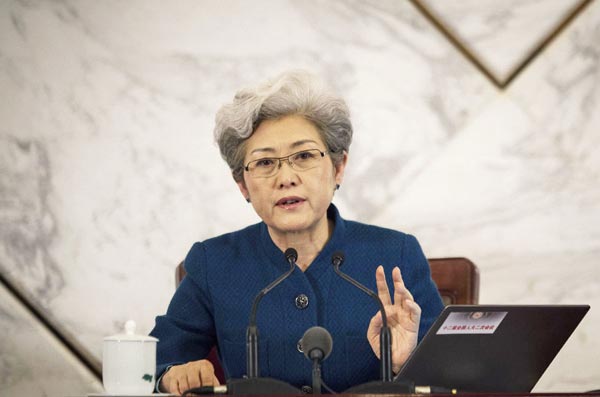
Q1: This year marks the 20th anniversary of China's accession to the Treaty of Amity and Cooperation in Southeast Asia. Could you share with us anything that particularly impressed you most when the treaty was signed in Bali 20 years ago?
Fu Ying: Twenty years ago China acceded to the Treaty of Amity and Cooperation in Southeast Asia (TAC), a milestone in the development of China-ASEAN relations, which is a natural result of the growing understanding and trust between the two sides.
The treaty was established in 1976 by Malaysia, Thailand, the Philippines, Singapore and Indonesia, founding members of the Association of Southeast Asian Nations, during the first ASEAN summit. In 1990, I joined the Department of Asian Affairs of the Chinese Ministry of Foreign Affairs, and that gave me the chance to witness and to be part of the takeoff phase of China-ASEAN relations.
In the early days of reform and opening-up China was committed to shaping a favorable external environment for collaboration, and it moved closer to ASEAN in the common pursuit of maintaining regional peace and promoting inclusive development and started the political dialogue process in 1991. In the decade since, relations between the two sides have developed rapidly, with a small step every year and a big step in every three years.
The year 2003 was important in China-ASEAN relations. In the spring when SARS was raging in Asia, China and ASEAN held a special leaders' meeting and decided to tackle the problem together. In October Chinese leaders visited Southeast Asia again to attend the Seventh China-ASEAN (10+1) Summit in Bali, Indonesia. The most important result of the summit was that the two sides signed a joint declaration on Strategic Partnership for Peace and Prosperity.
Under this framework the political document of China's accession to the Treaty of Amity and Cooperation in Southeast Asia took the lead among all the major countries engaged with TAC, which further enhanced mutual trust and took China-ASEAN collaboration to a new level. With China's leading role, countries including India, Japan, South Korea, Denmark, Greece, the Netherlands, New Zealand, Oman, Qatar, Russia, Ukraine and the United Arab Emirates have also acceded to the treaty, enhancing ASEAN's influence and its "central role" in building regional cooperation and security frameworks.
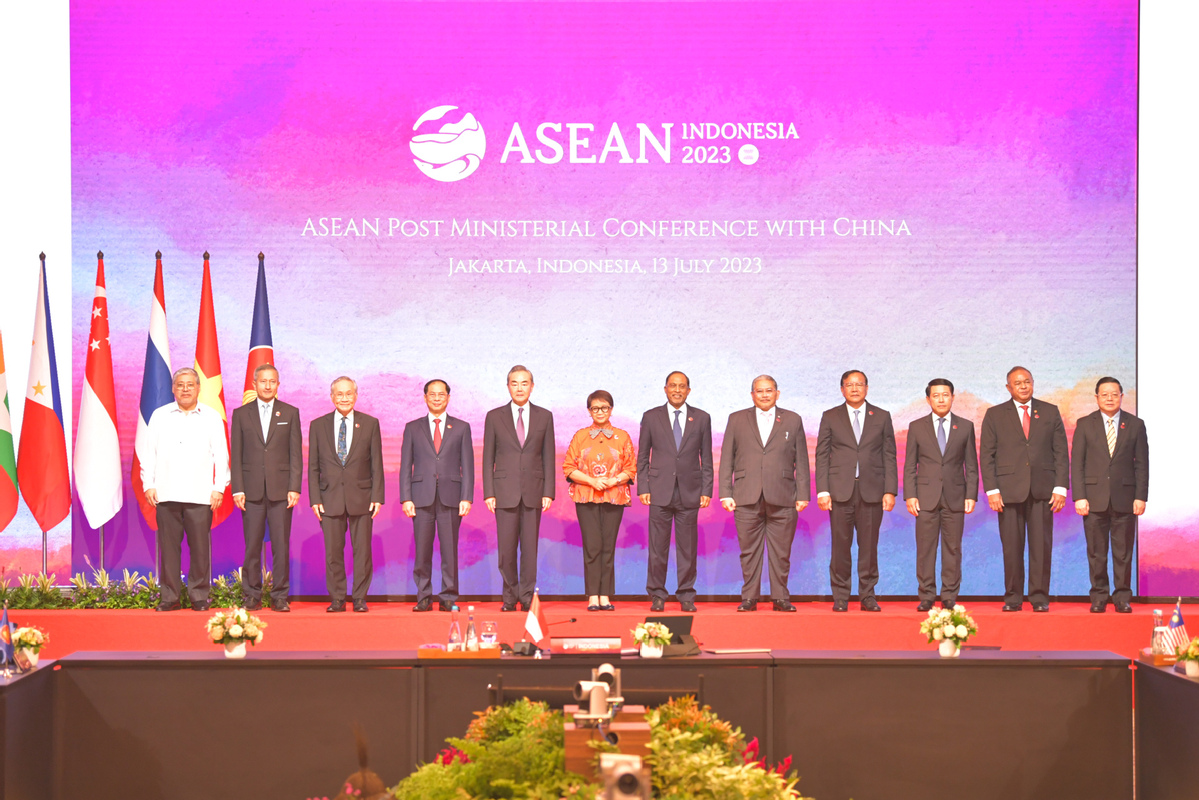
Q2: What are the most outstanding achievements of China and ASEAN countries in the past 20 years thanks to the treaty? As the world undergoes profound changes, what still needs to be done to build a closer ASEAN-China community?
Fu Ying: The establishment of the strategic partnership between China and ASEAN and China's accession to the Treaty of Amity and Cooperation in Southeast Asia 20 years ago cleared major political hurdles and trust deficits, providing an important impetus for the relationship to move into a golden 20 years. China-ASEAN relations have made significant strides in the following areas:
First, political mutual trust has become increasingly solid. In November 2021, at the Special Summit to Commemorate the 30th Anniversary of China-ASEAN Dialogue Relations, the two sides announced the establishment of a comprehensive strategic partnership for peace, security, prosperity and sustainable development. The two sides have formulated the Plan of Action (2021-25) to implement the China-ASEAN strategic partnership.
Second, economic integration has deepened. China's trade with ASEAN continues to grow rapidly, expanding nearly 12-fold from $78.2 billion in 2003 to $975.3 billion last year. In 2020, ASEAN became China's largest trading partner, and China has been ASEAN's largest trading partner for more than 10 years. At present, China and ASEAN have been each other's largest trading partner for three consecutive years.
Third, connectivity has improved. The two sides have worked closely on synergizing the Belt and Road Initiative and the Master Plan on ASEAN Connectivity 2025 in carrying out high-quality collaboration to forge a closer, open and integrated regional development pattern. The China-Laos railway is up and running. The construction of the Jakarta-Bandung high-speed railway, the China-Thailand railway and a number of other Belt and Road projects is accelerating. Transport, communication and new-energy projects are being carried out to improve the well-being of more than 2 billion people.
Fourth, people-to-people exchanges have become more active. Platforms such as the China-ASEAN Expo, the China-ASEAN Education Cooperation Week and the ASEAN-China Centre have built bridges to connect our two peoples. Media think tanks have promoted civilizational exchanges and mutual learning through high-level seminars, forums and dialogue. Policy communication, personnel exchange, platform construction and joint work on technology transfer have boosted science and technology collaboration and exchange.
This year marks the 20th anniversary of the strategic partnership between China and ASEAN, along with China's accession to the Treaty of Amity and Cooperation in Southeast Asia. Looking ahead, both sides should uphold the principles of mutually beneficial collaboration and strive to explore new opportunities for working together, at the same time jointly safeguarding peace and security, promoting economic stability and prosperity, and fostering people-to-people exchanges and friendships.
This steadfast commitment aims to nurture an environment conducive to expanding and enhancing our cooperative endeavors. China has, continues to be and will always be a good neighbor, friend and partner to ASEAN.