Africa vows to end female genital mutilation









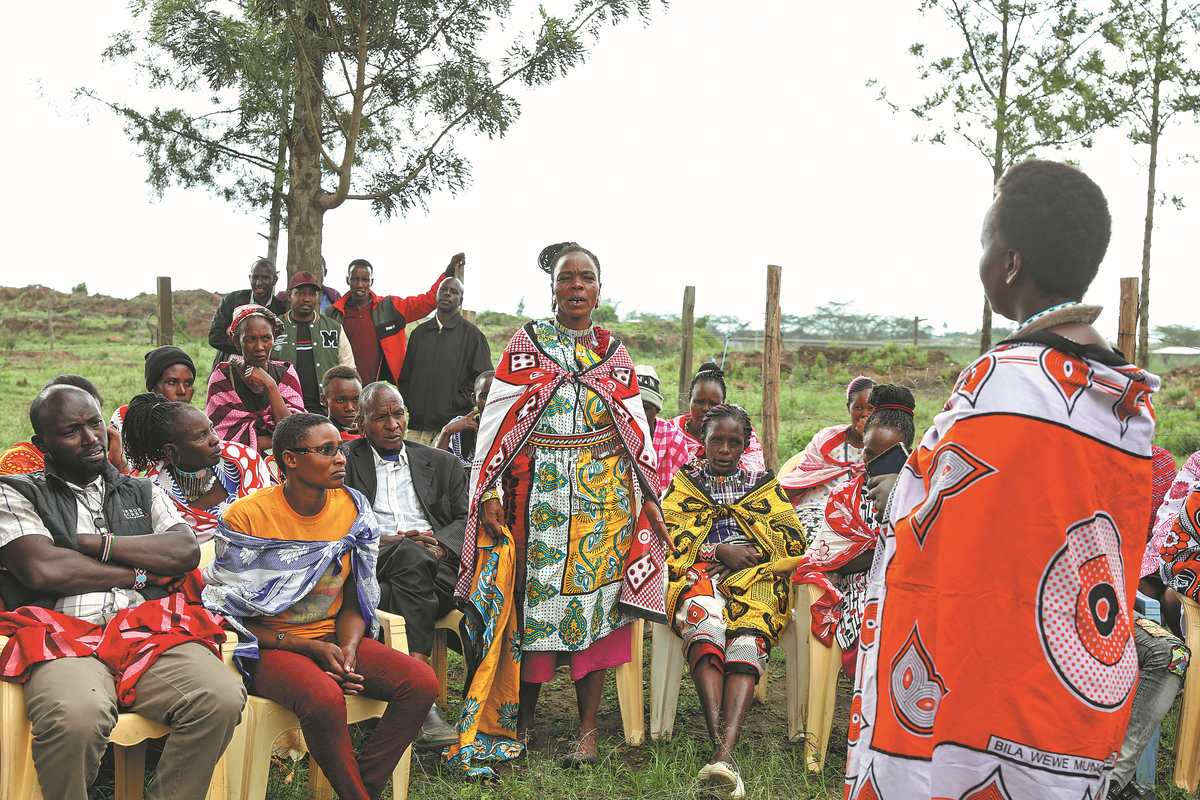
At a church compound in Suswa town in Narok County, Kenya, couples listened attentively, nodding and applauding as experts explained the consequences of the practice of female genital mutilation.
At the end of the hourlong dialogue, both men and women committed to abandoning the practice that has long violated the rights of women and girls and compromised their health.
Female genital mutilation, or FGM, is a traditional practice that exists in 30 countries, primarily in Africa, the Middle East and Asia. It refers to all procedures involving partial or total removal of the female external genitalia or other injury to the female genital organs for nonmedical reasons, the United Nations Children's Fund said.
FGM has no health benefits for girls and women, and can lead to severe bleeding, difficulty in urinating, and later complications such as cysts, infections and childbirth complications, as well as an increased risk of newborn deaths.
More than 200 million girls and women alive have undergone FGM worldwide, according to the World Health Organization.
Deeply rooted gender inequality and cultural beliefs continue to perpetuate the prevalence of the practice, despite legal efforts to eradicate it in many countries.
In Kenya, the prevalence of FGM is still as high as 15 percent, despite the practice being outlawed. This figure is down from 21 percent 10 years ago, indicating that 15 percent of girls and women aged 15 to 49 have been circumcised, UNICEF said.
After attending the dialogue session with his wife, 27-year-old father of two Nelson Nkalo vowed his daughter will not undergo FGM.
This decision was influenced by talks from experts during the dialogue and his personal experience of witnessing the ordeal that his wife, after undergoing the procedure, went through during and after childbirth.
"My wife took two months to recover and be able to perform any household chores. Those who have not undergone the cutting take less than a month to heal. She also risked hemorrhage during childbirth," he said.
Traditionally, a girl who has undergone FGM is viewed as virtuous and ready for marriage — a good way for parents to receive a bride price and generate income. In the Maasai community in Kenya, girls undergo FGM between the ages of 12 and 14, resulting in them dropping out of school and getting married at a young age.
On the other hand, an "uncut "girl is regarded as a "child", and may face isolation and the possibility of not receiving a marriage proposal. FGM is also believed to improve women's morality by reducing sexual urges, leading to the assumption that they will remain faithful in marriage.
Enlightened advocates
Abraham Tumpes, a Maasai elder with three wives and 20 children, is one of the leading advocates against FGM.
Noitui Kaleke, who used to perform the procedure, has renounced the practice after taking part in the dialogue that she said enlightened her. She is now a champion for the anti-FGM movement, with a special focus on reforming those performing FGM.
The dialogue was held under the Girl Generation: Support to Africa-Led Movement to End FGM, a program under the Kenya-based Amref Health Africa, the largest health development nonprofit in Africa. The program aims at significantly reducing the practice of FGM in Ethiopia, Kenya, Senegal and Somalia by 2027.
David Kawai, manager of the program, said they are implementing core models, and following that they will conduct an assessment to scientifically determine which models have been successful, and then scale their implementation in other regions and countries.
"We have given teams in those countries a mandate to come up with their own concept of what works. In Kenya, for example, we are implementing intergenerational discussions in the community. We have intergender discussions, couples' discussions in villages, school programs and youth clubs,"Kawai said.
In Senegal, the program utilizes a road caravan, in which trained advocates travel from town to town to educate people about the consequences of FGM.
They also carry out survivor leadership training, empowering survivors of FGM to take the lead in ending the practice, because they possess a deep understanding of the problem and how to effectively communicate about it.
"In the four countries the program is active, we are moving forward, we are getting lessons and documenting them." Kawai said."We want to produce some global goods that can be shared worldwide for people to know what works to end FGM in Africa."
Insecurity in the countries has been a major challenge in implementing the program, he said.
Thanks to the program, communities have opened up and are speaking out about FGM, he said, and girls can now say no to the practice and argue with their parents against it.
Boys have also changed their attitude toward the practice and are now marrying girls who have not undergone FGM.
"We are no longer talking about FGM as a cultural issue or just a simple harmful practice. It's a crime, it is a violation of the rights of women and girls," he said.
Geoffrey Ongaki, a teacher in Narok, said: "If students are enlightened, they will be educated and enlighten others in society, and the (practice) will end."