More than old methods needed to help youths get suitable jobs









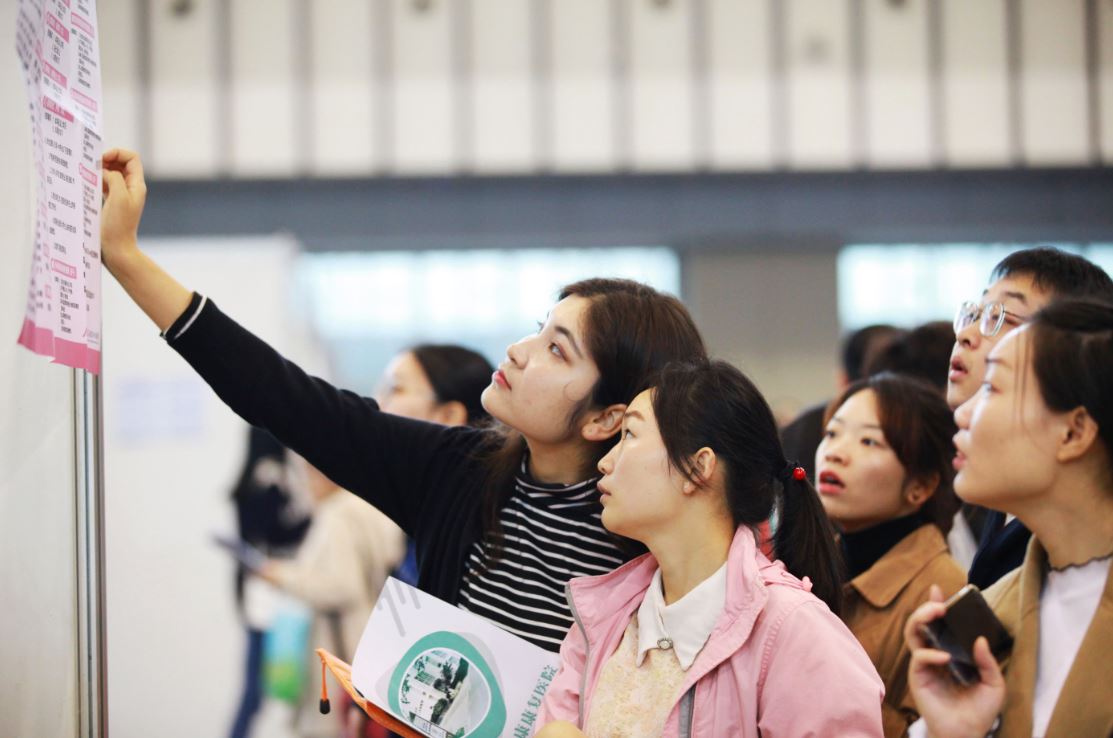
Behind the current complex employment situation in China lies a story of a structural transformation creating mismatches in the labor market, and inadequate development of human capital. This situation affects the youth the most, because they face the brunt of employment challenges as they enter the workforce.
Therefore, creating diversified employment opportunities and entrepreneurial ventures for young people is key to increasing the employment rate. To begin with, short-term measures to secure employment must align with the actual needs and long-term career development of youths, complemented by flexible social security measures, an efficiently operating labor market, and a comprehensive human capital accumulation system to ensure sustained employability.
The multifaceted issues associated with youths' employment can be attributed to the combined effects of frictional, structural and cyclical factors. And the relatively high unemployment rate among youths can be attributed to economic slowdown and weak demand for human resources. Graduates, in particular, find themselves squeezed between diminishing job opportunities and increasing supply of human resources. This complexity stems from various factors.
On the demand side, cyclical unemployment has contributed to youth employment, as youths are more sensitive to cyclical unemployment, tending as they do toward newly created jobs. Before the COVID-19 pandemic, the economic growth rate consistently outpaced the rate of increase in the number of college graduates. But in recent years, the number of college graduates has soared while growth has slowed down, resulting in a substantial rise in cyclical unemployment among youths.
Internal momentum remains weak despite signs of strong economic recovery driven primarily by government efforts to boost domestic consumption and integrate the strategy of expanding domestic demand with efforts to deepen supply-side structural reform to boost economic growth. The lingering effects of the pandemic, coupled with constrained household incomes and consumption expectation, are not conducive to boosting social investment and private enterprises' recovery.
Structural shocks on the demand side have led to loss of jobs in the modern service sector where young people are predominantly concentrated. The lower-than-expected performance of sectors such as education, the platform economy, culture and entertainment, and real estate has exacerbated structural unemployment among youths. And the mismatch between job supply and demand, compounded by rapid technological advancements and economic structural changes, has raised concerns over long-term unemployment risks.
Simultaneously, on the supply side, factors such as an unprecedented number of college graduates and overseas returnees have increased the employment pressure on youths. The number of college graduates reached a historical high last year, and China's growing stature as a well-functioning economy prompted a large number of youths to return home in search of good jobs after completing their higher studies abroad. This has created intense competition in the job market, particularly among fresh graduates.
There is a need therefore to take a series of measures to create long-term, high-quality jobs. Also, policy interventions should not only address short-term employment problems but also guarantee basic job stability and facilitate continuous enhancement of human capital. To do that, the authorities have to implement certain policies and take some specific measures.
First, efforts should be made to create jobs that align with the current human capital levels, establish diverse job channels, and support them with flexible social security measures and a strong human capital accumulation system to ensure their long-term employability. This includes coordinating between State-owned enterprises and the private sector to notify job vacancies, especially in the fields of education and research, and leveraging the role of the new economy to create jobs.
Second, encouraging entrepreneurship and flexible employment among youths, supported by flexible social security measures, is very important. Flexible employment provides more job options for youths, as it acts as a buffer between short-term and long-term employment. But to mitigate the negative impacts of flexible employment, social security policies must align with such arrangements.
Third, it is important to establish a strong human capital accumulation system to prevent the "depreciation" of human capital, and ensure human capital accumulation and skill training programs enhance young people's ability to adapt to economic transformations.
Fourth, there is also a need to use macroeconomic policy tools to stimulate demand, create high-quality jobs, and implement expansionary macroeconomic policies and prioritize measures conducive to increasing employment demand. For instance, policies aimed at reducing the social security burden on employers have helped boost employment.
And fifth, strengthening the multi-dimensional youth employment monitoring system is essential for making informed policy-making decisions. It is also important to monitor youth employment trends through mediums such as household surveys, recruitment data, and employer monitoring and public employment service agencies. Also, the exercise should focus on understanding the nature of recent and past graduates' employment, and conducting third-party evaluations.
One needs a holistic approach to understand the complexities of youth employment and balance short-term measures with long-term policies to create quality employment opportunities, boost human capital, and stimulate economic growth. Only through concerted efforts and comprehensive policies can China overcome the employment challenge and pave the way for a brighter future for the youth.
The author is a research fellow at the Institute of People and Labor Economics, Chinese Academy of Social Sciences. The views don't necessarily reflect those of China Daily.
If you have a specific expertise, or would like to share your thought about our stories, then send us your writings at opinion@chinadaily.com.cn, and comment@chinadaily.com.cn.