WTO members should facilitate digital trade and empower the vulnerable










Each year, International Women’s Day is a special occasion for me to reflect on my work related to women empowerment.
This year’s Women’s Day, under the theme “Invest in women: Accelerate progress”, comes only days after I wrapped up my attendance at the WTO's 13th ministerial meeting (MC13) held in Abu Dhabi, United Arab Emirates, as a member of the WTO Director-General Business Advisory Group. Since last July, I started to shoulder this responsibility, sharing my understanding and views on digitized global trade to Dr. Ngozi Okonjo-Iweala.
From my experience, I think WTO members should try all out to facilitate digital trade and empower the vulnerable, especially women.
Global e-commerce growth is expected to achieve a 9 percent compound annual growth rate through 2027 from 2022—more than double of the projected brick-and-mortar retail growth, which lies at a more moderate 4 percent, according to Boston Consulting Group.
As a cross-border e-commerce veteran, I believe that cross-border e-commerce could potentially outpace overall global e-commerce growth and demands increased attention from all stakeholders. It is crucial for WTO members to prioritize the facilitation of cross-border e-commerce development to drive economic growth and benefit people worldwide.
Let me take China as an example. The country’s cross-border e-commerce reached 2.38 trillion yuan ($331.06 billion) in 2023, accounting for about 5.7 percent of the country’s entire global trade, which amounted to 41.76 trillion yuan. Though it still occupies a minor share, the cross-border e-commerce sector grew 15.6 percent year-on-year, registering a much faster annual growth rate than the 0.2 percent China recorded for the overall global trade.
More importantly, this fast-growing sector is creating numerous opportunities for micro, small and medium-sized enterprises (MSMEs), and even individuals. Yes, global trade has evolved beyond the era of being dominated by large enterprises and into an era where everyone can participate.
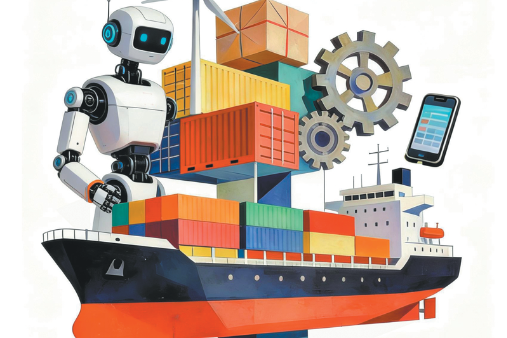
Digital technologies such as AI and big data are the forces behind this evolution. The technology has reshaped the global trade in every aspect. Imagine, in the current manufacturing landscape, factories can utilize AI algorithms to interpret front-end data, guiding their product design decisions. After that, they can employ 3D printing for swift market testing of samples, followed by scaled-up production. This streamlined process extremely enhances efficiency and significantly reduces costs.
Digital tools, mature e-commerce infrastructure such as online payment and accessible logistics, and booming social media platforms where everyone can have an influence together offer an unmatched opportunity for MSMEs to compete globally, breaking traditional barriers set by large corporations and allowing even the smallest businesses, such as a one-person business, to reach global audiences.
Though this change is still in its early stages and is beyond many people’s knowledge, it deserves everyone’s attention.
My experience at DHgate.com, a cross-border e-commerce platform established in 2004, has shown me that participants are coming from all over the world, with increasingly more women and Generation Z members from developing nations and least developed countries, such as Nigeria. Specifically, 40 percent of DHgate sellers are women-led businesses.
Most cross-border e-commerce participants, though empowered by technology, are still in an unfavorable situation in economic development and are underserved.
The moratorium on e-commerce tariffs was extended on MC13. I hope this moratorium could be extended again in 2026, as tariffs discourage many economically vulnerable people, such as stay-at-home women and fresh graduates without full-time jobs, from entering cross-border e-commerce and making decent income. Moreover, I would suggest all WTO members boost e-commerce related technology adoption and MSMEs empowerment.
In an era of fragmentation, cross-border e-commerce participants could be a contributing force to "re-globalize" supply chains, to bind more people in the global economy and foster more understanding between different countries.
I think the WTO should play a very important role here, encouraging public-private collaboration, fostering cooperation between countries and advocating digital skills training for MSMEs.
In the past 9 years, DHgate has trained hundreds of thousands of MSMEs, women entrepreneurs and policymakers in more than 50 economies under the cross-border e-commerce training (CBET) program, which has been recognized and endorsed by the leaders of UN, APEC and G20 countries.
In addition to the CBET program, I also launched the APEC Women Connect initiative in 2016 to empower women through inspirational sharing, practical learning, effective recognition and awarding. Over the past 7 years, the program, which has been recognized and endorsed by the leaders of UN, APEC and G20 countries, has trained over 100, 000 women MSMEs and cultivated over 5,000 women entrepreneurs. This community is growing bigger and bigger, as beneficiaries are bringing more and more followers.
In October 2023, I started The Inner Mountain Foundation, a global community empowering women to stand up, speak out and make a difference as I believe it is vital to build up and empower communities for women, providing access to various entrepreneurial resources, training, information and funding for women-owned businesses.
However, no matter how hard we try, efforts from the private sector are far from enough. I do hope WTO member countries can cooperate to facilitate digital trade, serving those unprivileged participants and allowing them to play a larger role in supply chain reglobalization, cross-culture communication and global peace.
Diane Wang is DHGATE Group's Founder, Chairperson and CEO, as well as a member of the WTO Director-General Business Advisory Group.
The views don't necessarily reflect those of China Daily.
If you have a specific expertise, or would like to share your thought about our stories, then send us your writings at opinion@chinadaily.com.cn, and comment@chinadaily.com.cn