Beijing subway system is a lifeline for the city









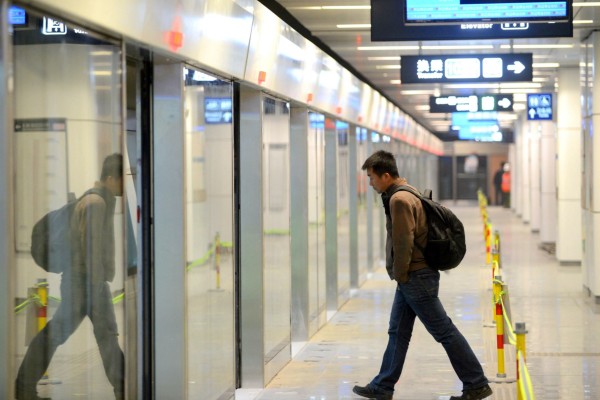
The Beijing subway system continues to be a beacon of efficiency and convenience for millions of commuters, significantly improving their daily commute and enhancing overall quality of life.
The Beijing underground system was established in 1971 and has grown significantly since then. It now connects many different areas of the city with a vast network. With around 27 lines, comprising over 490 stations, two airport rail links, one maglev line, two light rail lines and 22 rapid transit lines, the system spans over 12 urban and suburban districts in Beijing, as well as one district in Langfang in the neighboring province of Hebei, for a total distance of around 836 kilometers. A research states that 3.84 billion journeys—or 10.54 million trips every day—were undertaken in 2018. The Beijing subway stands as one of the longest and busiest subway systems globally.
The Beijing underground system's ability to reduce traffic congestion, a recurring problem in the busy city, is among its most important advantages. The underground system dramatically lowers the number of cars on the road, improving traffic flow and making the environment cleaner by offering a dependable substitute for private transportation.
Furthermore, anyone from all social classes can use the tube because of its affordability and efficiency, regardless of their financial situation. The underground continues to be a popular option for everyday commuters, infrequent travelers, and visitors from all over the world because of its affordable costs and variety of ticketing options, which include single trips and reduced monthly passes.
I recall how far the Beijing Institute of Technology's Liangxiang campus is from the city center from my time there. The Fangshan line metro, another branch of the extensive Beijing subway system, is one that I used to travel on with ease. It not only provided me a simple and pleasant way to travel, but it also made it easier for me to reach my destination on time. Remember that the cost of transportation in Beijing is rather low. Now that I'm on the Zhonguancun campus of BIT, I have two options for transportation— Line 4 and Line 16, which are the closest to the main campus of the university—so it's much more convenient for me to use them.
The Beijing underground system is more than simply a way of getting around for many residents; it's their lifeline, linking them to opportunities, conveniences, and services that are vital. The subway's reach makes it easier to connect and move throughout the city, whether it's for pleasure or visiting cultural sites and job prospects located around the city.
Moreover, the Beijing metro system is essential to improving urban accessibility for people with impairments. With features such as tactile paving, priority seating, and elevators that remove barriers, it guarantees inclusivity and equitable access for all travelers, regardless of their physical capabilities.
Also, according to a news release of the 2024 Beijing Urban Rail Transit Construction Plan, the first phases of Line 3 (Dongsishitiao-Dongfeng), Line 12 (Sijiqingqiao-Dongfeng), and the remaining portion of Phase I of Changping Line's south extension line (Xitucheng-Jimenqiao) will all begin operations this year. According to reports, together these projects will cover a distance of about 45.3 kilometers. After that, Beijing's urban rail system will operate over 880 kilometers in length.
Ten stations in total, including six transfer stations, will be part of Line 3's Phase I (Dongsishitiao-Dongfeng).
There will be 13 transfer stations among the 20 stations of Line 12 (Sijigingqiao-Dongfeng). Passengers will have transfer choices for the remaining 12 subway lines, including Lines 4 and 5, once it is finished and operational.
For the remaining portion of Changping Line's Phase I south extension line (Xitucheng-Jimenqiao), one more station and an additional interval will be constructed. When the line is completed and operational, it will be fully connected, facilitating easier transit for the local population.
The underground system is proof of Beijing's dedication to sustainable urban development and modernization as the city continues to develop into a major international centre of business, culture, and innovation. The future of Beijing's underground system appears brighter than ever, with plans for continual growth and technical breakthroughs that promise benefits for future generations.
In summary, the Beijing underground system improves the lives of millions of residents and tourists every day by revolutionizing transportation and acting as a catalyst for advancement.
The Author is Muhammad Humayun Asghar, a Pakistani student at Beijing Institute of Technology, a leading IT university in China. The views don't necessarily reflect those of China Daily.
If you have a specific expertise, or would like to share your thought about our stories, then send us your writings at opinion@chinadaily.com.cn, and comment@chinadaily.com.cn