Navigating the pathways










China's energy strategy in the Global South represents a complex yet strategic effort to foster sustainable development, enhance energy security and build long-term partnerships
In recent years, China's international engagement, particularly in the Global South, has taken center stage in global discussions, reflecting a multifaceted approach that intertwines economic diplomacy, strategic alliances and a concerted push toward sustainable development.
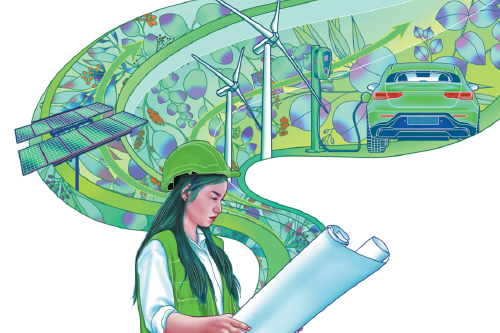
China's approach emphasizes State-led macroeconomic policies, innovation-driven development and a pragmatic approach to governance and social policy. In the realm of energy, this translates into a strategy that prioritizes long-term investments in infrastructure, a broadened energy mix including renewable resources, and bilateral partnerships that promise mutual growth and sustainability.
China's Belt and Road Initiative serves as a prime example of this strategy in action. Launched in 2013, the initiative aims at enhancing global connectivity and cooperation on a transcontinental scale, with energy projects playing a pivotal role. According to a report by the International Institute for Green Finance at the Central University of Finance and Economics in Beijing, as of 2020, China had invested over $50 billion in renewable energy projects in the Belt and Road countries. This investment reflects a deliberate shift toward sustainable energy sources, underscoring China's commitment to green development paradigms.
In Southeast Asia, China's push toward renewable energy is evident in its investment in solar and wind projects. In Vietnam, China's investments in wind energy, including the Bac Lieu Wind Power Plant, highlight China's commitment to diversifying energy resources in the region. These projects not only contribute to the local energy matrix but also align with the global shift toward cleaner energy sources.
In Pakistan, the China-Pakistan Economic Corridor, a cornerstone of the BRI, has catalyzed significant energy projects. The corridor has facilitated the construction of solar power plants, such as the Quaid-e-Azam Solar Park, and hydroelectric projects, including the Karot Hydropower Station. These initiatives have not only alleviated energy shortages in Pakistan but also contributed to the country's energy diversification and sustainability goals.
In addition, China's role in hydropower development is well-documented, with projects such as the Bui Dam in Ghana and the expansion of the Kariba Dam in Zimbabwe. These projects have significantly increased the electricity generation capacity in the host countries and facilitated economic development, improving the lives of millions. Beyond hydropower, China is also investing in solar energy across Africa, with the Garissa Solar Power Plant in Kenya being one of the largest solar installations in East Africa, showcasing China's multifaceted approach to energy strategy in the continent.
China's energy strategy extends beyond electricity generation to include infrastructure development aimed at enhancing energy access and security. In Central Asia, the China-Central Asia Gas Pipeline, which runs from Turkmenistan through Uzbekistan and Kazakhstan to China, exemplifies China's efforts to secure energy resources while promoting regional connectivity. Additionally, the CASA-1000 project, which aims to transmit hydroelectric power from Kyrgyzstan and Tajikistan to Afghanistan and Pakistan, highlights China's investment in infrastructure that supports energy trade and interconnectivity within the region.
On the environmental front, China's overseas energy projects have faced scrutiny regarding their ecological impact. The Myitsone Dam project in Myanmar, for instance, was suspended amid environmental and social concerns, highlighting the challenges China faces in balancing economic development with environmental stewardship. This has led to a more concerted effort toward adopting greener practices, as seen in the most recent BRI projects that emphasize renewable energy and environmental sustainability.
Yet, China's energy strategy in the Global South is not without its critics. Concerns have been raised about debt sustainability, environmental impacts and the transparency of agreements. Moreover, environmentalists have highlighted instances where the ecological implications of such projects were inadequately addressed.
In response to these concerns, Chinese authorities and State-owned enterprises have increasingly emphasized the importance of green and sustainable development practices. The "Green BRI" initiative aims to integrate environmental considerations into Belt and Road projects, promoting the adoption of renewable energy technologies and ensuring that projects meet stringent environmental standards.
Furthermore, China's pragmatic approach allows for the adaptation of strategies to meet the evolving challenges and needs of partner countries. This flexibility, combined with a willingness to engage in dialogue and cooperation, has enabled China to address some of the criticisms and work toward more sustainable and mutually beneficial outcomes.
In conclusion, China's energy strategy in the Global South represents a complex yet strategic effort to foster sustainable development, enhance energy security and build long-term partnerships. Through significant investments in renewable energy and infrastructure, China is not only advancing its own economic and strategic interests but also contributing to the global transition toward sustainable energy sources. However, the success of this strategy ultimately depends on its ability to navigate the challenges of debt sustainability, environmental stewardship and international cooperation. As such, China's energy strategy in the Global South serves as a dynamic case study in the interplay between national ambitions, development paradigms and the quest for a sustainable future.
The author is a senior research fellow at the United Nations University-Institute for Natural Resources in Africa and a senior fellow at China Agriculture University's China Institute for South-South Cooperation in Agriculture. The author contributed this article to China Watch, a think tank powered by China Daily.
The views do not necessarily reflect those of China Daily.
Contact the editor at editor@chinawatch.cn.