Western industrial rhetoric nothing but an economic fallacy









The United States and its Western allies have been hyping up the non-existent China's "overcapacity" issue to justify their protectionist measures and to paint China as a threat to international trade. A closer analysis, however, shows this narrative is deeply flawed and those using it are overlooking the complexities of global economic dynamics. Rather than representing an existential threat, China's purported overcapacity reflects the evolution of its industrialization process and its efforts to meet shifting market demands.
Overcapacity, in general, refers to a situation in which production capacity exceeds market demand. While it is undeniable that China experienced periods of overinvestment and misallocation of resources during its rapid industrialization process, viewing the country's current economic landscape solely through the lens of overcapacity is oversimplifying a complex reality. By resorting to such accusations, the US-led West refuses to acknowledge the significant strides China has made in optimizing its industrial structure and enhancing the quality and competitiveness of its products.
During the initial stages of China's industrialization, spurred by market reforms and globalization, there were instances when the country's industrial output outpaced domestic and global demand projections. Sectors such as steel, coal and cement had overcapacity as a result of ambitious investment initiatives and optimistic growth forecasts. However, it is necessary to recognize that overcapacity is not a static phenomenon but rather a dynamic process influenced by market forces and technological advancements.
In response to the challenges posed by overcapacity, the Chinese government initiated comprehensive reforms in order to address the structural imbalances and promote sustainable growth. Through initiatives such as supply-side structural reforms, capacity reduction programs and efforts to promote innovation and technological upgrading, China has made concerted efforts to optimize its industrial base and align production capacity with evolving market demands.
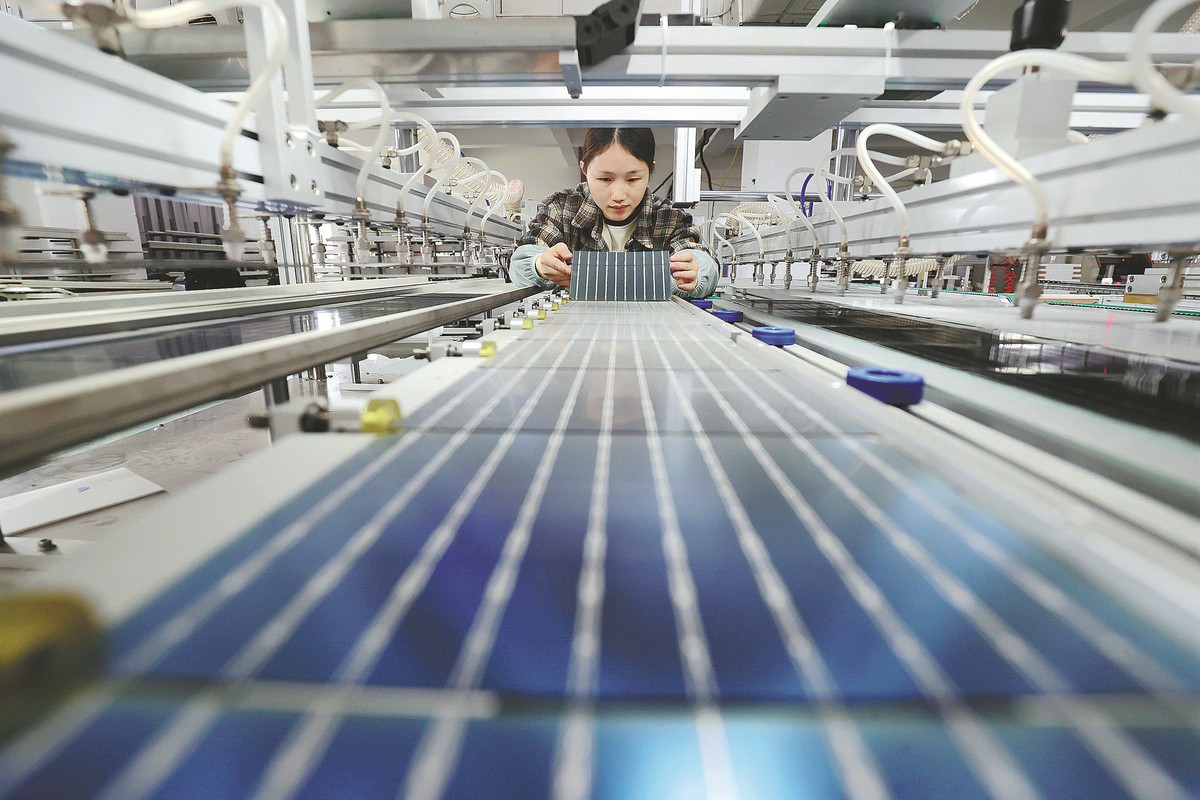
One of the most notable achievements of China's industrial transformation is the significant improvement in productivity and product quality. By investing in automation, digitalization and process optimization, Chinese manufacturers have achieved economies of scale and sharpened their competitive edge in international markets. Also, China's emphasis on research and development, and innovation has helped advance cutting-edge technologies and high-value-added products, particularly in sectors such as consumer electronics, renewable energy and electric vehicles.
Contrary to the narrative propagated by some Western politicians, China's rise as a manufacturing powerhouse cannot be attributed solely to the country "dumping" cheap products in global markets. Instead, it reflects the country's growing capability in producing high-quality goods that meet the diverse needs of consumers worldwide. Chinese products have earned a reputation for their reliability and affordability, positioning China as a key player in the global supply chains.
In projecting China's industrial prowess as a threat to Western economies, the US-led West is not only being misguided but also reflecting its narrow understanding of the dynamics of global trade. Rather than viewing China's manufacturing prowess as a zero-sum game, Western countries should appreciate the mutual benefit of trade and cooperation. The overcapacity narration is a deliberate attempt to reject the interconnectedness of economies and the shared opportunities for development.
Moreover, the focus on China's overcapacity distracts attention from the structural challenges facing Western economies, including declining industrial competitiveness, stagnating productivity growth and widening income inequality. Instead of scapegoating China for their domestic economic woes, Western policymakers should focus on addressing internal challenges and fostering a more inclusive and sustainable economic model.
It is essential to approach economic relations between countries with pragmatism and mutual respect, rather than succumbing to the rhetoric of economic nationalism and protectionism. The demonization of China's economic policies not only lowers the prospects for constructive dialogue and cooperation but also risks escalating tensions and triggering a cycle of retaliatory measures.
In today's increasingly globalized world, "overcapacity" not only concerns the industrial development of individual countries but also serves as a touchstone for international relations. The core purpose behind the US-led West's hype over China's overcapacity is to safeguard their own economic interests and competitive advantages, reflecting deeper contradictions and power struggles brought about by changes in the global economic landscape.
The US and the West should respect the principles of market economy and fair competition, and work with other countries to maintain the stability of the global industry chains. If they continue to take measures to curb China's industrial development using the pretext of "overcapacity", they will not only face a backlash from the international market but also strengthen China's resolve to intensify its industrialization campaign.
Rather than viewing China as a threat, Western economies should recognize the opportunities for collaboration and mutual benefit the country offers. By adopting a more nuanced and inclusive approach to economic relations, the West and China can build a more resilient and prosperous global economy for all.
The author is a research fellow at the Institute of World Economics and Politics, Chinese Academy of Social Sciences. The views don't necessarily reflect those of China Daily.
If you have a specific expertise, or would like to share your thought about our stories, then send us your writings at opinion@chinadaily.com.cn, and comment@chinadaily.com.cn.