America's bloc offense in disguise of 'common defense'










BEIJING - The Philippines has recently escalated provoking actions in the South China Sea. Thousands of miles away, the United States threatened the use of the US-Philippines mutual defense treaty against China, seriously violating the principles of the UN Charter and jeopardizing regional peace and stability.
In a bid to protect its hegemony, the United States is forming blocs globally to target specific countries, provoke confrontation and destabilize the world. It claims to protect its allies under mutual defense treaties, but in reality, the treaties serve as a tool to subordinate them to the superpower and push them to the forefront of conflicts.
"DEFENSE" TREATIES AIMING FOR OFFENSE
In March, Commander of the US Indo-Pacific Command John Aquilino claimed that the Philippines could activate Article V of the US-Philippines Mutual Defense Treaty, i.e., the collective defense clause, if any Filipino sailors or soldiers die in any possible conflicts in the South China Sea. US President Joe Biden recently declared that any attack against Philippine aircraft, vessels or armed forces in the waters of the South China Sea would trigger the US-Philippines Mutual Defense Treaty.
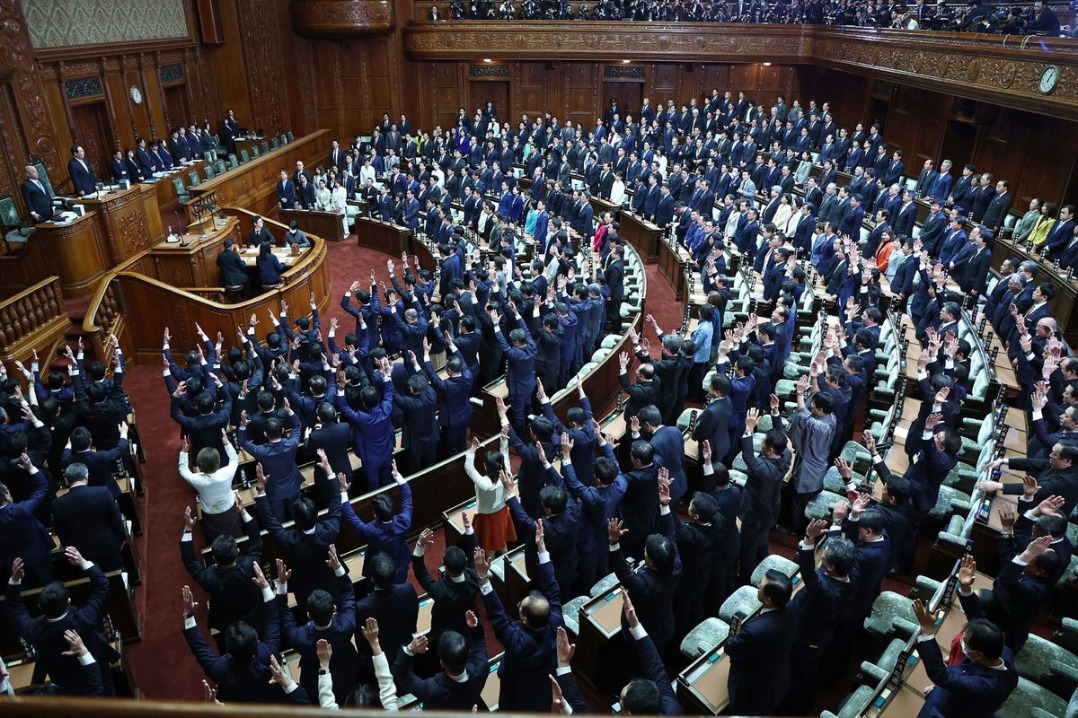
The United States repeated the same tactic on the Diaoyu Islands issue, bringing the piece of China's territory into the defense area of the US-Japan alliance. On April 10, after talks with visiting Japanese Prime Minister Fumio Kishida, Biden said the United States has always stood firm on its defense commitments to Japan based on the Treaty of Mutual Cooperation and Security, which also applies to the Diaoyu Islands.
Although the US military alliance with the Philippines and Japan is categorized as "defense," it has obvious offensive characteristics. During Kishida's visit to the United States, the two sides made the largest upgrade to the US-Japan security treaty in more than 60 years, with the United States supporting Japan's efforts to strengthen its offensive capabilities and enhancing the synergies between the two militaries.
Last year, the Philippines opened four additional military bases to the United States near China's Taiwan region and the South China Sea. In April, the United States deployed the "Typhon" Mid-Range Capability missile system to Luzon, the Philippines, with a range that can reach China's coast and the South China Sea.
Leaders from the three countries also held a trilateral meeting in Washington on April 11. In a statement, they attacked China's legitimate actions in the South China Sea and around the Diaoyu Islands and claimed the three countries would deepen cooperation in "supporting a free and open Indo-Pacific region."
In that regard, Anna Malindog-Uy, vice president for external affairs of the Asian Century Philippines Strategic Studies Institute, recently wrote in the Philippine daily newspaper Manila Times: "This newly formed defense and military triad of the US, Japan and the Philippines is another aggressive approach to foreign relations, a Cold War tactic, and a narrower security-centric effort of the US to preserve its hegemony and dominance in the Asia-Pacific region."
"It is also an attempt to contain, counter, isolate and single out China," she wrote.
Xu Qingqi, chairman of the new Asia Strategic Studies Center in Malaysia, said the United States is seeking to consolidate its relationship with regional allies to enhance the military power of the first island chain in a bid to contain China's rise.
ALLIANCES SERVING US HEGEMONY
Driven by domestic military-industrial complexes and other interest groups, the United States has instigated conflicts worldwide. Under the guise of mutual defense, Washington and its allies have encroached upon the interests of other countries.
In Northeast Asia, the US-South Korea alliance ostensibly aims to defend against the so-called threat from the Democratic People's Republic of Korea (DPRK); in reality, it serves as a tool for US intervention in Northeast Asian affairs.
The United States has maintained a military presence on the Korean Peninsula, not only to counter the DPRK but also to target surrounding major countries.
For instance, the deployment of the THAAD system in South Korea is intended for surveillance of China and Russia. Moreover, in recent years, the United States and South Korea have intervened in the Taiwan Strait and the South China Sea.
In Oceania, US-Australia defense cooperation started during World War II. But when the two countries formed a military alliance after the war, Australia faced no obvious external security threats.
Nevertheless, since then, Australia has sent troops to partake in numerous wars instigated by the United States, including the Korean War, the Vietnam War, the Afghanistan War and the Iraq War.
Furthermore, in recent years, the two countries have collaborated under the pretext of "freedom of navigation" to frequently undertake military operations in the South China Sea.
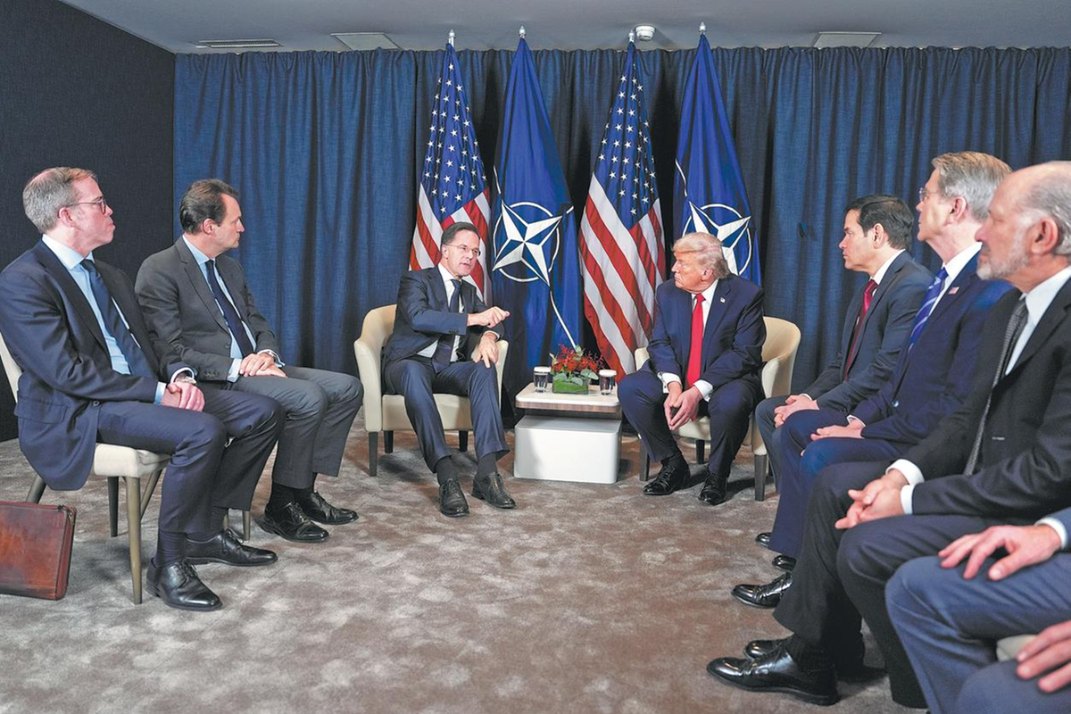
In Europe, the United States has continuously strengthened the North Atlantic Treaty Organization (NATO) under its dominance. While the bloc claims to be a defensive military alliance, established initially to fend off the so-called "Soviet invasion," it did not disband after the collapse of the Soviet Union and the end of the Cold War.
Instead, NATO has viewed Russia as a rival and gradually squeezed its strategic sphere through successive rounds of eastward expansion. After the escalation of the Ukraine crisis, NATO has consistently furnished Ukraine with military support, attempting to weaken Russia through the conflict.
Meanwhile, NATO has bolstered its deterrence against Russia from the north by enlisting Finland and Sweden.
In fact, since the end of the Cold War, this so-called defensive organization under US leadership has been involved in military interventions worldwide. It has taken military actions against countries like Afghanistan, Iraq, Libya and Syria, resulting in severe humanitarian crises.
In recent years, the United States has sought to build broader alliances, such as establishing security mechanisms involving the United States, Japan, South Korea, Australia and the Philippines, to create a NATO-like bloc in the Asia-Pacific region.
All these military alliances, ostensibly formed for mutual defense, fundamentally serve as instruments for Washington to protect its hegemonic interests.
Russian Security Council Secretary Nikolai Patrushev said NATO's ongoing expansion serves the national interests of the United States while undermining the independence of other countries.
BEHAVIORS DAMAGING GLOBAL PEACE
Some US allies, emboldened by the assurance of mutual defense from the United States, appear increasingly willing to engage in aggressive behaviors.
Most recently, Philippine President Ferdinand Romualdez Marcos claimed that the death of any Filipino serviceman in the event of "aggression" in the South China Sea could activate the US-Philippines Mutual Defense Treaty.
However, instead of ensuring the security of its allies, Washington's mutual defense promises only bring them greater risks.
"No nation would survive a thermonuclear war between the superpowers, so getting involved in one would be utter suicide," Former Philippine Senator Francisco Tatad recently wrote in an article published by the website of the daily newspaper Manila Times.
Taking the decisions by Finland and Sweden to join NATO as an example, Jan Oberg, director of the Transnational Foundation for Peace and Future Research, said the two countries "will be frontline states drawn into a crisis/tension situation much more easily and early than otherwise."
Forming alliances and fostering confrontation cannot solve disputes or enhance security; instead, they only serve to exacerbate divisions and conflicts.
The right path to resolving disputes lies in seeking peaceful negotiations to find solutions acceptable to all parties.
"Intervention by countries outside the region, like the US, will only aggravate the situation in the South China Sea," said Veronika Saraswati, senior researcher at Indonesia's leading think tank Center for Strategic and International Studies.
She said that disputes in the South China Sea should only be resolved through mutual consultation.
For Japan, Atsushi Koketsu, an emeritus professor at Yamaguchi University of Japan, said ending militarization and promoting friendly relations with neighboring countries are the best security policies for the country.