Australia hurting itself with cap on international students









Last month, my uncle ecstatically shared his daughter's admission letter from one of the prestigious Group of Eight (Go8) universities in Australia on his Weixin (WeChat) Moments. I responded with a thumbs-up and hearty congratulations. As a scholar, I can already envision the excellent education she is likely to receive down under in Australia. To put it into context, Go8 is the Australia's counterpart to America's Ivy League, Britain's Russell Group, or China's C9 League. However, this month, Canberra has cast a shadow over its highly successful international education sector, which is valued at more than A$40 billion dollars.
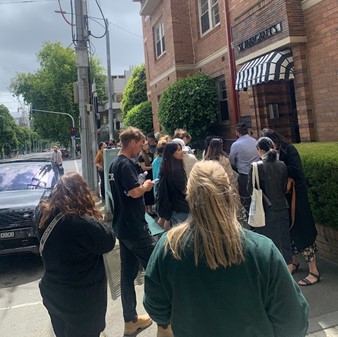
Last Thursday, federal politicians from major parties in Canberra targeted international students by proposing a legislation to cap their numbers each institution can admit. The decision has sparked a fierce debate across Australia. Alongside this dramatic restriction on the intake of new overseas students, the legislation aims to slash migrants from 528,000 in 2023 to 260,000 in 2025. Ostensibly, the legislation aims to alleviate the current national housing pressures by reducing migration. The housing crisis, unfortunately, is almost solely and unjustly attributed to migrants, particularly international students, despite the complex reality on the ground. If enacted, this legislation could significantly reshape the academic and professional futures of many, especially Chinese students, who make up a substantial portion of the international student body in Australia.
But what does this new cap have to do with Chinese students?
The answer is simple, and the numbers speak volumes. Chinese students have consistently been the largest group of international students in Australia. Over the past two decades, their numbers have increased more than threefold, accounting for about a quarter of all international students, about 150,000. They are followed closely by students from India and more distantly by those from Nepal, the Philippines, and Vietnam. Partly as a result, whatever changes in immigration policies are likely to affect Chinese students directly and significantly.
What does this legislation specifically mean for Chinese students then? The implications are multifaceted, and there are three dimensions to unpack, both in the short and the long term.
First, the immediate short-term effects of the cap will introduce significant uncertainty to Chinese students and other international students alike who are planning to study in Australia. The country has already tightened student visa rules, leading to a high number of rejections and slowing new arrivals. Recently, student visa rejection rates have also reached a historical high, the highest in almost two decades. This uncertainty is likely to influence actions taken by students in the long run.
Second, in the long term, Chinese students may opt for other comparable English-speaking countries over Australia. While Canberra can churn out various policies, often short-lived and mostly aimed at serving populist agendas, international students can simply choose a more predictable country both for their studies and for their well-being. Between 2023 and 2024 alone, we witnessed significant policy changes – adjustments to the post-study work period in 2023, new age caps in 2024, and revised student visa rules in 2024, to name a few. As the University of Sydney Vice-Chancellor, Professor Mark Scott, noted: "If you send a message to international students that they're not welcome, they have many other options." Chinese students are well aware of this.
Moreover, a growing number of prospective Chinese students may altogether avoid Australia if Canberra begins to micromanage where international students can study, such as in regional universities. Many studies have shown that Chinese students place a high value on university rankings. The complexities of potentially directing international students to less prestigious regional universities present as much of a structural problem for Australia's housing market as they do a structural demand of the domestic Chinese job market for these students. Therefore, it seems there is little room for compromise in this regard, particularly for Chinese students.
Third, also in the long run, people to people interactions between China and Australia are significant. Chinese students contribute to the educational and cultural diversity of Australia, and their experiences help foster mutual understanding and respect between the two countries and cultures. Just as Jason Clare, the minister for Education of Australia, stated: "When a student comes here to study they don't just get an education…they fall in love with the place." This rings especially true for me, based on my personal experiences studying in multiple countries around the world.
Australia is a major exporter of high-quality international education, much as China is a big provider of international students. It is crucial that the dynamic synergies between these two sectors are collaboratively fostered to benefit both countries, rather than yielding to short-term domestic populism. The minister further emphasised: "And when international students go home, they take that love and affection for us back home with them." This "love and affection" is as important as the education a student receives.
The story of my uncle's daughter provides a perfect snapshot of how Chinese parents and students value the internationally recognized high-quality education offered down under. I hope my sister does not confront me anytime soon with questions about whether Australia is still as welcoming as it used to be. Given the recent and constant changes in Australian immigration policies for international students, I am not confident enough to give her a positive answer.
Canberra should treasure and protect its hard-won reputation as a welcoming destination that provides world-class education for international students, not the other way around. It makes perfect sense that Canberra regards this largest multibillion-dollar service export as a "critical national asset," but this asset deserves better treatment, ideally free from populist politics.
Dr. Ming Gao is a scholar of modern East Asia at Australian Catholic University and Monash University. He now resides in Melbourne, and has previously studied or worked in Korea, Japan, Singapore, the United States, and China.
If you have a specific expertise, or would like to share your thought about our stories, then send us your writings at opinion@chinadaily.com.cn, and comment@chinadaily.com.cn.