Crude motives behind US war on drugs









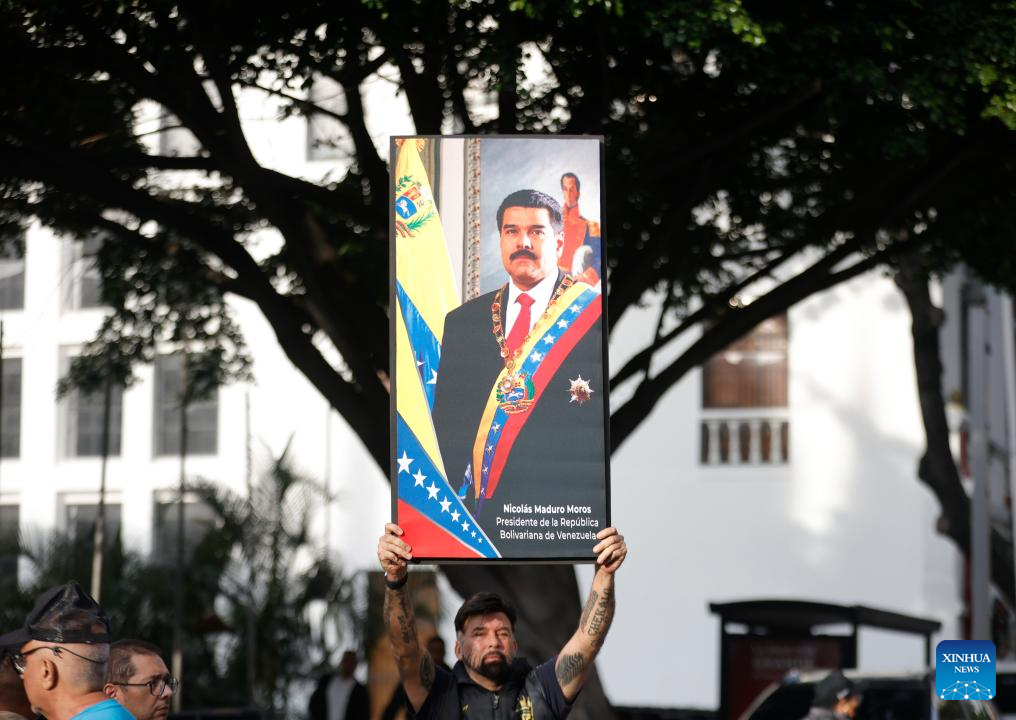
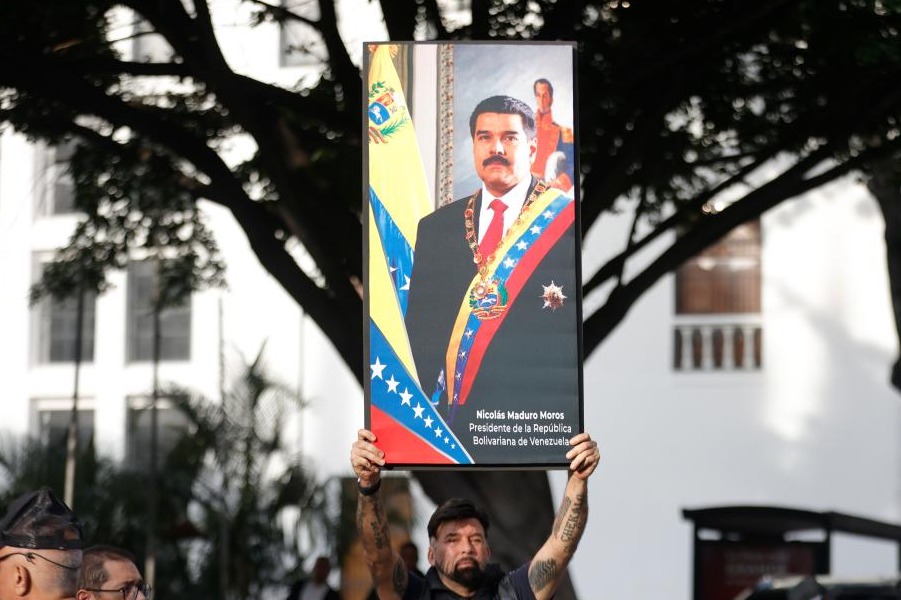
At 3 am on Jan 3, the United States Army launched Operation Absolute Resolve, a coordinated military attack on Venezuelan command-and-control infrastructure, and abducted President Nicolas Maduro and his wife from Caracas.
This action effectively erased the sovereign border between Venezuela and the US judicial jurisdiction, treating a sovereign nation like a subordinate colony. Diplomatic immunity was brushed aside, the United Nations Charter was ignored and international law was brazenly violated. What unfolded was not law enforcement, but an illegal reconquest of the area — an update of the neocolonial playbook exposed decades ago by Uruguayan writer Eduardo Galeano in his seminal work Open Veins of Latin America.
The stated objective, as always, was a crackdown on drugs. The US often lets traffickers go when it is politically useful while conveniently ignoring the fact that the demand for drugs in the US drives the global narcotics trade. The so-called "war on drugs" is therefore just a geopolitical camouflage — a mechanism for controlling resources in the Global South.
Operation Absolute Resolve is haunted by the ghost of Manuel Noriega. The parallels between the 1989 invasion of Panama and the 2026 invasion of Venezuela are not coincidental but doctrinal. In both instances, a Latin American leader was demonized as a drug trafficker, indicted by US courts and forcibly removed by US military power.
However, there is an abyssal divergence in the material conditions of these two interventions. Panama in 1989 was a client state whose leader had gone rogue, but the Panama Canal remained the primary strategic asset. Venezuela in 2026 is a founding member of the Organization of the Petroleum Exporting Countries with the world's largest proven oil reserves and a strategic partnership with China. The Panama template is being applied to a scenario of vastly higher geopolitical complexity.
The legal language is about drugs, but the economic basis is imperialism, which is the highest level of capitalism. The US government has openly said that it wants to tap Venezuela's vast oil reserves for profit. This takes away the pretense of humanitarian concern from the operation.
The US economy needs Venezuela's heavy crude, which is the biggest and cheapest feedstock to keep its refineries profitable during times of inflation and a slowing shale boom. The invasion is a way to forcefully bring these resources back into the US cycle of accumulation, avoiding sovereign rent-seeking.
The deepening ties between Caracas and Beijing were very important to the timing of the attack. The invasion was a preemptive strike to stop the China-Venezuela energy partnership from getting stronger, protect the petrodollar system from Venezuela's move toward the yuan or petro and use military force to enforce secondary sanctions when economic pressure does not work.
International law forbids taking foreign nationals and heads of state from their countries. The US has acted like a rogue state by following the 1989 Barr Memo, which goes against the UN Charter and the Vienna Convention.
From the perspective of the Third World Approaches to International Law, the "war on drugs" represents the contemporary continuation of colonial "punitive expeditions". It lets the metropole use force in a civilizing mission to "save" the periphery. The empire must get rid of the trafficker because they have turned a political enemy — the socialist — into a criminal enemy.
The US may have won a tactical battle in Caracas, but it has lost the war in the hearts and minds of people in the Global South. China has called the act a hegemonic violation, and there are likely to be uneven responses, such as de-dollarization or the Group of 77's diplomatic mobilization, among other multilateral calls for reason.
The invasion has also broken the illusion of hemispheric unity in the region. Progressive governments in Colombia and Brazil see this as a return to gunboat diplomacy, which is moving the region away from the Organization of American States and toward the Community of Latin American and Caribbean States and BRICS.
The seizing of Maduro and his wife strips away the democratic veneer of US foreign policy, revealing the naked predatory logic of late-stage imperialism, a zero-sum game. For the Global South, international law offers no protection against an empire in crisis. Security lies not in compliance with the rules-based order, but in the construction of robust multipolar alliances, autonomous economic systems and the capacity for asymmetric defense.
The invasion of Venezuela is not the end of the Bolivarian Revolution but the beginning of its most critical phase. The dialectic of history turns once more, not toward the end of history promised by neoliberalism, but toward a sharpened conflict between the forces of sovereign emancipation and the forces of imperial subjugation. The US has swallowed the bait of immediate resource seizure, only to find itself ensnared in the trap of a protracted, delegitimizing colonial war.
The author is from Brazil and a professor of international law at the School of Law of Lanzhou University.
The views don't necessarily represent those of China Daily.
If you have a specific expertise, or would like to share your thought about our stories, then send us your writings at opinion@chinadaily.com.cn, and comment@chinadaily.com.cn.