Driving Global South to the center










The agenda for global development will be better incentivized and activated by working on larger issues where consensus is natural and addresses the root cause of global divides
The solution to escalating global tensions, political disarray and economic fluctuations lie in the emerging of alternative voices and scenarios in global affairs. The resurgent efforts of the Global South are a testament to their potential, and these marginalized voices are now being heard in the form of disagreements over intimidation and military aggression by the affluent and influential states. The essence of global relations lies in upholding universal values and not imposing the interests of a few on all. The rise of the Global South signifies the rise of these nations, but the final stretch to make South-South cooperation effective and transform it into a powerful collective force necessitates a shared agenda, rooted in the values of cooperation, mutual respect and development.
Since World War II, the powerful countries have forced the former colonies and subjects to relinquish their right to question and disagree. The core challenge for the South-South cooperation is to cope with exceptionalism. The search for a modern world and the underlying obsession with modernity in the past centuries created drifts and delusions about the priorities of the Global South. A self-driven and self-centered agenda in the second half of the 20th century's postwar construction of the world unveiled a long-standing reality as imperialism and notions of subjugation surfaced in newer forms. To put it into context, in the age of artificial intelligence and automation, a large part of the population in the Global South lives in the shadow of deprivation, where extreme poverty prevails, and access to education, healthcare and better living standards is daunting.
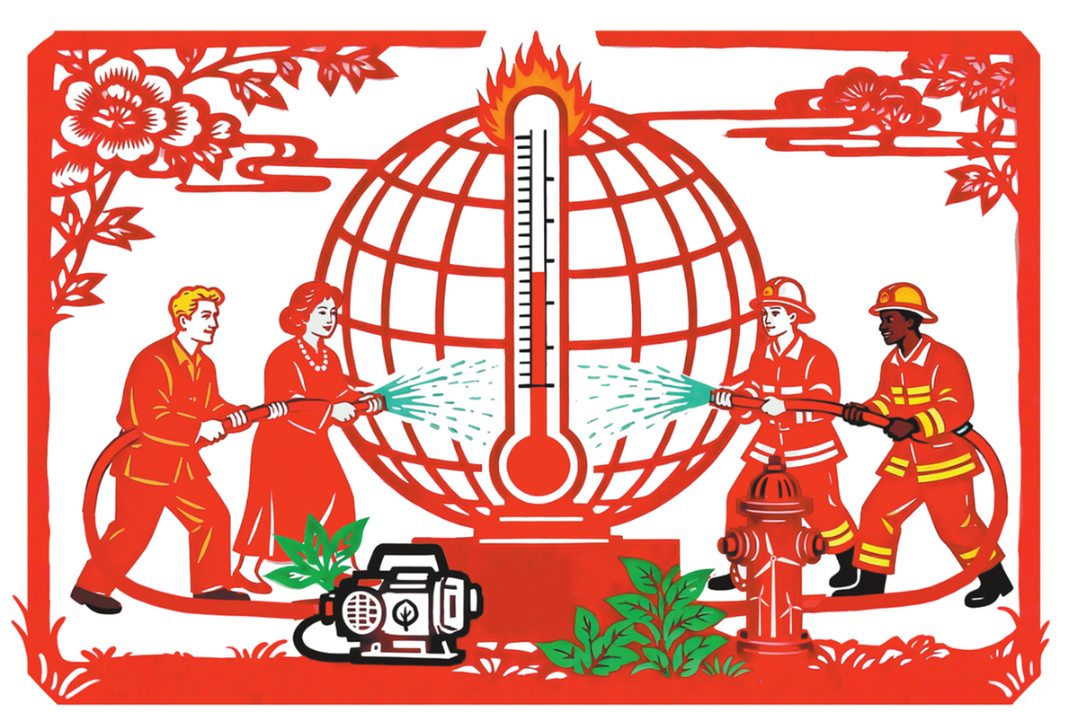
The Global South's solidarity has begun to take a definitive shape, particularly in the face of ecological devastation. Agriculture, a cornerstone of low-income economies, sustains the livelihoods of millions, ensures food security, and contributes to national economies. Climate change poses significant threats to agriculture in the Global South, including altered rainfall patterns, increased frequency of extreme weather events and rising temperatures. These changes have reduced crop yields, led to food shortages and increased the vulnerability of farmers. The industrialized nations, which champion equality and ethics, have been emitting hazardous gases since the Industrial Revolution. The Global North has been responsible for 50 percent of the total greenhouse emissions since 1850, despite constituting only 12 percent of the global population. The Global South is bearing the brunt.
According to the United Nations Framework Convention on Climate Change, the countries in the Annex I category (i.e. the most industrialized countries) account for 90 percent of excess emissions.
Energy cooperation and developing sustainable and alternative responses to the energy crisis have become crucial to the Global South and a key factor in building synergies. With the intense pressure to survive in the competitive West-led markets of labor and production and the excessive emissions produced by the Global North, the developing nations often face challenges when it comes to utilizing affordable energy sources for their development. The question is not only about the choice here but also the fact that the developed countries have long controlled energy production and supplies, a significant factor in global geopolitics and economics. These dynamics affect international relations, economic development and energy security.
The Global South's road to moderate prosperity has been severely affected by the oil cartels and energy geopolitics. The conventions and high-table meetings around emissions and climate policies dictated by the global rich manifest the newer forms of controlling energy. We all remember when the countries controlling the funding levers pledged to stop funding fossil fuel projects and condition the funding on clean energy standards. In 2022, the Glasgow Statement signed at COP26 by 20 countries unilaterally decided to end new direct public finance for overseas fossil fuel projects by the end of 2025.
This is another of the technological divides in which the Global South has been ensnared in. The UN Conference on Trade and Development's Innovation and Technology Report 2023 warns about the increase in the green tech divide between the Global North and the Global South. The report discusses the importance of 17 frontier technologies ranging from fuels to automation and communication. The adoption of frontier technology was low in low-income countries. The global push for reducing climate change is forcing poor countries to adopt these technologies. The point is that they have a limited overall budget to spend and might have to compromise between providing basic facilities and adopting green technologies.
The investment and sale of green technologies have been largely dominated by developed countries. In terms of numbers, the net zero emissions 2050 programs and the annual clean energy investment worldwide would see a manifold rise of up to $4 trillion, which also means that the market for the tech-rich countries is widening in favor of the developed countries.
As the UNCTAD's Technology and Innovation Report 2023 lists, among 166 countries, the 30 higher-income countries are better prepared for frontier green technologies. This indicates the green tech gap between developed and developing nations from the Global South.
Global development also demands solidarity among the Global South countries over the structure of the world's development and financial order. The use of international institutions by developed countries to wield global power dynamics is evident in blocking the Global South's access to capital and resources. The Global South countries need to be alert to neocolonialist institutions and laws, where poor countries may be coerced to give up cheap energy choices and buy expensive technologies such as green hydrogen in the name of energy transition and cutting emissions.
Some newer technologies do not provide practical solutions for developing countries. For example, green hydrogen requires not only technological know-how but monumental investments in infrastructure and supplies. The trade of green technologies is also protected by institutions led by developed economies. This double tariff standard disadvantages the Global South's efforts to fight climate change and use a composite approach to achieve global development.
The Global South's approach to building consensus on global development should be incremental. The elementary approaches like food security, improving primary healthcare, ecological balancing and curating ways to inculcate indigenous innovation build resistance to stand up against re-emerging forms of colonization. Access and inclusivity are the core principles of any engagement the Global South countries seek. The agenda for global development will be better incentivized and activated by working on larger issues where consensus is natural and addresses the root cause of global divides.
To achieve the equitable goals of green development and subsequently accomplish the South-South cooperation prerequisites, China and India can play a more active role. India and China's approach to reaching a consensus on green cooperation is more than preventive but civilizational. India and China represent the concerns of green living and rising growth disparities of the global south but also lead them to raise voices for green technology and green accountability from the richer countries. Both countries' contribution to the evolving green consensus will decide the course of global dialogue on a green future.
The author is an associate professor at Jawaharlal Nehru University. The author contributed this article to China Watch, a think tank powered by China Daily.
The views don't necessarily reflect those of China Daily.
Contact the editor at editor@chinawatch.cn.