US could learn a thing or two from its own diplomacy failings










In his op-ed, "What the United States Can Learn from China", published on the Foreign Policy website last week, Stephen Walt, a professor of international relations at the Harvard Kennedy School, has apparently tried to offer US policymakers some food for thought on how to improve the United States' foreign policy.
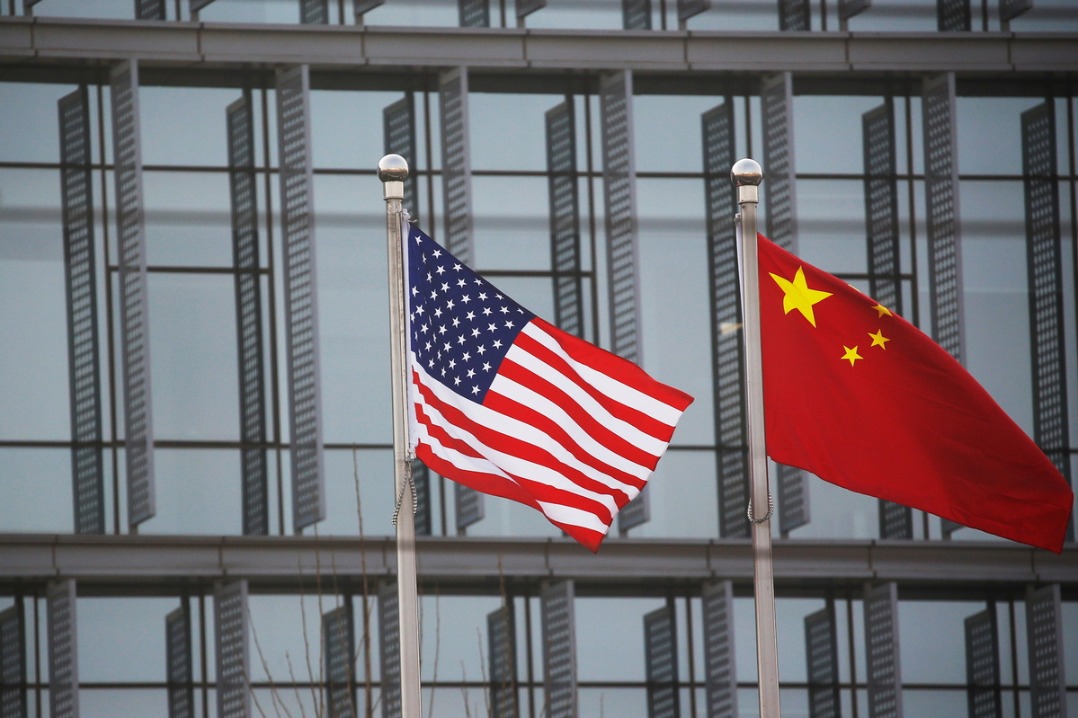
The two political parties in the US have technically downgraded the otherwise most testing challenge, if not an art, of handling the most consequential bilateral ties with China into a containment strategy that is devoid of flexibility, wisdom and foresight.
The great lengths that Washington has been going to in its efforts to coerce US allies and other countries to jump on its anti-China bandwagon at the cost of bending international laws and rules actually backfires on the US itself. Not to mention the moral burden and material inputs its policy requires.
The world sees clearly that the US is using the unfair means that it accuses China of employing, including state subsidies, protectionism, tariff wars and dumping overcapacity, to maximize the US' hegemonic interest over other countries, including its allies.
While China is helping underdeveloped countries improve their infrastructure, public services and governance, the US is trying to instigate domestic unrest in them to persuade the people to embrace the US, smearing Chinese engagement as a geopolitical tool of Beijing. While the US is dictating to other countries on the nobleness of human rights and trying to weaponize human rights issues to justify its interventionism, China is taking down-to-earth actions to put meat on the bones of the human rights that the US professes to uphold, implementing one project after another to enhance people's livelihoods around the world.
China avoids plunging itself into costly geopolitical quagmires as the US has done over the ongoing Russia-Ukraine conflict and the Middle East crisis. Washington has never explained to the US people in which way the country has benefited from its 20-year "democracy experiment" in Afghanistan, and an equally protracted process in Iraq where thousands of US lives were squandered.
Although the US seems to boast a much larger network of allies in the world, which requires its input to maintain the network's specious cohesion, that limits its international space to some extent, as the US divides countries into those that are members of the US club and those that are not. China's diplomatic outreach is broader as it strives to have good relations with all countries and regions in the world based on equality, mutual respect and win-win cooperation, all of which form the bedrock of international laws and the norms of international order. The zero-sum game the US peddles naturally pales in contrast with Beijing's proposal to make the cake bigger for all, given the latter's pertinence to countries' practical needs.
In many cases, particularly to the vast majority of countries of the Global South, it is China's noninterventionist approach to foreign relations, which is centered on respecting state sovereignty, that puts Beijing on a higher moral ground than Washington, whose "America-first" practices and exceptionalism seriously depreciate the value of the US' diplomacy.
Last but not least, like any other country, except the US, China regards war as the option of last resort, recognizing that it is the most harmful means, in both strategic and economic terms, to resolve conflicts of interest between countries. So while China is trying its best to use diplomatic means to avoid wars, the US is doing the opposite.
The only thing Washington has omitted lashing out at China for is copying US diplomacy.