AIGCs' copyright question needs answering









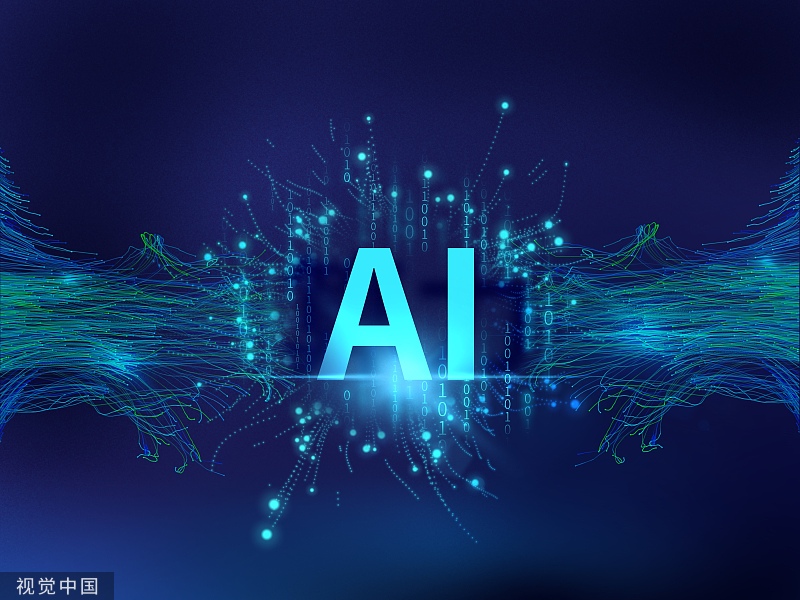
The rapid development of emerging technologies such as big data, artificial intelligence and cloud computing has had a profound impact on people's daily lives as well as the legal system.
A big question rattling both sociologists and legal experts is whether artificial intelligence-generated content (AIGC) should be protected by intellectual property and property laws. China's existing laws do not have detailed provisions for intellectual property rights related to AI. So the 14th Five-Year Plan for National Intellectual Property Protection and Planning has proposed to "improve intellectual property protection policies, and establish a sound intellectual property protection system for new fields and formats such as big data, artificial intelligence, and genetic technology".
Making clear the position of AIGC in intellectual property laws is key to exploring the AI issue from the perspective of IPRs. It is especially important to determine whether AIGC fulfills the requirements for being protected by IP laws, such as whether the products generated by AI meet the conditions for protection under the Copyright Law and whether the AI-assisted inventions and creations qualify to be protected by the Patent Law.
The mainstream view of Chinese academia on IP law is that AIGCs have creativeness and should be considered intellectual achievements. On the other hand, the minority view is that creations protected by copyright must be products of natural persons' intellectual labor, and AIGCs are devoid of this characteristic.
Several typical copyright disputes involving AIGC have occurred in China in recent years, and it is affirmed that the majority of AIGCs are protected by copyright.
In the recent "Dreamwriter" case, the Nanshan District People's Court in Shenzhen said the content created by users with the help of AI meets the conditions for being protected by the Copyright Law, suggesting that AI-generated works ought to be protected by the law. The judgment was in favor of the plaintiff, Shenzhen-based tech giant Tencent, and against the defendant.
In the "Stable Diffusion" case, too, the Beijing Internet Court held that the works generated by users with the help of AI are original works protected by the Copyright Law, and users can become the owners of such works.
However, in the "Feilin v. Baidu" case in 2019, the Beijing Internet Court ruled that the works protected by the Copyright Law should be the result of the intellectual labor of natural persons, and denied copyright protection to the works involved.
With the development of generative AI technology, AIGCs have evolved into Sora (a generative AI model developed by OpenAI which specializes in text-to-video generation). In fact, IPR issues involved in AI are not limited to whether the products generated by AI are protected by IPR laws, they also include other issues — for example, the identity of the author of an AI-generated work, the identity of the inventor of AI-generated inventions and creations, the corresponding ownership of IPRs, and the legal liability of AI service providers for IPR infringement of AI-generated products.
Departmental regulations are occasionally used to analyze the nature and legal status of AIGC. For example, Article 4 of the Interim Measures for the Management of Generative Artificial Intelligence Services, which came into effect on Aug 15, 2023, says the provision and use of generative AI services should respect IP rights.
And Article 7 stipulates that providers of generative AI services shall conduct training for data processing including pre-training and optimization training in accordance with the law and use data and basic models from legitimate sources. Besides, none should infringe upon the IP rights of others.
The lack of laws and regulations on AIGC raises the risk of legal disputes over IPR issues, especially because of the increasing application and industrialization of AI technology. The cases mentioned above are a testament to this.
Given the challenges created by the development and industrialization of AI, the AI sector should strengthen legislation on AIGC. This is especially important because while the European Union has already enacted an AI bill, China is still conducting research to finalize a draft, and the AI Act has been included in the legislative plan.
The lawmakers in China should reach a consensus on the positioning of AIGC in the Copyright Law, and make clear the intellectual property of AI-generated products. On the other hand, it is necessary to distinguish between text and data mining for data training in AIGC and recognizing their nature for possible fair use in order to promote the AI industry's development.
And to maintain the order of the cultural market and encourage natural persons to use intellectual labor to produce new products, mandatory attribution rules need to be established for AI-generated works to distinguish between natural persons' original works and AI-generated works.
It is also necessary to make clear the legal status of AI-generated inventions and creations, and make necessary modifications to the rules and patent-determining guidelines accompanying the Patent Law to scrutinize patent applications for AI-generated inventions and creations.
As for AI service providers using AI to infringe on the IP rights of others, it is necessary to strengthen anti-IP infringement rules in the field of AI, make clear the subjective fault standards and fix accountability for such infringements.
With the development of generative AI technology and the industrialization of AI technology, new IPR issues are bound to arise. Therefore, a balance should be struck between protecting IPRs and promoting the development of AI technology and industry.
The author is a chair professor at Jimei University and a professor at China University of Political Science and Law.
The views don't necessarily reflect those of China Daily.
If you have a specific expertise, or would like to share your thought about our stories, then send us your writings at opinion@chinadaily.com.cn, and comment@chinadaily.com.cn.