The fallacy of three worlds system theory










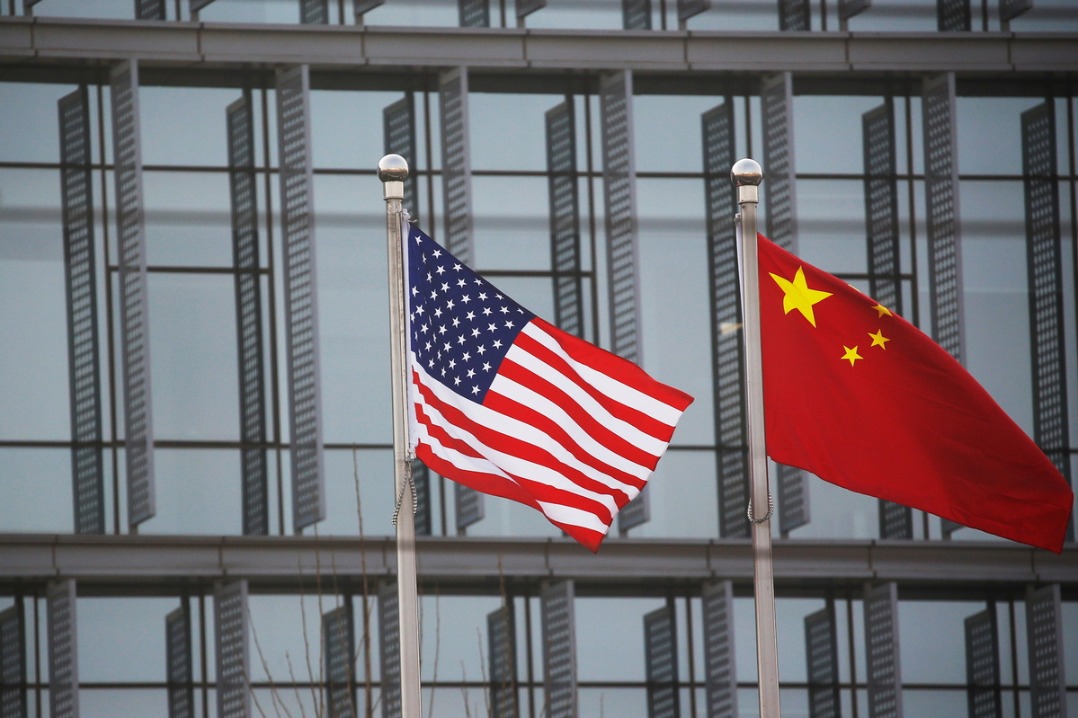
On 31st, January 2024, International Affairs published an article Three Worlds: the West, East and South and the Competition to Shape Global Order, authored by G. John Ikenberry, a theorist of international relations and US foreign policy and professor at Princeton University's Woodrow Wilson School of Public and International Affairs. He argued that the modern world consists of three country blocs: the global West, the global East and the global South. The global West is led by the US and Europe, the second by China and Russia, and the third by an amorphous grouping of non-western developing states, led by India, Brazil and others. In this emerging "Three Worlds", China and the US each occupy a polar by virtue of their respective economic, military, technological, demographic and other forces, but the role of the global South as a collective, system-wide power cannot be ignored.
He then offered a four-point prediction of the three-world system. First, the competition between the three worlds is likely to last a long time, but none of them will win it easily because of their different political philosophies, positions in the global landscape, and different levels of development. Second, in order to gain an advantage in the competition, the global West and the global East will actively seek the support and cooperation of the Global South. Third, the existing principles of the world order, such as the Westphalian principles of territorial sovereignty and non-intervention, and the United Nations principles of sovereign equality, self-determination, sustainable development and social justice, have led to the return of the "Three Worlds." Finally, although the global West will have the upper hand in this long-term competition due to its superiority in comprehensive power, wealth, technology, and military, it will no longer be able to dominate the world as a geopolitical and ideological giant.
The author’s judgment on the future world order is reasonable to some extent. For example, the West will not be able to override the international order in dealing with international issues as before; countries in the global South are increasingly pursuing non-interference in territorial sovereignty, sovereign equality, self-determination, and fairness and justice of the international community; the West has to actively cooperate with the global South. As a scholar, however, his view is not based on the reality of present international relations, but out of consideration for the interests of the West. His “Three Worlds” system theory and the concept of the global East aim to spoil the close relationship between China and developing countries, deliberately cover up the antagonistic nature of the global North-South, erase China's contribution to the developing world, and provide a false theoretical basis for the West to prolong its hegemony in the future.
First of all, the global East is an artificial concept constructed by western scholars to serve the needs of the West in the geopolitical game. Obviously, the global East is a geographical concept, not a political one. Classifying China as the "global East" and separating China from the global South is related to the change in the status of the global South in the international economic pattern, which shows the anxiety of the West over the increasing influence of the global South in the international community. The global South, where 88 percent of the world's population lives, is no longer a passive player on the world stage, but the engine of the world economy. According to the Organisation for Economic Co-operation and Development, India's gross domestic product will surpass that of the US by 2050; By 2060, the combined GDP of China, India and Indonesia will reach $116.7 trillion, accounting for 49 percent of the global GDP and three times the size of the US economy. Therefore, the attempt of the West to cancel China's developing country status and cut China off from the global South is a strategic adjustment for fear of the rapid development of the South. Its purpose is to divide and rule the global South, undermine the unity and economic development momentum of the BRICS, stop Belt and Road Initiative weaken China's influence within the bloc, and finally prevent China from peaceful rise and national rejuvenation. At the same time, the West will take advantage of its remaining influence in the international system to both intimidate and woo countries like India and Brazil by promising them political, security and economic support to serve the interests of the West and slow down its decline of hegemony.
Second, the US denies China's developing country status only out of political considerations, not out of the reality of the social development of China. From 2022 to 2023, US politicians have been making efforts to "revoke" the developing country status that China enjoys. Finally, in March 2023, the US House of Representatives passed the so-called "China is Not a Developing Country Act", requiring international organizations and international treaties not to classify China as a developing country in the future, and the US Senate Foreign Relations Committee passed the bill later.
It is undeniable that China has made remarkable achievements in the past few decades and has become the second-largest economy in the world. China does face the dilemma of national identity caused by the superposition of "great power" and "developing country", but, certainly, China is still a developing country. This fact has been recognized by several international organizations. In its report "Building a Global South" in December 2004, the United Nations Development Programme explicitly listed China as a country in the "Global South". The Statistical Manual published by the United Nations Conference on Trade and Development classifies all countries in the world, including "developed countries", "developing countries" and "least developed countries", and China belongs to the "developing country". According to GNI per capita, the World Bank divides countries in the world into low-, middle- and high-income countries. For example, on July 1, 2023, it considers countries above $13,845 to be high-income, countries below $13,845 to be middle-income (including China), and countries below $1,135 to be low-income. According to the World Bank's criteria, China has not yet entered the ranks of high-income countries. Therefore, the primary factor that determines a country's level of development is not the size of its economy, but its actual level of development.
Third, the “Three World” theory aims to blur the fact of the global North-South economic gap and cover up the essence of the North-South confrontation. The global South is neither a strictly geographical concept, but a metaphor with characteristics of political economy. The definition of the global South is characterized as: 1) a bloc of poor and marginalized countries; 2) the former colony that pursued the spirit of solidarity of the Bandung Conference and the Non-Aligned Movement; 3) not specific countries but a force that is opposed to the monopoly of the Global North in the world system, to neoliberalism and hegemonism. For a long time, the global South has been marginalized and disadvantaged by capitalist globalization and the Western-dominated governance system. After the Cold War, the global South was often used to refer to the Third World or the developing countries. Many countries in the global South have a history of colonialism, racism and imperialism. There has been widespread disillusionment in the countries of the global South with the so-called "liberal international order" since WWII. To many, the so-called "rules-based order" seems only to serve the interests of the West, not that of the South. The opposition of the global South to the "double standards" of the West and rejection of a "new Cold War" are growing stronger. For example, after the Russia-Ukraine conflict in 2022, the global South no longer blindly followed the instructions of the West, and developing countries such as China, Brazil, India, South Africa, and Indonesia refused to join the US-led multilateral sanctions against Russia.
Fourth, China is a natural member of the countries of the global South, sharing wealth and woe with them. The same historical experience, economic development circumstances and demands of the time have closely linked China and the countries of the global South. At the very beginning of the founding of the People's Republic of China, when the country's financial resources were tight and there were many domestic challenges to be done, China began to pay attention to the people’s livelihood and the cause of seeking development of the other developing countries, provided them economic assistance to its best ability, and gave political support to their struggle for national independence and liberation. With the increase of China's economic strength since the reform and opening up, China's foreign aid to other developing countries has become richer in content and diversified in forms, which has further promoted South-South cooperation. For example, from 2015 to 2020, China provided developing countries with "six 100" projects, including 100 poverty reduction projects, 100 agricultural cooperation projects, 100 aid for trade projects, 100 ecological protection and climate change projects, 100 hospitals and clinics, 100 schools and vocational training centers, and training 500,000 vocational and technical personnel. China has set up an Academy of South-South Cooperation and Development and provided US $2 million in cash assistance to the World Health Organization. Without doubt, China has contributed Chinese wisdom and injected Chinese strength to solving global development problems, promoting South-South cooperation and implementing the United Nations 2030 Agenda for Sustainable Development.
Finally, the West is unwilling both to provide substantial assistance to the development of the global South and to understand the real aspirations of backward countries. The author emphasizes the importance of the global West in winning the support and cooperation of the global South, but the West is only keen to promote the so-called liberal democratic values and its elusive human rights and does not understand that the right to survival and development is the priority of many developing and poor countries. The West regards the global South as a geopolitical tool rather than an equal partner. Having been influenced by old and new colonialism, the theory of white racial superiority, and accustomed to a high-welfare social life, it is hard for the Western countries to understand what food, roads, housing, schools and hospitals mean to the less developed countries.
Many countries of the South aspire to live, to be treated fairly in the international world, to live a life of dignity, to become real sovereign states and to be treated with basic respect. Chinese have experienced and felt the sufferings of countries in the global South, and cannot bear to see similar human tragedies happen again. Therefore, China has always firmly supported the just struggle of developing countries to safeguard their own sovereignty, security and interests, and dared to speak up and make a just voice on behalf of these countries. We stand for upholding the international order based on international law, safeguarding international fairness and justice, and oppose the use of military, political, economic, or other means to impose unilateral sanctions on other countries. When assisting other developing countries, China therefore has been following the propositions of mutual respect and equal treatment; focus on the development and improve people's livelihood; teach people to fish and develop independently; openness and inclusiveness, exchanges and mutual learning.
In short, the “Three World” theory is a reaction of western scholars to the dilemma of the West, such as the gloomy economic prospect, the overall challenge to liberal democratic values, and the intensifying conflicts of the West with developing countries, but it is doomed to fail, for the West has neither the capacity nor the will to offer the global South what it wants. Therefore, the correct approach should be to get out of the vicious circle of the Cold War ideology, return to the track of globalization, treat the southern countries in the pragmatic spirit of equality, mutual benefit and cooperation, share cutting-edge technology with them, respect diverse cultures, and embrace the concept of a community with a shared future for mankind.
Guo Jiulin is a professor of American studies at Dalian Minzu University.
The views don't necessarily reflect those of China Daily.
If you have a specific expertise, or would like to share your thought about our stories, then send us your writings at opinion@chinadaily.com.cn, and comment@chinadaily.com.cn