Green shoots, deep roots of a shared future










The ongoing 2024 Summit of the Forum on China-Africa Cooperation promises to be a milestone in the development of China-Africa relations. Following the historic summits in Beijing (2006 and 2018), Johannesburg (2015), and Dakar (2021), Chinese and African leaders have once again gathered in Beijing to explore new ways of strengthening Sino-African ties and fortifying the Global South amid the fast-changing international landscape, and increasing challenges and uncertainties.
The summit, the largest diplomatic event in China this year, has garnered global attention, with many expecting it to offer constructive answers to the pressing questions of how to maintain global peace and promote development, and boost China-Africa cooperation.
As the world's largest developing country and the continent with the highest number of developing countries, China and Africa have always prioritized cooperation and partnership. That Xi Jinping chose Africa as his first overseas visit after being elected as president of China in March 2013 shows the great importance China attaches to Sino-African relations. During that visit, President Xi declared in Tanzania that China and Africa are like a community with a shared future.
Since then, China has deepened cooperation with African countries across multiple sectors with fruitful results, with the two sides working together to build a China-Africa community with a shared future. But given the turbulence and rapid changes, characterized by great power competition and economic instability, the world is experiencing, people across the world desire peace and development more than ever before.
However, the changes in the global political and economic landscape present both risks and opportunities. As such, optimizing the structure and model of China-Africa development cooperation is crucial for further strengthening Sino-African friendship and deepening cooperation within the Global South, as well as creating a favorable external environment for China to realize its goal of becoming a modern socialist country.
African countries have expressed their interest in learning from China's development experience. While African countries seek to expand their development cooperation with China, they also expect China to further refine its policy toward Africa. Their evolving demands are distinct, emphasizing the need for industrial upgrading, regional economic integration, sustainable development and deeper collaboration in nurturing talents.
In recent years, African countries have been working to boost regional economic integration based on the ambitious blueprint outlined in the African Union's Agenda 2063. Regional integration will improve the overall business environment in Africa, and attract more Chinese investments, thus boosting the continent's economic development.
One of the key goals of the African Continental Free Trade Area, which went into operation in 2021, is to build a comprehensive regional value chain. Also, African countries are eager to strengthen collaboration with China to advance economic integration, especially in areas such as transport infrastructure and digital connectivity, to clear the bottlenecks hindering regional trade.
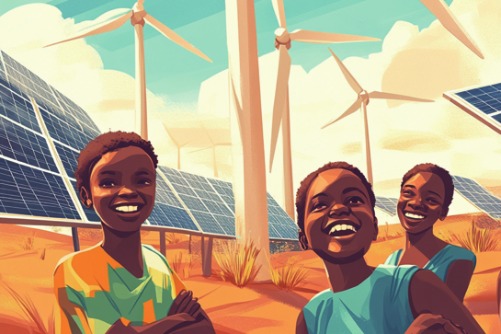
Moreover, environmental protection has become a central issue on Africa's sustainable development agenda. African countries are keen to learn from China's experience in ecological governance and deepen cooperation in this area. This means China and Africa are likely to focus on environmentally-friendly and resource-efficient projects, such as green energy initiatives and water resource management. Increased investment in renewable energy, including in solar, wind, and hydropower, will reduce Africa's environmental pressure, helping it to achieve the United Nations'2030 Agenda for Sustainable Development and the African Union's Agenda 2063.
China has mutually beneficial partnerships with African countries. From supporting Africa's anti-imperialist and anti-colonial struggles to helping build a China-Africa community with a shared future, China has engaged with African countries across different fields over the past seven decades, and helped the African countries meet their needs by deepening multi-layered, unconditional development cooperation through different platforms.
But since African countries vary significantly in terms of their political and social governance capabilities, development levels, and capacity for green transition, with some not having the resources to combat climate change, China should adopt different approaches to engage with different African countries while making sincere efforts to foster collective development.
The key to Africa achieving self-reliance in different fields lies in generating internal growth momentum. Keeping this in mind, China has always exercised caution when considering Africa's financial needs, focusing on the efficiency and effectiveness of investments.
Meanwhile, the Belt and Road Initiative has encouraged Chinese "green "enterprises to invest and expand their businesses in Africa, and share green transition technologies with the African countries, and deepen cooperation in renewable energy and related industries. China has also been promoting "small and beautiful" projects in Africa in fields such as agriculture and healthcare.
Committed to peaceful development and reform, China will continue to help maintain global peace and uphold international justice, while contributing to the global modernization process, particularly the revitalization of the Global South. In this regard, the ongoing FOCAC Summit is expected to consolidate the traditional Sino-African friendship and cooperation, and boost the development of a high-level China-Africa community with a shared future and safeguard the common interests of the Global South.
The author is executive dean and a professor with the School of International Relations at Nanjing University.
The views don't necessarily reflect those of China Daily.