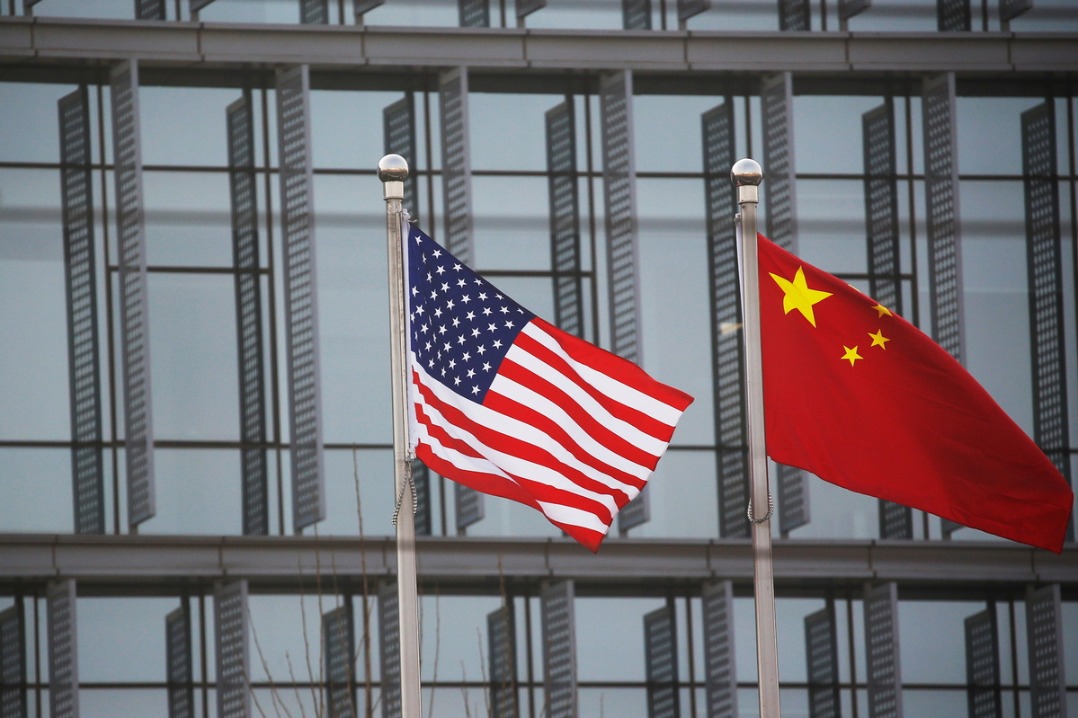
Washington's false overcapacity claim convincingly debunked









The United States, through its official remarks, has been creating a false narrative about China's so-called overcapacity, while claiming that China has increased its production capacity and exports at the expense of other countries. Some Western leaders and media even argue that China's economic growth is heavily reliant on exports, which poses a threat to the global economy. That these claims lack factual basis and suggest the US-led West has a hidden agenda is obvious.
Contrary to what US officials claim, China is not any more dependent on exports for economic growth than other developing countries. From 2020 to 2023, China's total merchandise exports is equivalent to about 17.9 percent of its GDP. For comparison, developing economies' average is 17.7 percent, while developed economies have a much higher average (of 35.8 percent). It is therefore clear that China's economy is less dependent on goods exports than many developed economies.
Moreover, US practices contradict its claims that China's industries have massive overcapacity. The US complains that sectors such as solar cells, lithium batteries and electric vehicles (EVs) in China have been oversupplying and causing global overcapacity. Yet the US has invested more than $860 billion in the clean energy and semiconductor sectors due to Biden Administration's Investing in America agenda. If the US respects market principles, why is it investing huge amounts in sectors that supposedly have overcapacity?
The contradiction between what the US claims and its own policy underscores the hypocrisy of its stance on overcapacity. The Biden administration's large-scale interventions in certain sectors mirror the actions it criticizes China for. This double standard shows the US' overcapacity narrative is more about geopolitical strategy than economic facts.
The global economy has been grappling with numerous challenges, and the US is using the false overcapacity narrative as a tool to justify its trade protectionism and bolster its strategic competition with China, rather than helping the world overcome those challenges.
By propagating the false overcapacity narrative, the US is trying to use a pretext to protect its industries from foreign competition. In essence, its claim that China is causing global overcapacity is a convenient excuse to impose more punitive tariffs on imported goods to shield US companies from global competition.
Promoting the false overcapacity narrative allows the US to justify its aggressive economic stance and interventions in strategic industries. By alleging that China's industrial expansion is harmful to the global economy, the US is trying to prove its own policies are necessary and justified in a bid to "protect" its domestic interests. In reality, the US is trying to curtail China's industrial growth to revive its own manufacturing sector.
The overcapacity argument also serves as a smokescreen to distract people from the fact that the US' own economic policy has exacerbated global economic imbalances. Critics often overlook the fact that the US' fiscal and monetary policy has had profound spillover effects, which have contributed to the very global economic instability it claims to be addressing.
After taking office, Biden implemented large-scale fiscal stimulus measures, which have raised the US' debts to record levels, caused high inflation and led to soaring interest rates. The US' total debt has reached $35 trillion — equivalent to the combined economic output of China, Germany, Japan, India and the United Kingdom. This immense debt poses a severe challenge to US economic governance and limits its ability to respond to future economic recessions. As the US faces growth deficits, neither the Democrats nor the Republicans have shown any real willingness to introduce policies that would curb spending or reduce the national debt.
The US' ballooning debt and persistent fiscal irresponsibility have triggered growing concerns among other countries and international institutions. And more and more countries are concerning the US dollar's status as the world's primary reserve currency, with economists like Paul Krugman warning that the US' debt might become unsustainable as interest rates outpace GDP growth.
The US Federal Reserve's tightening of monetary policy to combat inflation has had widespread negative spillover effects on the global economy. Rising US bond yield has caused ripple effects across global financial markets, tightening financial conditions worldwide and creating turmoil, particularly in emerging markets. As the International Monetary Fund reported in 2023, more than half of the low-income countries are either at or near high risk of debt distress.
In many ways, the US' monetary policy has not alleviated but exacerbated global imbalances. By taking controversial measures to control inflation at home without regard for their global impacts, the US has contributed to the instability in the world economy.
The US should take responsibility for the global repercussions of its fiscal and monetary policy rather than deflecting blame onto China with unfounded claims of overcapacity. The interconnected nature of the global economy demands that governments, especially of major economies such as the US, engage in responsible macroeconomic policy coordination. The false narrative of Chinese overcapacity is a convenient excuse for the US to resort to protectionism, which will fail to address the deeper issues of global economic governance that the US has played a significant role in creating.
The author is an associate researcher at the Institute of American Studies, Chinese Academy of Social Sciences.
The views don't necessarily represent those of China Daily.
If you have a specific expertise, or would like to share your thought about our stories, then send us your writings at opinion@chinadaily.com.cn, and comment@chinadaily.com.cn.