Chinese botanists protect plants in Africa
Research reveals intricate web of factors that govern diverse habitats and living conditions of endangered species










Endangered giant trees
The baobab tree, often referred to as the "tree of life" in Africa, is revered for its multifaceted utility. Its fruits are edible, and its massive trunks store water, serving as a vital resource for nearby communities and wildlife during dry seasons.
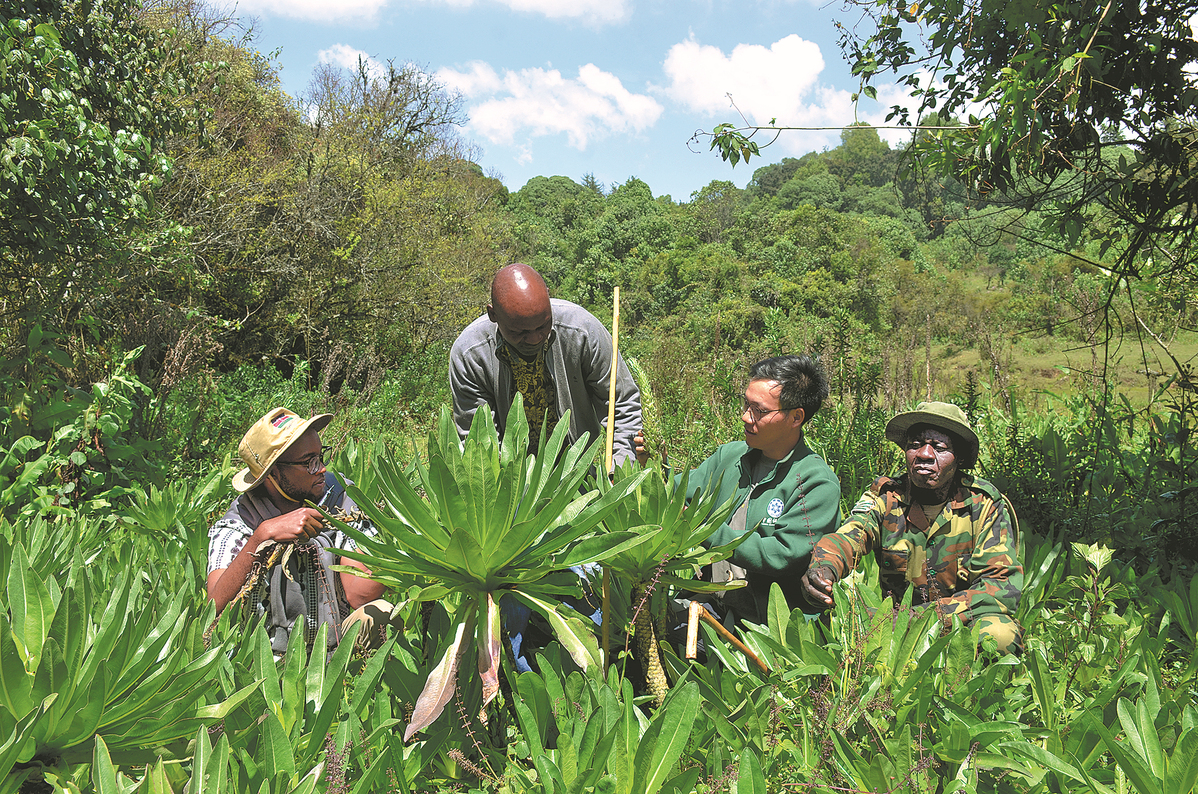
Baobab trees encompass eight globally recognized species within the Adansonia genus, seven primarily found in Africa and one in Australia. Wang's fieldwork in Madagascar has revealed the diverse habitats where baobab trees thrive.
"Before I visited Madagascar, I thought baobab trees only lived in the drier regions of Africa," he said. "But in Madagascar, I saw different species of baobab trees, living in diverse habitats. For example, in northern Madagascar, there are many baobab trees growing in forests. They are called the 'mothers of the forest' by the locals."
They can also grow in villages and cities, he added.
During their field surveys, Wang and his colleagues encountered three endangered species within the baobab genus. Of particular concern was Adansonia perrieri, with fewer than 200 individuals remaining in the northernmost region of Madagascar. Classified as critically endangered, these trees face the looming threat of extinction in the wild.
While Adansonia suarezensis is distributed over even smaller areas compared to Adansonia perrieri, the former is only classified as endangered due to its bigger population size.
Adansonia grandidier, despite its frequent appearance in photographs showcasing Madagascar's baobab trees, is also categorized as endangered due to its restricted distribution in western Madagascar.
As Wang and his colleagues conducted their survey and collected samples in the wild, they came to the profound realization that the endangered status of many baobab species may have been underestimated.
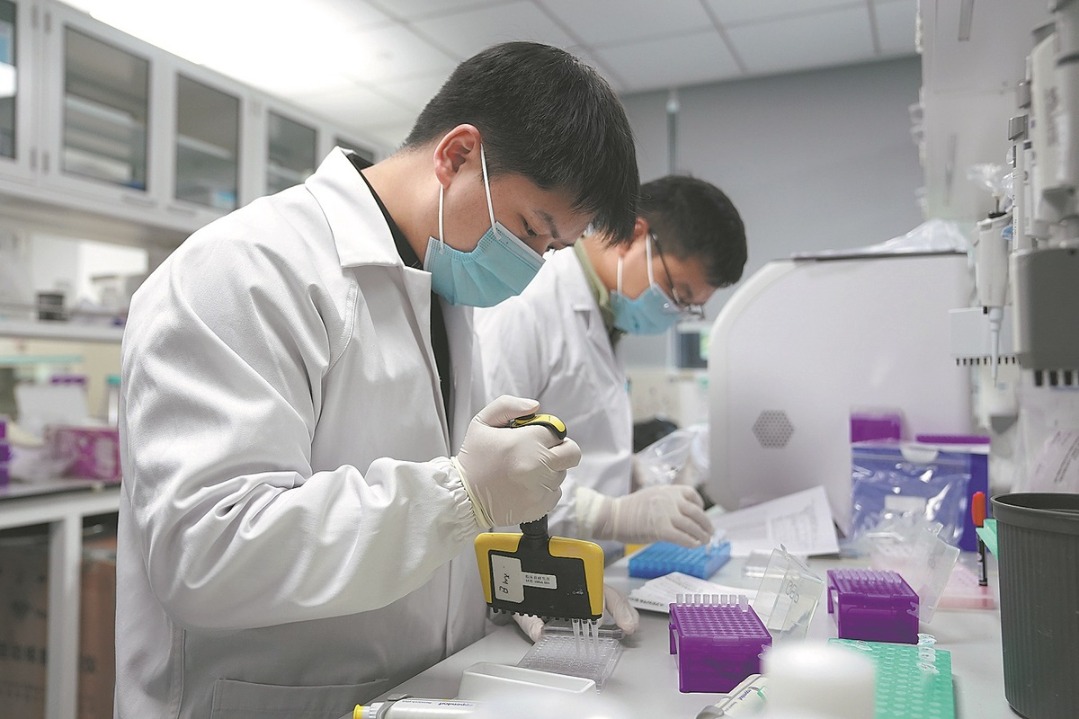
Upon returning to their laboratory, Wang and his colleagues started a series of experiments and data analyses. By integrating genomics and ecological data in a comprehensive manner, they reconstructed the global evolutionary history of baobab trees.
Their research revealed findings regarding the population dynamics and habitat adaptability of the trees over the past million years. They observed a pattern of population increase followed by decline, with the three endangered species experiencing more rapid declines. Among the species studied, Adansonia za demonstrated a remarkable ability to adapt to various habitats, while other species had more restricted and smaller ranges.
These discoveries prompted a reassessment of the conservation status of Adansonia suarezensis, leading the researchers to recommend upgrading its classification to critically endangered. Their research was published in an article titled "The Rise of Baobab Trees in Madagascar" in the journal Nature in May.
After the publication of the article, Wang said, their work will expand to conservation of baobab trees in Madagascar. They carried out health checks on some of the older baobab trees and encouraged local villagers to collect the plants' seeds, cultivate saplings and plant them in their natural habitats.
"At a village in northern Madagascar, I purchased 20 baobab tree saplings and became the villagers' first customer," Wang said. "Then I donated the saplings to the University of Antananarivo in the country's capital. They are now growing on the campus of the university."