Chinese botanists protect plants in Africa
Research reveals intricate web of factors that govern diverse habitats and living conditions of endangered species











Finding new populations
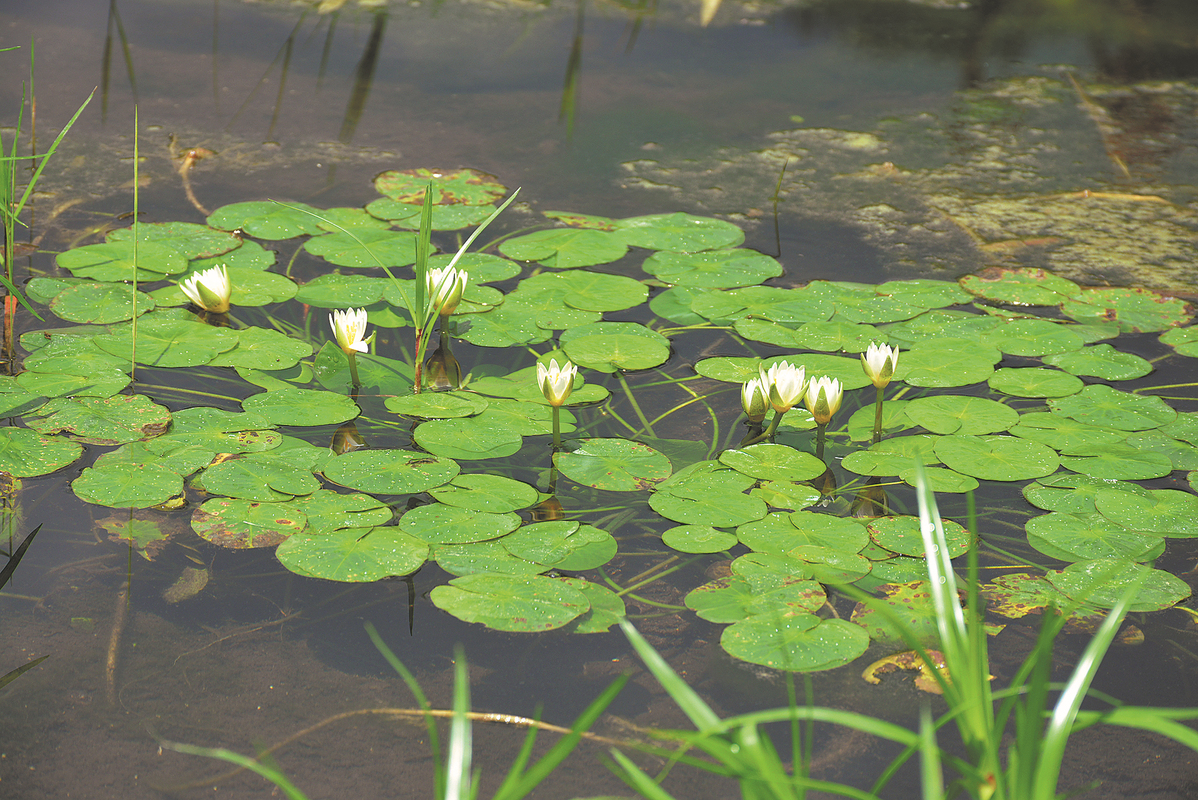
Wang's research work also led him and his colleagues to Rwanda, where they gained a deeper understanding of dwarf Rwandan water lily (Nymphaea thermarum), the world's smallest water lily species once thought to be extinct in the wild.
Nymphaea thermarum was discovered in 1987 by German botanist Eberhard Fischer. The epithet thermarum refers to the hot spring and temperature that provided its native habitat.
The plant's native habitat was damp mud formed by the overflow of a freshwater hot spring in Mashyuza, southwestern Rwanda. Unfortunately, due to residents clearing the spring's river to cultivate farmland, the habitat disappeared, leading to the extinction of the plant population.
The last recorded photograph of the plant was in 2005, and by 2008 the species was officially declared extinct in the wild.
Fortunately, Fischer had foreseen the risk of extinction for this species. He took prompt action by transferring seeds and some plant specimens to the Botanical Garden in Bonn, Germany, for preservation. Later the Bonn Botanical Garden shared these resources with the Royal Botanic Gardens in Kew in the United Kingdom for ex-situ conservation.
In 2009, Kew successfully propagated a batch of dwarf water lilies from the seeds, indicating that although the species had gone extinct in the wild, it had not completely disappeared as it continued to thrive in botanical gardens and laboratories.
In July last year, an exciting piece of news spread throughout the scientific community when botanist Thomas Abeli rediscovered this rare water lily in northwestern Rwanda.
The discovery surprised Wang and his colleagues, igniting a strong desire to conduct further research. Fortunately, they had a joint field biodiversity survey with the University of Rwanda scheduled for November 2023, providing them with the opportunity to look for the water lily.
Where did Abeli find the first population? Surprisingly, Wang said, it was next to a pathway in a village, with mango trees on one side and fields growing bananas and pineapples on the other.
The second population discovered by Abeli was even more miraculous — it was in a fishpond. The water lilies in this pond were abundant, with larger plant specimens and larger flowers.
After finding the two populations, Wang's colleague, Wei Neng, pointed out that there were likely other populations nearby. As a result, they centered their search around the two populations discovered by Abeli and conducted a systematic search within a few kilometers of the area.
Fortunately, they did discover new populations.
The first location, two to three kilometers from Abeli's sites, was a small ravine between some rice fields and an area where local farmers planned to grow medicinal herbs. They noticed that the population was not large, with only about a dozen plants. Then, they saw a hot spring waterfall nearby, with water temperatures exceeding 40 C.
The discovery of the second population left them astonished. In the middle of a cornfield pathway, they observed thousands of the water lilies densely growing.
"It was Nov 20, a day I will never forget. I and Dr Wei Neng were fortunate to witness plants that we had only seen in documentaries and books before. What was even more exciting was that we discovered entirely new populations of the plant."
They talked with the locals. Some elderly villagers aged over 60 told them that the plant had always been present in the areas where they grazed sheep during their childhood. "So, why was there talk of extinction before?" Wang said. "The reason is simple: our botanical surveys were not thorough enough, and we did not venture into this particular region. This has provided us with valuable insights. When determining whether a species is extinct or assessing its endangered status, we must exercise caution and refrain from rushing to conclusions."
However, the conservation work for the dwarf Rwandan water lily has only just begun. Many questions regarding this species remain unanswered, Wang said, such as what its life cycle entails.
"Most of the information currently available is derived from preserved samples in Kew Gardens or other botanical gardens, rather than observations from wild populations, making it not entirely accurate," he said.
"Also, we need to accurately describe its morphological characteristics, study its genetic diversity, determine its position in the evolutionary process, and understand how it adapts to the hot spring environment. These questions all require further research and resolution."
Currently, less than 60 percent of African plants have been assessed and classified for their endangered status by the International Union for Conservation of Nature, indicating that a large number of plant species have yet to be evaluated.
"So we still have a lot of work to do," Wang said. "The work we are conducting in Africa is a reflection of our response to the global call for biodiversity conservation."
chenliang@chinadaily.com.cn