Charting Nepal's path to progress with China










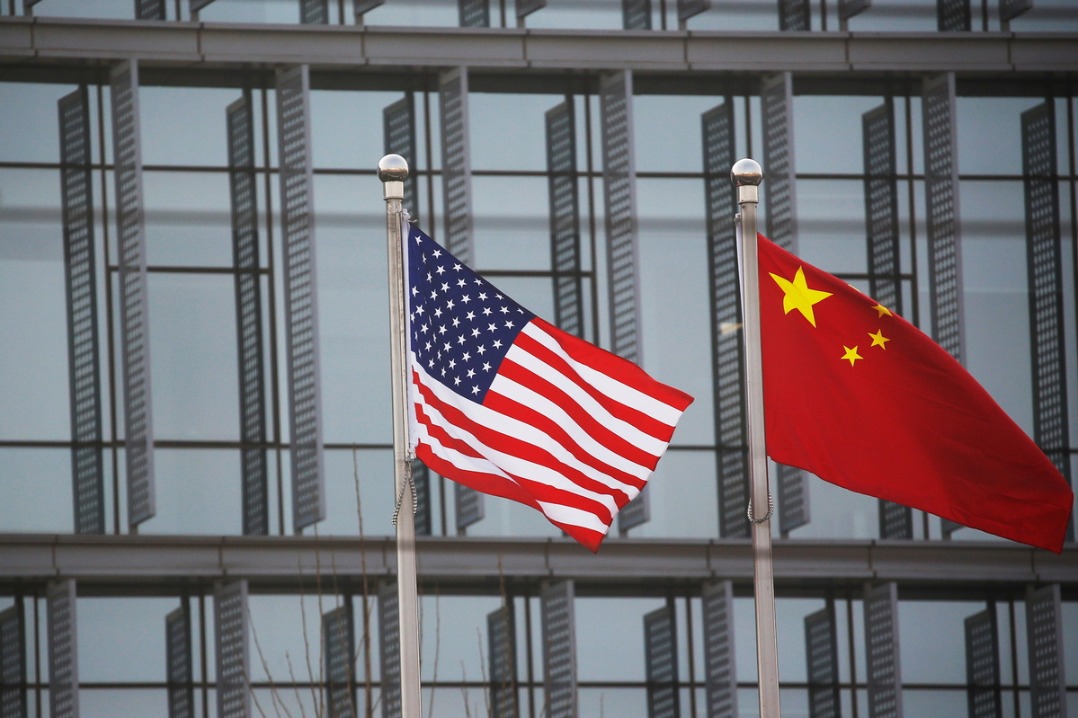
Nepal's Prime Minister K.P. Sharma Oli is on an official visit to China from Monday to Thursday during which the two sides are expected to discuss new ways to revive the Belt and Road projects, which have failed to materialize even seven years after being signed. The visit will also allow the two countries to contemplate their historical ties, forged under the shadow of the mighty Himalayas.
Nepal and China share a 1,414-kilometer border and an even longer history of camaraderie, marked by the exchange of knowledge, including science and technology. The early interactions between Nepal and China were primarily religious and philosophical in nature, with figures like Buddhabhadra, Faxian and Xuanzang contributing to the spread of Buddhism in China. A significant historical figure in this relationship is Araniko, a Nepali artisan who traveled to China at the age of 18 and contributed to numerous architectural and artistic projects in China, including the iconic White Pagoda in Beijing.
Araniko's collaboration with Chinese astronomer Guo Shoujing on advanced astronomical equipment shows his expertise in science and technology. Though forgotten in Nepal for centuries, his legacy was revived through Chinese historical records, which revealed his great contributions to art and science.
Amid the fast-paced developments of the 21st century, Nepal and China are striving to embrace the winds of change and meet the aspirations of their people. China has made monumental strides on the economic front, becoming a global economic powerhouse with GDP of $17.79 trillion. On the other hand, Nepal is poised to graduate from its least-developed country status. This transition will be a crucial milestone in Nepal's developmental journey, marking a shift from reliance on international support to becoming self-reliant.
China's remarkable economic leap owes much to its focus on research and development. From 1990 to 2020, China's per capita GDP grew from $318 to $10,409. During the same period, its gross investment in R&D increased from 0.8 percent to 2.4 percent of GDP. This strong correlation between R&D investment and GDP growth underscores the transformative power of science, technology and innovation.
In fact, China has further increased its investment in R&D. According to the National Bureau of Statistics, China invested $470 billion, or 2.65 percent of GDP, in R&D in 2023.
Besides, global poverty remains one of the biggest challenges that modern development efforts must address. China has emerged as a global leader in poverty alleviation, lifting an astounding 800 million people out of poverty in the past more than four decades.
Speaking at the recent G20 Summit in Rio de Janeiro, Brazil, President Xi Jinping underscored China's developmental journey thus: "If China can make it, other developing countries can make it too." His statement serves as an inspiration for countries striving to end the vicious circle of poverty, as well as a reminder that poverty alleviation demands sustained efforts and a well-crafted strategy. And central to this endeavor is the role of science, technology and innovation.
This is Oli's third visit to China as Nepal's prime minister. During his earlier two visits, in 2016 and 2018, the two sides signed more than a dozen agreements, including a memorandum of understanding on cooperation in railway projects. Also, nine agreements were signed between Nepali and Chinese enterprises. Nepal should review these agreements, prioritize the key initiatives and implement them to translate its commitments into tangible outcomes.
An MoU on cooperation under the framework of the Belt and Road Initiative was signed by Nepal and China in 2017. During Oli's visit to China in 2018, the joint statement issued by the two countries emphasized the importance of implementing the MoU to enhance connectivity through land ports, roads, railways, airways and telecommunications. This MoU was reaffirmed in the joint statement issued during the visit of former Nepal prime minister Pushpa Kamal Dahal "Prachanda" to China in 2023.
The Belt and Road Initiative is more than just a trade partnership; it is a catalyst for enhancing science, technology and innovation capacities. A recent study published in a Nature Portfolio journal showed the initiative has strengthened the foundation for boosting the innovation capability of participating countries, and helped increase the proportion of cooperative patents among its partner economies.
One critical but often overlooked area in Nepal's politics is the prioritization of science, technology and innovation. China's remarkable success on almost all fronts demonstrates how strategic investments in R&D and promotion of innovation can facilitate sustained growth.
As such, Nepal needs to shift away from traditional policy priorities and focus on science and technology, and capacity building. And since the exodus of young talents poses a significant challenge to Nepal, the country has to take measures to retain and empower human resources in order to achieve long-term development.
China's focus on science, technology and innovation is rooted in its vision of "four modernizations" — advancements of agriculture, industry, national defense, and science and technology — which is also part of China's 14th Five-Year Plan.
In March 2024, China's National People's Congress made the development of "new quality productive forces" a top priority, so as to not miss out on the "Fourth Industrial Revolution". And to develop new quality productive forces, China has put emphasis on advancements in science, technology and innovation. As President Xi has been reiterating, advancements in science and technology should serve humanity as a whole, and enable China to help developing countries build capacity and promote the global flow of knowledge.
The 1960s were challenging times for both Nepal and China. Yet as a goodwill gesture, China provided assistance in building the Kodari Road, which gave Nepal's capital of Kathmandu, its first alternative trade route. Known as the Araniko Highway (National Highway 34), this vital route is a living testament to China's good-neighborly act. But mindful of the Cold War's geopolitical complexities in the 1960s, China prudently ended the highway in Bhaktapur, about 12 km shy of Kathmandu.
Given the significance of Oli's third visit to China, all sectors of Nepali society should champion the traditional friendship between the two countries. And the Nepali delegation, comprising lawmakers, advisers, government officials, journalists, businesspeople and academics, should draw inspiration from China's advancements in science, technology and innovation. By following China's example, Nepal can chart a sustainable development trajectory while deepening its strategic partnership with its giant northern neighbor.
The author is an academician with the Nepal Academy of Science and Technology and a visiting professor at Northwest University, Xi'an.
The views don't necessarily represent those of China Daily.
If you have a specific expertise, or would like to share your thought about our stories, then send us your writings at opinion@chinadaily.com.cn, and comment@chinadaily.com.cn.