BRICS accession a New Year gift to Indonesia









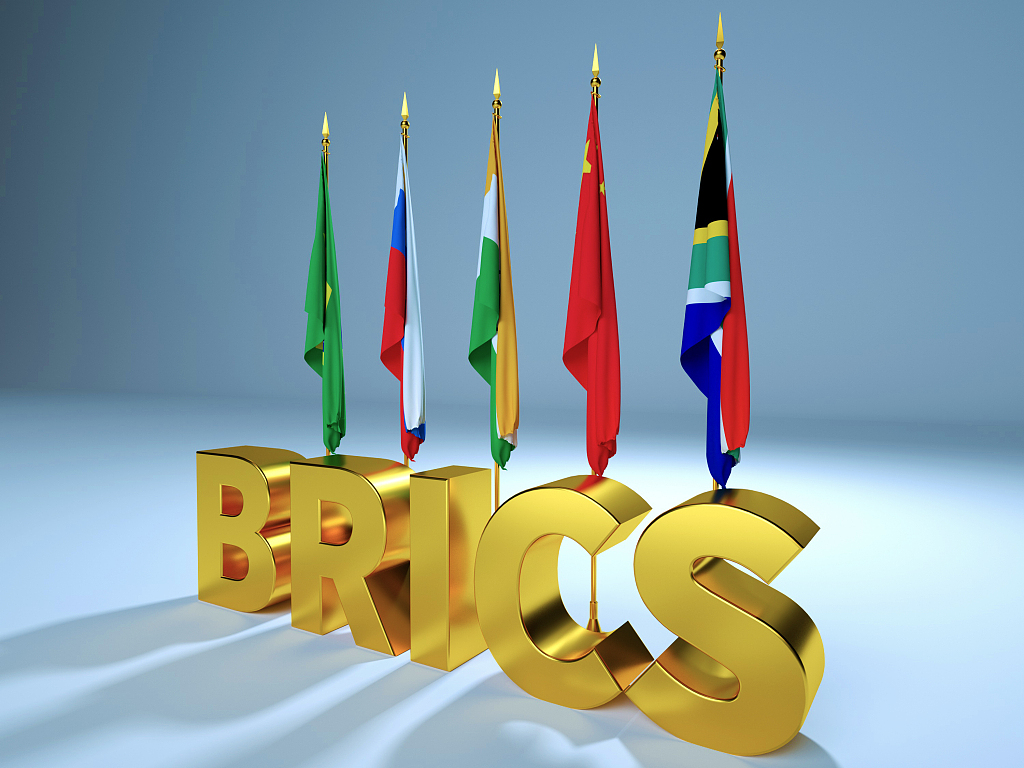
Indonesia officially became a full member of BRICS on Jan 6, as announced by Brazilian foreign ministry. While Indonesia's accession to BRICS has sparked debates at home, the decision by the Prabowo Subianto administration should be acknowledged as a strategic move to strengthen Indonesia's position in global geopolitics.
Luhut Binsar Pandjaitan, chairman of the National Economic Council, emphasized that Indonesia is too big a country to rely on any one economy. Jakarta has asserted that joining BRICS aligns with Indonesia's policy of engagement with other regional and global mechanisms and platforms such as the G20, the Asia-Pacific Economic Cooperation, the US-led "Indo-Pacific Economic Framework for Prosperity", MIKTA (a grouping of Mexico, Indonesia, the Republic of Korea, Turkiye and Australia), and the Comprehensive and Progressive Agreement for Trans-Pacific Partnership, as well as its accession phase as a member of the Organisation for Economic Co-operation and Development.
Indonesia's inclusion as a full member of BRICS will provide more benefits for the country. First, BRICS, as a grouping of developing countries, especially the Global South countries, can provide a platform for Indonesia to co-seek the reform of global institutions such as the United Nations, the International Monetary Fund and the World Bank, which have been dominated by Western countries. Considering the evolving global dynamics, this is the right time to reform global institutions so they more effectively represent the interests of the developing countries.
Second, Indonesia, which needs financing for infrastructure development, can reduce its reliance on traditional financial institutions such as the IMF and the World Bank, and instead seek loans from BRICS New Development Bank at much lower interest rates.
Third, BRICS' membership also provides an opportunity for Indonesia to diversify its economy, and reduce its dependence on its traditional trading partners such as the G7 nations.
Fourth, as a member of BRICS, Indonesia can explore more potential export markets for its manufactured goods and mining products, as BRICS is different from traditional platforms promoting trade cooperation which often prioritize the interests of rich countries.
In his book Globalization and Its Discontents, Joseph E. Stiglitz criticizes the IMF, the World Bank and the World Trade Organization for promoting unfair policies and protecting the interests of rich countries. Some scholars have also raised concerns over the IMF's unfair policy of supporting the rich countries' agenda while more or less ignoring the needs and interests of developing countries.
Similarly, Prabowo has long been concerned about the injustices perpetrated by international organizations. In his book Paradoks Indonesia dan Solusinya, he criticizes the IMF's proposal to Indonesia during the 1997 Asian financial crisis, which destroyed many of the country's industries.
By joining BRICS, Indonesia has also created a new channel to strengthen cooperation with China, which is not only one of the founders of BRICS but also Indonesia's largest trading partner, with their bilateral trade volume reaching about $135.1 billion in 2024. In fact, Prabowo has repeatedly expressed his commitment to strengthen cooperation with China, following the policy of his predecessor Joko Widodo.
Furthermore, BRICS' membership will allow Indonesia to more conveniently collaborate with other BRICS members, and promote the Global South's interest in international institutions and forums.
Prabowo's decision to deepen cooperation with China aligns with the public opinion, as reflected by a recent survey. The 2024 survey conducted by Indikator Politik Indonesia — a reputable Jakarta-based polling firm led by Burhanuddin Muhtadi — showed 28.5 percent of the general public and 28.2 percent of elite respondents support prioritizing cooperation with China.
China received more support than Japan, which got 23.4 percent approval from the general public and 11.7 percent from elite respondents, and the United States, which received 16.5 percent public approval and 24.3 percent elite support. The Indonesian people also see Beijing as Jakarta's closest ally, closer than other ASEAN member states, the US and Japan. The support of the Indonesian public is an indicator that Indonesia-China cooperation is on the right track.
According to IMF data, published in 2024, in purchasing power parity (PPP) terms, the 18 members and partners of BRICS made up 41.4 percent of global GDP, while the G7 members Canada, France, Germany, Italy, Japan, the United Kingdom and the United States accounted for 29.08 percent in 2024. The BRICS members and partners have overtaken the G7 industrialized countries in terms of GDP measured in PPP terms. This momentum should be used by the countries of the Global South to build a better and fairer world.
Moreover, the countries of the Global South, many of which are the signatories to the Bandung Declaration of 1955, will commemorate the 70th anniversary of the declaration in April. The spirit of Bandung must continue to be upheld in order to create an inclusive world order that is more open, fairer, and protects the interests of all nations, rather than favoring only the rich countries.
The author is the head of the ASEAN-China Research Center at the University of Indonesia. The views don't necessarily represent those of China Daily.
If you have a specific expertise, or would like to share your thought about our stories, then send us your writings at opinion@chinadaily.com.cn, and comment@chinadaily.com.cn.