Trade, not tariffs, causes peace, prosperity









Scottish economist Adam Smith was one of the first to observe that trade brings about peace. In his 1776 magnum opus The Wealth of Nations, he wrote: "... commerce and manufactures gradually introduced order and good government, and with them the liberty and security of individuals, who had before lived almost in a continual state of war with their neighbors, and of servile dependency upon their superiors. This, though it has been the least observed, is by far the most important of all their effects."
Some 19th-century philosophers thought similarly. In France, for example, economist Frederic Bastiat famously argued that "where goods do not cross borders, soldiers will". On the other side of the Atlantic, Ralph Waldo Emerson declared: "... trade was the principle of liberty; that trade planted America and destroyed feudalism; that it makes peace and keeps peace; and it will abolish slavery".
In the 20th century, Lee Kuan Yew, the first leader of an independent Singapore, Robert B.Zoellick, former president of the World Bank, and even psychologist Steven Pinker agreed that trade causes peace. Indeed, Pinker's conciseness is notable: "... you can't kill someone and trade with him too".
We appreciate that the anti-globalization folks disagree, in some cases violently. However, aside from the philosophers, the causal relationship between trade and peace has been proven empirically by economists. The most prominent economic evidence is provided by Solomon W. Polachek. He explains in his paper about international relations: "The results show that the fundamental factor in causing bilateral cooperation is trade. Countries seek to protect wealth gained through international trade, therefore trading partners are less combative than nontrading nations."
In that paper, Polachek also reviews the literature in political science, which is also consistent with the trade-causes-peace relationship. Finally, the Institute for Economics & Peace provides the most comprehensive measures of peace within countries and its relationship to economic variables.
Trade brings about peace in three ways.
First, it builds economic interdependence; second, international interpersonal interactions breed long-term and mutual understanding; and, third, international diversity stimulates the creative products and solutions that have always driven human progress. Less trade causes less of all these things. As a prominent example, consider the cellphone in your pocket — the technology therein comes from around the world.
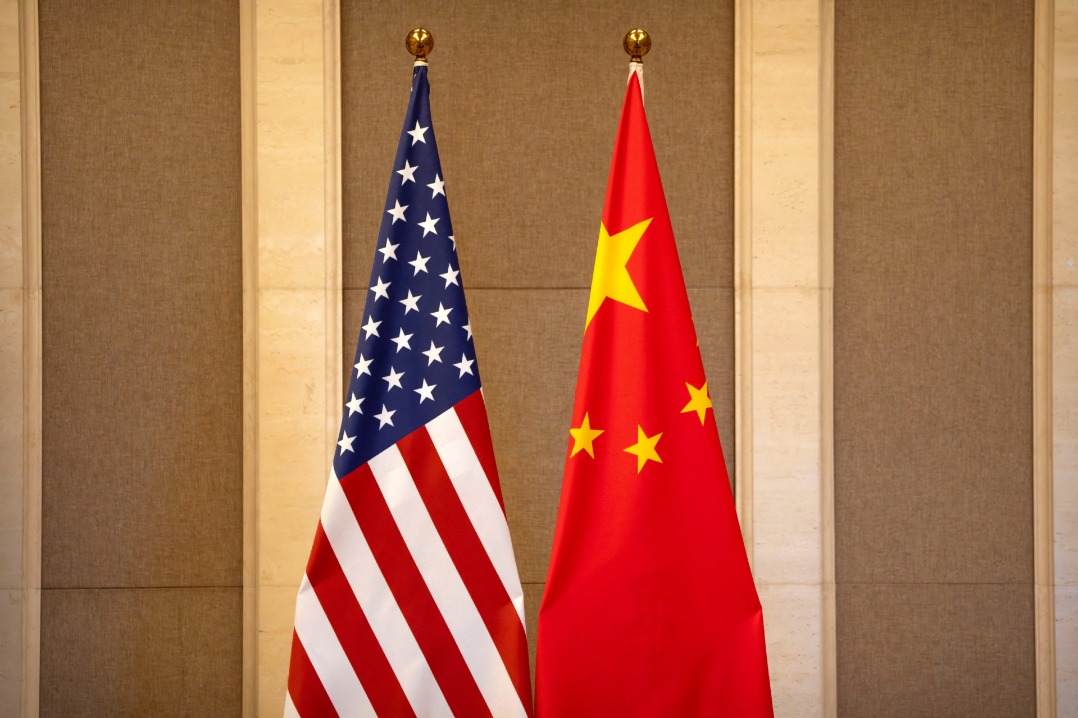
Another important example of the creativity resulting from international collaboration and trade comes from our most recent analyses of patent data from the United States. The number of patents granted to research teams that included both US and Chinese citizens has continued to rise from one in 1985 to 23 in 1995, to 156 in 2005, to 1,681 in 2015, and to 3,130 last year. The only declines in the data stream we can see were in 2018 and 2020, both years of the first Donald Trump presidency.
Trade does not work as a stick, only as a carrot. The best studies we can find on the topic estimate that economic sanctions have achieved their stated political purposes around 25 percent of the time during the last hundred years. But the analyses have always ignored the often catastrophic collateral costs of sanctions. Many researchers have enumerated other such unintended negative consequences of sanctions: US firms' losses (often in sectors beyond those targeted), third-country competitive gains, and in the target countries' GDP and employment shrinkage, extreme poverty, civilian suffering, and even increased human rights violations. Among the worst consequences are retaliatory terrorism and attacks on the sanctioning countries themselves.
It was in 1807 that Thomas Jefferson came up with trade sanctions as an innovation in diplomacy. The donkeys he endeavored to persuade then were quite big and quite stubborn — England and France. The goal was to get these warring nations to leave US ships alone on the high seas. Lacking a competitive navy, the third president of the United States dreamed up the trade embargo — rather than using trade as a carrot he planned to withhold trade and use it as a stick. However, instead of changing French or English policies and behaviors, Jefferson's policy actually endangered New England traders. They complained: "Our ships all in motion, once whiten'd the ocean; They sail'd and return'd with a Cargo; Now doom'd to decay, they are fallen a prey, To Jefferson, worms, and EMBARGO."
Jefferson's embargo fell apart in just 15 months. Only the War of 1812 settled the problems with English aggression at sea. Some two centuries later, we have Donald Trump's tariffs. When will we ever learn?
Finally, I will end this essay with 1776. In the Declaration of Independence, a prominent complaint of the colonists against the tyranny of King George was about free trade: "For cutting off our trade with all parts of the world."
The author is professor emeritus of international business at the Paul Merage School of Business and a founding director of the Long US-China Institute at the University of California, Irvine, the United States. He is also author of the book China Now: Doing Business in the World's Most Dynamic Marketplace.