Twelve hours is a long time, so he incorporated a lot of background information about the new drug development process into the lectures, including the tale of the two drugs.
After hearing him, one of Liang's friends said that he should write a book based on the lectures. Liang wrote an outline and proposed it to Yilin Press, with which he was already working on the book series, The Stories of New Drugs.
"I feel I am the right person to write the book, not only because I have gathered so much background material of the two drugs, but also because of my personal experience," he says.
The discovery of quinine and artemisinin, two natural medicines, fundamentally changed human health, altered the world order, and profoundly transformed the worlds of chemistry students like Liang.
When he was studying chemistry at Fudan University in the 1980s, Liang wanted to become a writer. As a young man interested in literature and art, he spent most of his time playing sports, reading world classics, playing cards and dancing, leaving him little time for chemistry. But the trajectory of his life was completely changed in a single lesson, during which the professor recounted the story of how quinine was synthesized, the starting point of modern organic synthesis.
If, as Liang wrote in the epilogue of his book, the synthesis of quinine "opened up the world of chemistry" for him and made him "truly fall in love with organic chemistry", then the synthesis of artemisinin allowed him to "start thinking about the magical world of life".
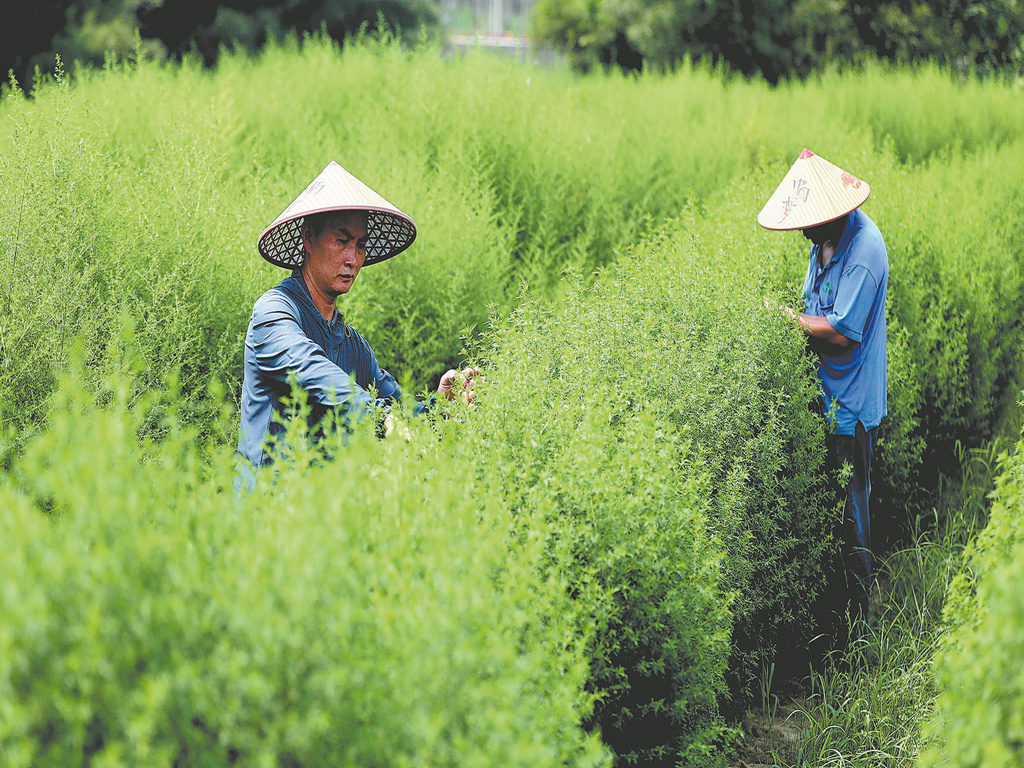
The peculiarity of qinghao urged him to think deeper: "Why does sweet wormwood contain a compound with such a unique structure? Why is it only found in that plant, and not in others like grass? Is it truly meant to be a natural compound for killing malaria parasites?"
These questions, he explains, may also be helpful in inspiring people to think about how to find the next "artemisinin" hidden in the compendium of TCM prescriptions.
"If there is an initial intent in writing the book, it is to get people to think about this question together. Right now, it's a question without an answer. But if more people start thinking about it, we might be able to find the answer, or answers, so that we won't wait another 1,600 years to find the next 'artemisinin'," he writes.
The book includes excerpts about sweet wormwood and treatment methods for malaria from the Zhou Hou Bei Ji Fang and Ming Dynasty (1368-1644) medical expert Li Shizhen's Compendium of Materia Medica for reference.
"Compared to Li's encyclopedic collection of herbs and prescriptions, I'm more interested in Ge's 43 prescriptions for treating malaria, because among the three known effective natural antimalarials — quinine, artemisinin and the alkaloid of the antifebrile dichroa root, he got two correct more than 1,600 years ago," he says.
"Compared to sweet wormwood, obviously Ge had conducted more studies on dichroa root, and had been trying to improve the prescription for it," he says.
Despite the plentiful sorcerous content in the Zhou Hou Bei Ji Fang, Liang says that he will continue researching Ge's prescriptions to see if there are any other special discoveries.
Contact the writer at yangyangs@chinadaily.com.cn
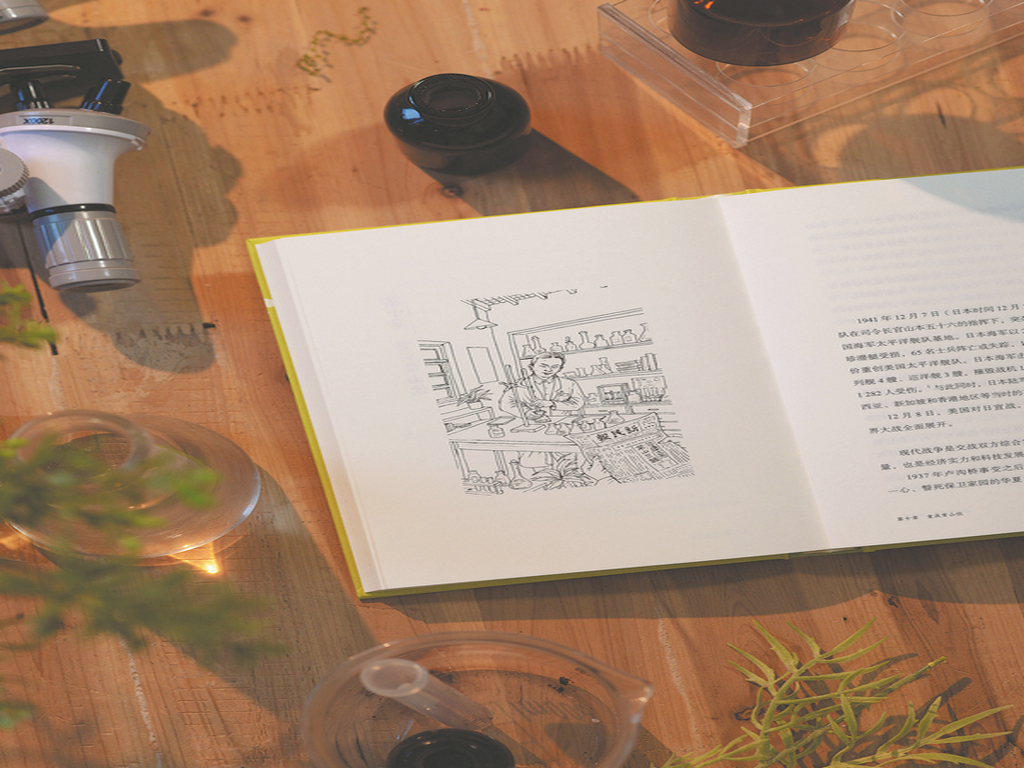
<figcaption>Left: Shuang Yao Ji, or A Tale of Two Drugs, reveals scientific milestones regarding quinine and artemisinin, both antimalarial drugs. Right: Liang, the author, is a drug research and development scientist.</figcaption></figure>