US military presence near China documented
Beijing-based think tank releases report describing activities targeting country









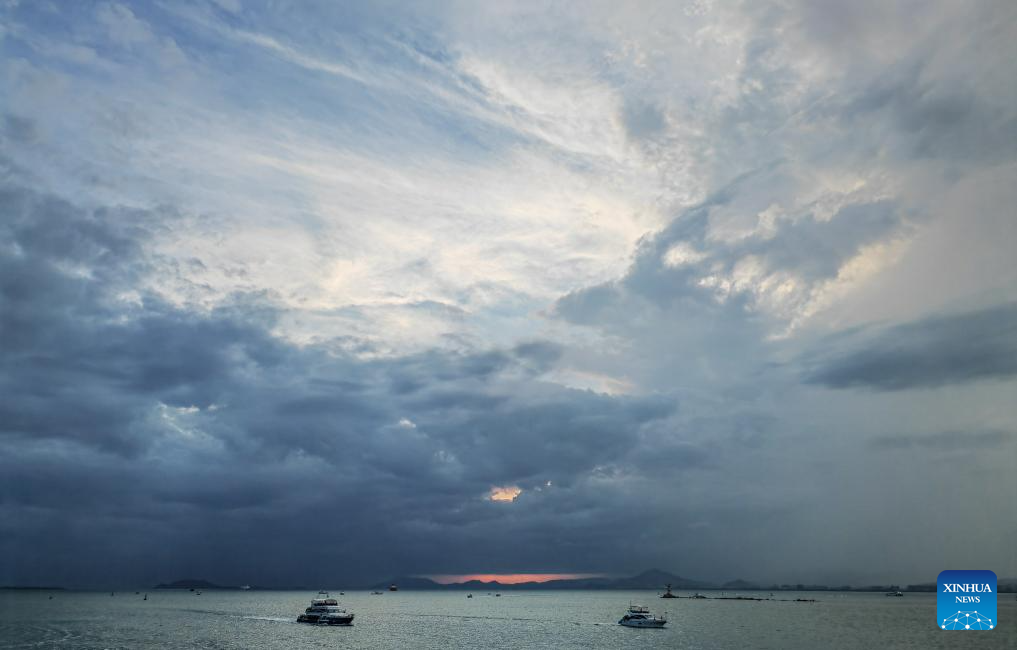
The United States maintained an active military presence in the South China Sea and frequently carried out provocative activities near China throughout last year, according to a new report.
"In 2024, the US military intensified its military deterrence against China by maintaining high-intensity operations in the South China Sea and surrounding areas, including close-in reconnaissance, transits through the Taiwan Strait, forward deployment, strategic patrols, combat exercises and battlefield preparations. Specifically, it conducted approximately 1,000 sorties of close-in aerial reconnaissance using large aircraft, while ocean surveillance and survey ships logged 706 ship-days of operations — a significant increase compared to 2023," according to the report, which was released on Monday by the Beijing-based think tank South China Sea Strategic Situation Probing Initiative and focused on US military activities in the South China Sea in 2024.
The report says that the US Navy deployed its carrier strike groups to the South China Sea eight times last year. The deployments were apparently meant to promote the US military's presence in the region.
In addition, at least 10 attack submarines, two cruise missile submarines and one ballistic missile submarine, all of which are nuclear-powered, were found operating in the South China Sea and adjacent waters throughout the year, signaling the US military's clear intent to sow deterrence and intimidation, the report says.
Meanwhile, the frequency of bomber incursions into the South China Sea increased significantly, with crews conducting frequent drills on "north-south coordinated maneuvers" and "distributed combat operations", according to the document.
The report notes that since 2009, the US military has continuously escalated the frequency and intensity of its China-targeted activities in the South China Sea.
Though the Red Sea crisis and other regional developments such as the Russia-Ukraine and Israel-Palestine conflicts have diverted the US' naval and air forces, the US still keeps a high-intensity military presence in the South China Sea and adjacent areas, it adds.
The report also points out that in 2024, apart from bomber operations and marine surveillance/survey ship deployments, the number and frequency of US military hardware operating in the South China Sea showed limited growth and had neared their operational ceilings.
"The US extensively strengthened its exercises and strategic and tactical deployments targeting the South China Sea and Taiwan Strait. Such efforts were based on its continued deployment of forces on the Philippines, which it regards as a major pivot," it says.
The report stresses that during peacetime, a country conducting thousands of annual close-in reconnaissance sorties and hundreds of targeted exercises in another nation's adjacent waters clearly violates the principles of the United Nations Charter, the Five Principles of Peaceful Coexistence and the "peaceful use of oceans" provisions under the UN Convention on the Law of the Sea.
In conclusion, it says that the Trump administration is pursuing a global strategic retrenchment, yet it will not alter the US' strategic community's consensus that the Indo-Pacific remains the top priority for US military efforts and that China is its most significant strategic competitor.
However, even if the Red Sea crisis subsides or a Russia-Ukraine ceasefire is achieved, the number of naval and air assets the US can redeploy to the Indo-Pacific will remain constrained, the report says. This is because as much as 60 to 70 percent of US conventional naval and air forces available for overseas deployment are already stationed in the Western Pacific, and the scale of further enhancement will be very limited.
Consequently, the US military is very likely to use more unmanned platforms and autonomous weapons systems in the South China Sea and adjacent areas in the future to meet the additional needs of forces, according to the report.






- Hong Kong mourns those killed in fire tragedy
- New high-speed rail line connects every city-level region in Guizhou to national network
- New freight train service launched from Handan international land port
- Jiangsu's hearing-impaired baristas brew a new future
- School in Henan forced to refund nap fees
- 8 arrested by Hong Kong's anti-graft body in corruption probe into major renovation project