Improved public transportation can help address parking problem









Last year Beijing announced that it would create more than 17,000 parking lots and turned another 10,000 institutionally owned parking lots into shared ones. The news generated such enthusiasm that a local newspaper devoted an entire page to explain how the work was done and what it signified.
To keep its promise of adding more parking lots, the Beijing municipal government added its districts and sub-districts to the plan, turning idle plots and more roadsides spaces into parking lots and persuading government institutions to share their parking lots with neighborhood residents at night, and on weekends and holidays.
The efforts of the municipal government should be applauded, especially because we know it is a mission impossible for most of the municipalities in the country to solve the parking problem.
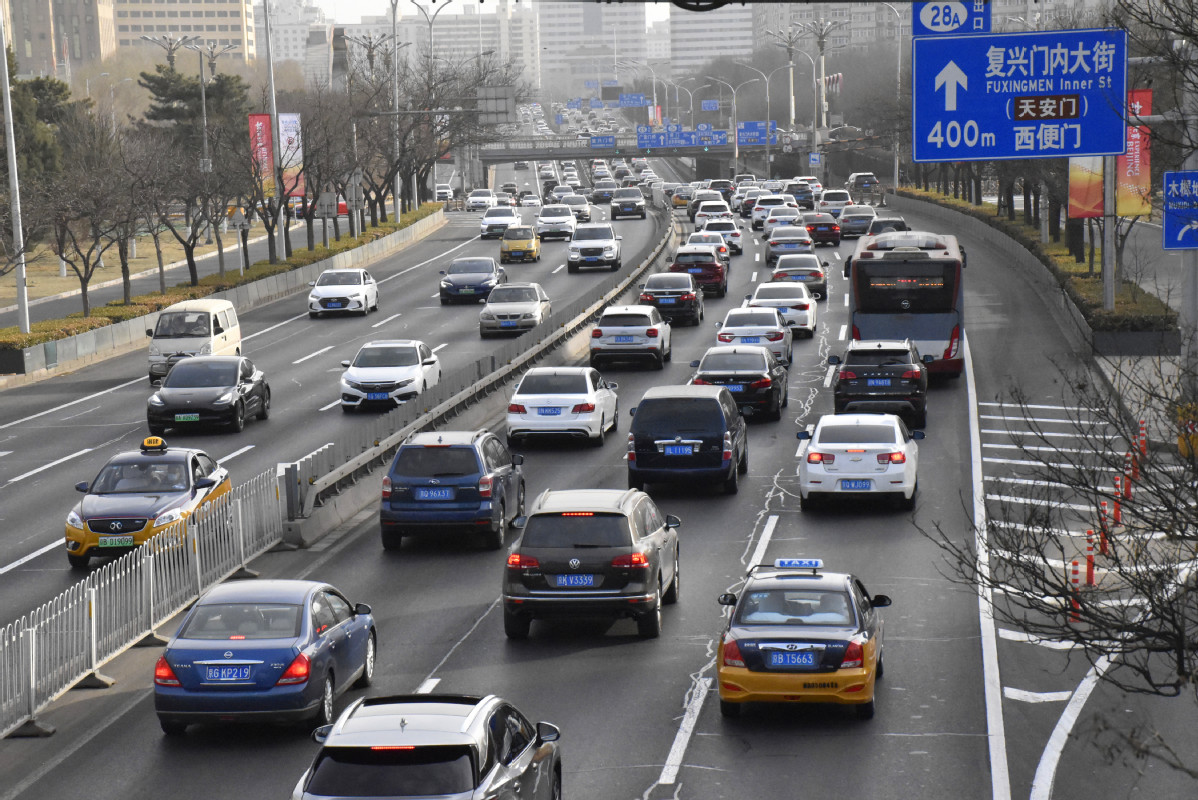
Rapid economic development over the past decades led to the expansion of the urban population and a dramatic increase in the number of cars. Beijing, for instance, has more than 20 million residents and over 7 million vehicles, with over 5 million of them being privately owned cars.
Difficult as it is to find a parking space, I'm sure most car owners have somehow found a fixed parking space in their residential compounds or nearby roadsides. The real nightmare begins when one drives out of one's comfort zone for shopping or to go to office. Although Beijing is reported to have 700,000 paid public parking spaces, most of the affordable ones have been rented out on a long-term basis and the few still available are relatively expensive. When an employee is late for office, his/her most likely reason is "driving around for half an hour to find a parking space".
Even when one is lucky enough to find a vacant parking space, the cost is relatively high. Parking along the roadside 10 kilometers away from the city center costs between 6-10 yuan (82 US cents-$1.37) per hour. The cost shoots up if you choose to park under a roof or when the parking space is closer to the city center. The parking fee at the parking lot of Beijing West Railway Station, for instance, is 5 yuan for a quarter of an hour and 360 yuan per day. A day's fee is equivalent to a Beijing worker's average income for two days.
Beijing's woes are shared by many other Chinese cities. China had an estimated 440 million motor vehicles, with 345 million of them being cars, by the end of June last year. With 26 cities having more than 3 million cars each, many city administrations are under tremendous pressure to build more roads and parking lots. To control the increasing number of cars, some cities have taken measures such as drawing of lots or auctions for license plates, while quite a few have built multi-story parking lots so they can use every available square foot of land for parking.
But city administrations risk infringing on citizens' civic rights if they turn public spaces into parking spaces to address the parking problem. Officials are welcome to turn vacant land into parking lots to benefit the public and make cities more environment-friendly. But when they turn roadsides into parking spaces, they infringe on the right of cyclists to use the service lanes along thoroughfares. Many smaller cities, by allowing cars to park on pedestrian-only sidewalks, make life difficult for humble pedestrians like me.
In a country which is similar in land area to the United States but has over four times the population, it is difficult to find enough parking spaces for all the cars and/or build enough roads for them to drive without being caught in jams.
Therefore, instead of building more parking lots and turning public spaces into parking spaces, the authorities should make efforts to improve the public transportation systems. When people can travel anywhere in the city more comfortably and at a lower cost using public transport, their urge to buy or drive a car will diminish.
I am looking forward to the day when sidewalks are returned to cyclists and pavements to pedestrians, and public spaces are canopied by trees and city administrations are no longer frustrated by the parking problem.
kangbing@chinadaily.com.cn
The author is former deputy editor-in-chief of China Daily.