Canada-China trade ties seen at crossroads









As the United States imposes sweeping new tariffs, Canadian experts have different visions for the nation's economic relationship with China.
Jeff Mahon, former deputy director for Greater China at Global Affairs Canada, said the world is "on the cusp of undergoing profound change" and that those forces are already reshaping trade relations.
"Canada-China relations have historically been very friendly based on mutual trust and support for each other," Mahon told China Daily.
He noted Canada's early support for Chinese food security before the country's opening-up, and the nations' decades of "win-win cooperation" that followed.
However, he said relations began to sour during the first Trump administration, when China's growing global influence presented both "great opportunities and challenges" for Canada.
"Unfortunately, cooperation stalled, and Canada-China relations suffered from this," he said.
With the second administration of US President Donald Trump, Mahon said there are "new challenges to both Canada and China, and the world more generally".
But he said he believes the moment also presents a unique opportunity for the two countries to lead by example.
"There is a great opportunity for Canada and China to demonstrate leadership to the world by designing a new approach for solving trade conflicts based on mutual respect for each other's development model and well-being for their citizens," Mahon said.
To move forward, Mahon highlighted the importance of addressing production and employment concerns in both countries.
Mahon pointed to areas where Canada can continue to support China, including food and energy security, and said China's leadership in innovation could also benefit Canada.
"Canada and China should work together to resolve the current trade tensions by avoiding megaphone diplomacy and engaging in candid consultations," he said.
"We should identify areas of mutual interest while also acknowledging that there are differences and sensitivities that need to be respected," he said.
Mahon said that approach would require rethinking international trade arrangements so that they reflect new and unique circumstances.
"If China and Canada can succeed, it will not only benefit Canada-China trade relations but the entire world," he said.
He noted Canada's historical friendship with China and status as a G7 nation could become an ideal test case for a new trade framework.
"Any successful outcome between Canada and China makes an attractive model for others to follow," Mahon said.
Julian Karaguesian, an economics professor of McGill University, said Canada must take a pragmatic approach to trade with China.
"The relationship between the two countries is not going away; it's simply too significant," he told China Daily.
Karaguesian, who served as special adviser in the international trade and finance branch at the Canadian Ministry of Finance, highlighted China's manufacturing prowess and Canada's resources wealth as complementary.
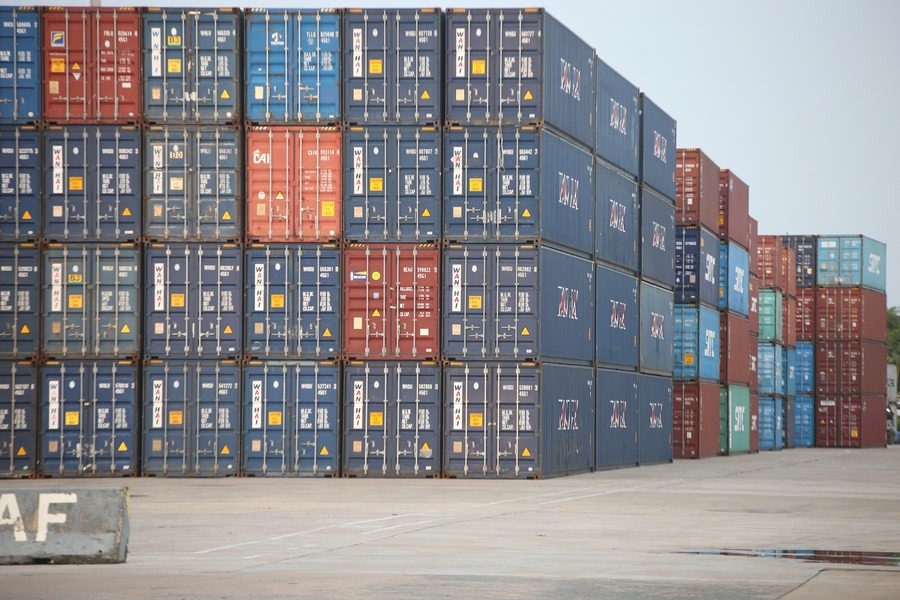
"China's manufacturing sector is as big as the next nine countries combined. We're natural trading partners — we have critical minerals, energy, food. We could be a protein superpower," he said.
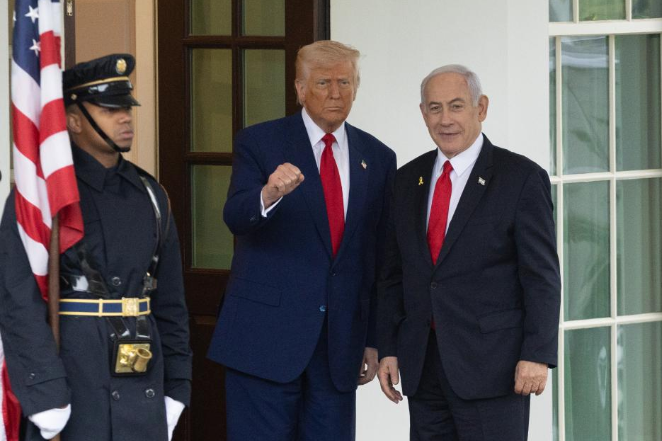
On April 2, Trump announced new tariffs on imports into the US from most trading partners — along with imposing the 25 percent levy on "all foreign-made" vehicles.
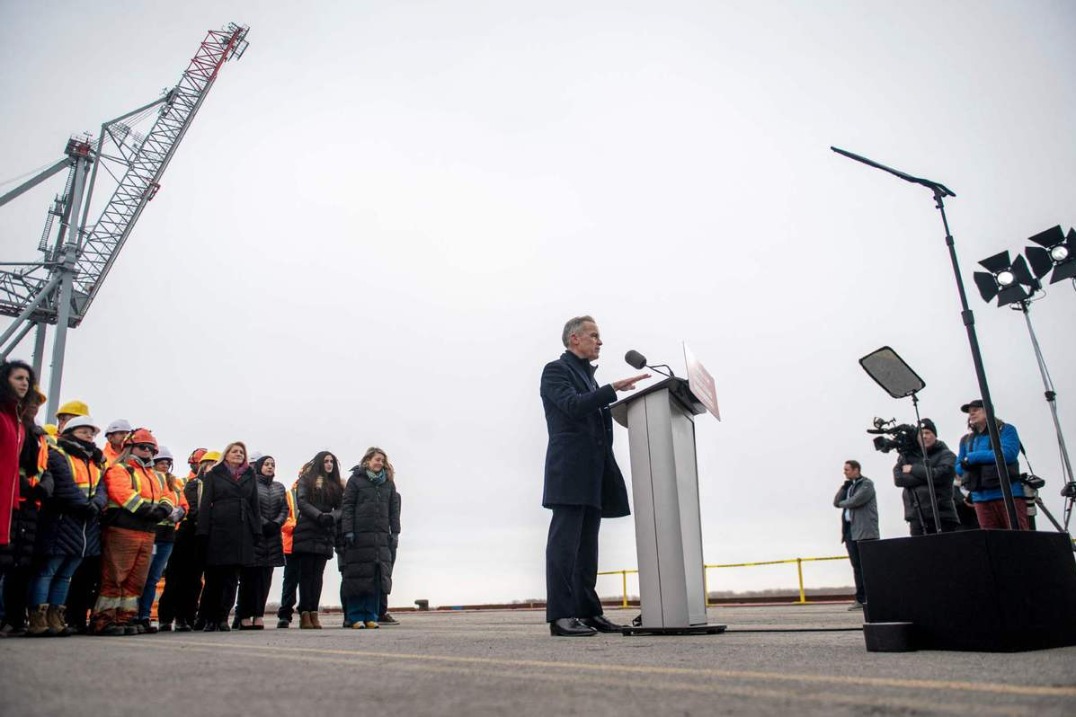
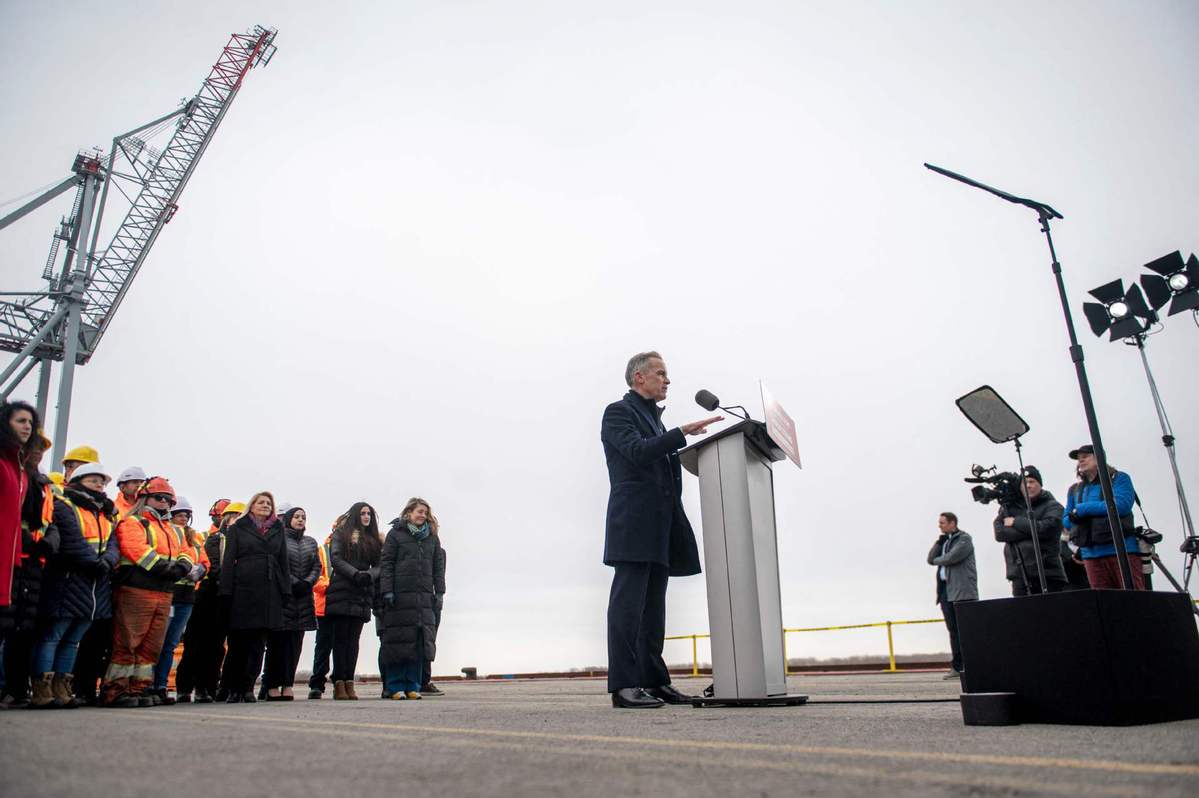
Canadian Prime Minister Mark Carney then announced that Canada would impose the same tariffs on all vehicles imported from the United States that did not meet the standards of the Canada-United States-Mexico Agreement (CUSMA).
Karaguesian framed the tension as an opportunity. "This gives us a chance to reshape our nation, be less dependent on the US, and trade more globally — with Europe, China, India."
Last October, Canada followed the US in imposing tariffs on Chinese electric vehicles.
Karaguesian said Canada's tariffs on Chinese EVs were unnecessary: "There was no reason for the tariff. We weren't even importing Chinese EVs."
Instead, he proposed that now is the time to resume dialogue. "We should sit down with China and talk trade. In return for lifting tariffs, China could ease restrictions on Canadian agricultural exports."
To reduce reliance on the US, Karaguesian called for a sweeping industrial strategy. "Today, we must recalibrate our economy toward global trade and infrastructure."
He pointed to automation's impact on jobs. "Every big country needs manufacturing. We should invite Chinese automakers to produce here. Why not partner with China to build affordable EVs?"
Karaguesian offers a vision grounded in pragmatism. "The US rift lets Canada chart a new course — one where we trade freely, think big, and reclaim sovereignty.
"We can either cling to a global status quo that is under attack by the very country that created it, or we can build a future in which China is a key partner and not a rival," he said.
Sui Sui, a professor at the Ted Rogers School of Management at Toronto Metropolitan University, noted the risks and limitations of deeper collaboration — particularly as Canada looks to reduce its reliance on the US market.
Sui told China Daily that US trade policies under the Trump administration have forced Canada to reconsider its economic strategy.
"The traditional economic relationship with the US is over," she said, quoting Carney. "The US is saying, 'I'll take care of myself, you take care of yourself.'"
She said that shift has left Canada, a nation deeply integrated with the US economy, in a precarious position.
"Canada will be hit hard," Sui noted, adding that while diversification is necessary, aligning too closely with China risks provoking Washington.
gaoyang@chinadailyusa.com