Levies chipping away at Canada's lumber industry









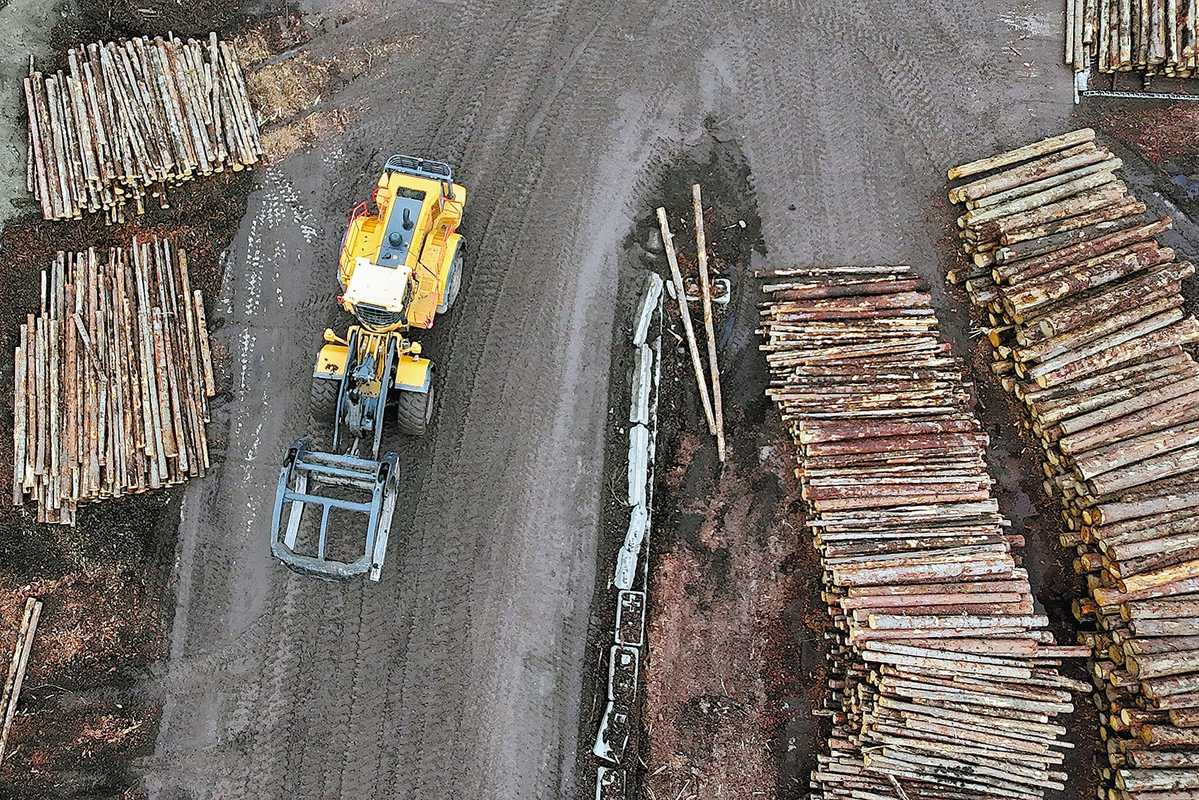
By raising duties on Canadian lumber, the United States is contending that the producers benefit from unfair subsidies and sell products below market value.
However, British Columbia Premier David Eby called it an "attack on forest workers and British Columbians" on April 5. "In Canada, the continued unjustified softwood lumber duties, combined with additional US tariffs and other trade actions, have united Canadians."
The US Commerce Department on April 4 proposed raising the average combined duty rate on Canadian softwood lumber imports from 14.4 percent to 34.45 percent.
That includes countervailing duties imposed to offset government subsidies and antidumping duties designed to penalize foreign companies that sell goods below fair market value.
Harry Nelson, an associate professor of forestry at the University of British Columbia, said the increase stems from Washington's annual review of its trade remedy findings.
"The main reason for the significant increase is that both rates went up, the antidumping especially so."
Bloomberg reported the new duty structure would increase antidumping rates from 7.66 percent to 20.07 percent and countervailing duties from 6.74 percent to 14.38 percent.
In September, the forest products manufacturer Canfor said it would close its sawmills in Vanderhoof and Fort St. John, both in British Columbia, because of "punitive" US tariffs and high operating costs. The decision affected 500 workers.
Nelson said some companies such as Canfor face a nearly 50 percent tariff and could be unsustainable.
"Lumber margins tend to be small — certainly not 50 percent, and it is hard to imagine how Canfor will be able to continue to operate," he said.
"I would expect a curtailment in production, where higher-cost firms may either take temporary downtime or permanently shutter some more mills."
In a statement on April 6, Kurt Niquidet, president of the BC Lumber Trade Council in Vancouver, described the duties as "unjustified and harmful".
"Our stumpage system is grounded in market principles, with timber sold through open, competitive auctions," he said.
The statement said British Columbia does not subsidize its lumber industry. "Claims that B.C.'s system provides an unfair advantage are simply not supported by the facts."
The council urged US officials to reverse course, saying the duties would hurt workers and communities "on both sides of the border" while raising costs for US consumers.
Under pressure
Nelson said Canadian producers are already under pressure from declining harvest levels in British Columbia. "You may go from two shifts to one," he said. "Still operate, but at a reduced rate."
The new duties are not expected to take effect until August, but Nelson said the economic fallout could arrive sooner depending on broader market conditions.
The efforts to find new markets for Canadian wood remain constrained, he said. "There is limited ability of those markets to absorb a lot of wood."
The broader market effect will hinge on how US demand evolves, he said. "Canada, and B.C. in particular, have always been the higher-cost external supplier. So we go offline first.
"There is some ability of other producers in the US to expand to fill the gap, but not enough … so prices will go up, given current demand levels."
However, a potential US economic downturn could complicate the picture, Nelson added. "If the US goes into a recession and housing starts going down, the drop in demand would exert sufficient pressure for overall lumber prices to drop."
He underscored the need to extract more value from by-products such as sawdust and wood chips. "Investments there are critical to support the sector's overall viability."
Looking ahead, Nelson said Canada's best course of action lies in diversification. "We are too reliant on one partner and one product.
"A well thought-out trade diversification strategy where we invest in building a brand for Canadian wood and wood products around quality and building stable relationships with other trading partners is essential."
gaoyang@chinadailyusa.com