Past 50 years offer guide to future of relationship









On May 6, 1975, then European Commission vice-president Christopher Soames and the then Chinese premier Zhou Enlai opened the first chapter of diplomatic relations between the then European Economic Community and China.
This was a different Europe: smaller — with only nine member states — and still primarily focused on economic matters, hence it was an "economic community" and not the union that would be established in 1993. It was also a different China: with an economy half the size of that of France. It was just beginning to open up in a process that would result in an unparalleled economic transformation. And the backdrop to this was a world engulfed in a Cold War of geopolitical rivalry and ideological conflict between the United States and the Soviet Union.
During Soames' visit to China in 1975, China expressed its support for a strong and united Europe as a vital contribution to a peaceful world and committed to conduct its future international economic relations in the spirit of dialogue and cooperation and not confrontation.
The visit paved the way for the first trade agreement concluded in 1978, which was soon replaced by a more comprehensive trade and cooperation deal concluded in 1985. With China fully embarked on reform and opening-up under the leadership of Deng Xiaoping, the agreement which spanned agriculture and rural development, scientific and industrial cooperation, energy, environmental issues and vocational training was intended to promote the growth and modernization of the Chinese economy, while being mutually advantageous.
Deng's message to the then European Commission president Jacques Delors during his first visit to Beijing in July 1986 was that China saw in Europe an important economic partner and a source of development cooperation, but also that a united Europe could be an important counterweight to hegemony. This has been a consistent message from China to this date.
The year of 2001 marked an important moment as China became a member of the World Trade Organization, an aspiration supported by the European Union who saw in it the means to anchor Chinese reforms into a multilateral framework, as well as a means to steer rather than strain the Chinese economy, and a catalyst for continued reforms in the Chinese economy toward a global level playing field.
Both China and the EU worked together to advance multilateralism in 2015 with the adoption of the United Nations Sustainable Development Goals to end extreme poverty in the world by 2030 and the Paris Agreement, to address the most pressing collective threat to humanity. Yes, the level of ambition that both had for these agreements differed, but the most important fact remains that cooperation and compromise made multilateralism possible.
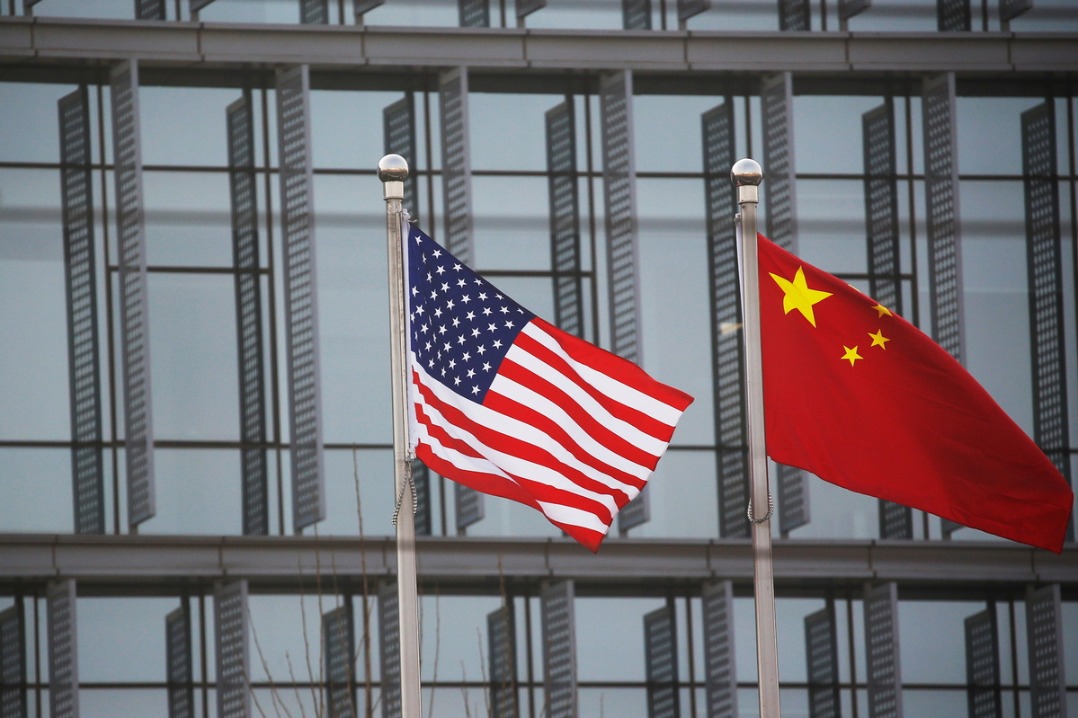
As the relationship celebrates its 50th anniversary, much has changed. Bilateral trade has grown exponentially, with the two trading more in one day than they did in the whole of 1975. Investment has grown in both directions. China has now significantly improved its technological and innovation capacities, often surpassing those of the EU. Asia has become the engine of global trade. But China and Europe also have different views on issues such as "unfair competition", "economic imbalances" as well as on "human rights", Ukraine and other foreign and security matters. And the benign international environment of the last three decades has now turned into a US-China rivalry.
In a world where many see cooperation as a constraint, where violations of international law, including internationally agreed borders are on the rise, and as some consider open trade as a zero-sum game, there may be merit in looking back to the original foundations of bilateral cooperation for inspiration to build a more functional relationship between the European Union and China. Both should do this as a function of their own interests and the starting point should be to acknowledge the differences that exist between both, economically and politically. Sugar coating will not work. The aim should be to manage the differences starting with avoiding making them bigger. But ignoring each other or even embarking on de-coupling from each other will not work either. What matters now is to walk the talk.
There is scope to build on commonalities, including the value of open markets and fair trade to their economies, the importance of being more generous toward the world's poorest and most vulnerable countries, as well as the need for modernized international trade rules to ensure a global level playing field. Both have an interest in advancing just and long-lasting solutions to conflicts such as in Ukraine or Palestine. Both have much in common in accelerating the fight against climate change. Both have an opportunity to help build an international framework for the ethics of artificial intelligence or to advance scientific cooperation.
Today, as 50 years ago, a united Europe remains a force of global good, a ballast in a polarized world. And China's commitment to cooperation and dialogue, not confrontation, remains vital to global stability. Both should frame their relations based on the understanding that there will be areas of stark difference, others of robust competition and many of honest collaboration. Both are indispensable to a functioning multilateral order. The alternative is a world of conflict and chaos, which is in no one's interest.
The author is the former minister of foreign affairs, European Union and Cooperation of Spain, and dean of the Paris School of International Affairs, Sciences Po.
The views don't necessarily reflect those of China Daily.
If you have a specific expertise, or would like to share your thought about our stories, then send us your writings at opinion@chinadaily.com.cn, and comment@chinadaily.com.cn.