US govt faces lawsuits over tariff orders
Imposition of trade measures using emergency powers to be challenged









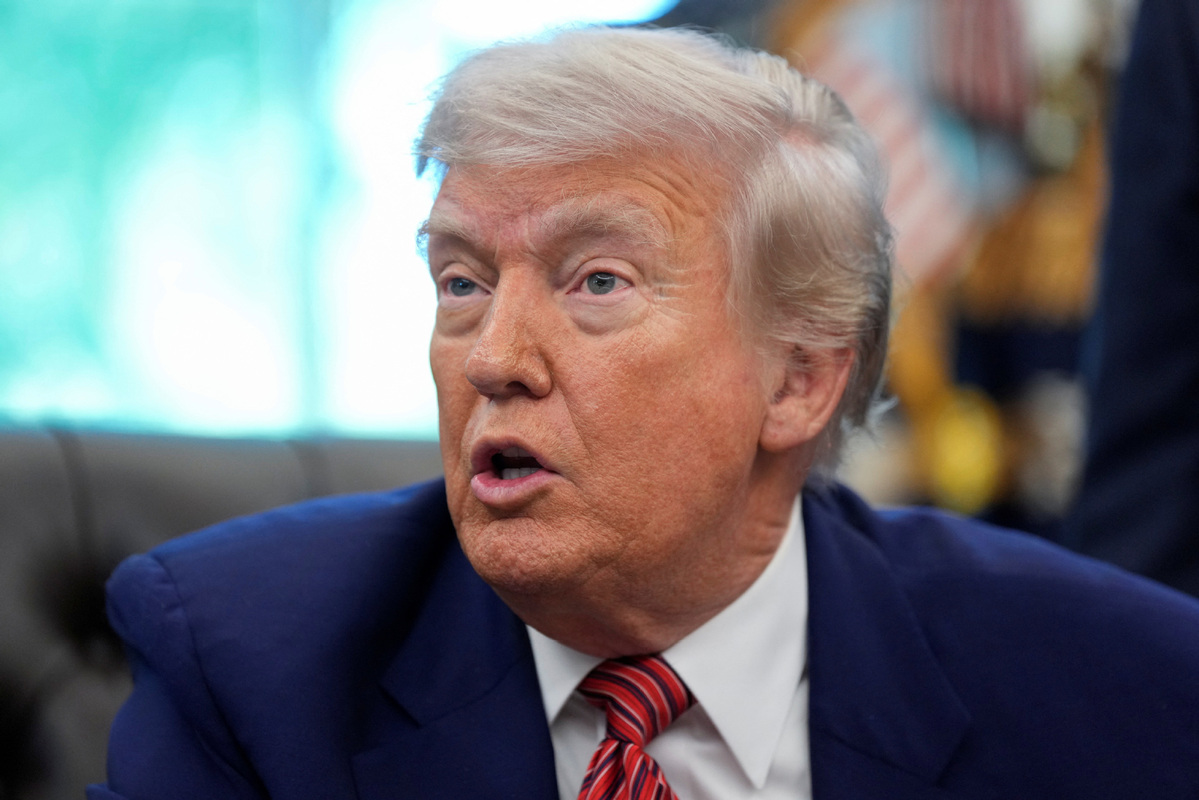
The Trump administration is facing mounting legal challenges over its sweeping tariff policies, with at least seven lawsuits filed by states, businesses and individuals challenging the president's authority to impose broad trade measures using emergency powers legislation.
Experts believe the lawsuits have a decent chance of success but also warn that the slow legal process means continued uncertainty for businesses grappling with the new tariffs.
Since February, the Trump administration has issued a series of executive orders declaring a national emergency and imposing tariffs on all imports. The administration invoked the International Emergency Economic Powers Act of 1977, or IEEPA, to justify the tariffs, marking the first time this law has been used for such broad trade measures.
The new tariffs include a 10 percent baseline tariff on nearly all imports and sharply higher duties on Chinese goods and foreign automobiles. However, the administration has temporarily reduced the 145 percent tariffs on Chinese imports to 30 percent until Aug 12 and paused a slate of so-called "reciprocal tariffs" against more than 50 countries until July 8.
The lawsuits allege the president lacks the authority to impose tariffs under IEEPA, arguing that the law, which empowers the president to impose sanctions in response to international emergencies, does not authorize the imposition of tariffs and that the executive orders constitute a violation of the separation of powers in the United States.
"These cases have a good chance of success, because the Constitution gives Congress the authority to regulate trade and tariffs," Robert O'Brien, research director at Counterpoint Research, told China Daily. "In the past, almost always, when tariffs were implemented, it was from an act of Congress, and the president's authority is greatest when they're working in concert with Congress. And in this case, Congress was not at all involved in all of these tariffs and executive orders."
"But the legal system takes a long time to resolve, so that continues the level of uncertainty for businesses," he added.
Vada Garcia, a specialist for policy and government affairs at the Consumer Technology Association, echoed similar concerns about the legal foundation of the tariffs.
"It's important to note the legal authority that is being used for these tariffs — IEEPA … is on very shaky legal ground and something that's never been done before," she said at a recent panel discussion examining the tariffs' impact on consumer electronics. "If one of those lawsuits is successful, that's going to set a precedent for tariffs."
The lawsuits are of particular importance to the consumer technology industry, as the highest tariffs were imposed on Chinese imports, and China is a major supplier of consumer electronic products in the United States.
"They're responsible for 87 percent of imports of video game consoles, 79 percent of imports of laptops and tablets, 67 percent of imports of monitors. So that's going to be an issue that the consumer technology industry, as a whole, is going to have to grapple with," Garcia explained.
California became the first state to sue the Trump administration over the tariffs. In the complaint filed last month, the state argued that the tariffs will create substantial economic harm in various forms, including lost tax revenue and impacts on the state's ability to import and export goods.
'Reckless actions'
"California, as the fifth-largest economy in the world and the country's most populous state, stands to suffer unique harm from President Trump's reckless and unprecedented actions on tariffs," the complaint said.
Twelve other states, including Oregon, Illinois and New York, challenged the tariffs in the Court of International Trade, alleging that Trump unconstitutionally imposed tariffs on foreign products and that the tariffs caused direct financial harm to the states.
Their complaint cited an example of the University of Oregon, which ordered specialized equipment for scientific research from Switzerland in November but had to pay an extra $18,579 when the equipment arrived after the tariffs went into effect.
The lawsuit filed by Liberty Justice Center on behalf of five businesses that rely on international imports emphasized the human and economic toll of unchecked executive power.
MicroKits, one of the plaintiffs, is a small business based in Charlottesville, Virginia, that makes educational electronic kits and musical instruments. The company imports electronic components and then assembles and finishes the products in its local workshop.
The owner, David Levi, described the tariffs as "devastating" and "crushing" for the company. "The government shouldn't be able to make sweeping economic decisions like this without any checks or accountability," he said in a statement.
O'Brien predicted the lawsuits "are going all the way to the Supreme Court and Supreme Court would have to weigh in".
He referenced the Supreme Court's ruling on the student loan forgiveness program in 2023, where the court ruled that the Biden administration could not forgive student loans because it constituted a major economic disruption without congressional authority.
"I think student loans are a small fraction of what's going on here with the tariffs," O'Brien said.
liazhu@chinadailyusa.com