



AI-powered systems can improve medical care









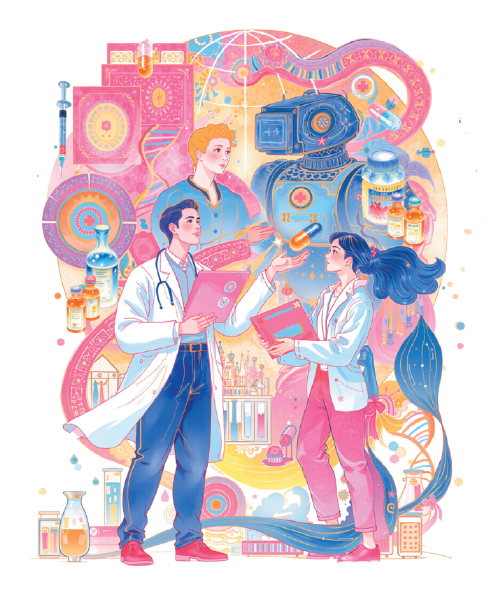
As the world races to develop powerful artificial intelligence, it is also racing to tackle multiple public health challenges that need AI-powered solutions. These challenges include preparing for the next pandemic, tackling the relentless rise in infections that no longer respond to treatment with antimicrobial medicines, reversing the obesity epidemic, understanding and addressing the rising burden of mental health problems, and caring for people living longer but not healthier, often with multiple medical conditions.
In this context, an international network of innovative health systems could make rapid progress toward AI-powered public health.
The nature of health data available for training AI is challenging. Unlike data from cameras and sensors used for training AI to drive a car, the data from medical records for training AI to support healthcare does not present the full picture of people's health. Medical records focus on people who are already ill or have a medical condition. They are just snapshots of patients' conditions. There is so much missing and measurement error in healthcare data that training AI is like asking algorithms to look through holes in a fence, then through obscured glass, to see the true picture of patients' health journeys.
Earlier and fuller information on how people developed illnesses or became sick enough to seek medical help is lacking. This information is essential to finding ways to prevent an illness and support people's well-being. Given the rising costs of caring for aging populations, prevention is vital. Fortunately, AI is starting to tap into the rhythms of daily life — generating new data and user-interactions that can be used to support people's wellbeing and prevent illness.
At present, patient-driven apps and devices tend to focus on specific diseases or treatments, and the most serious patients with multiple conditions face a blizzard of different technologies. There is a need therefore to shift healthcare AI from the mindset of medical app-store to one of a healthcare skill-store for the digital twin of the patient. This shift is vital for achieving more predictive, preventive and personalized care.
For example, people prescribed medication for serious mental illness often face a risk of weight-gain, high blood pressure, diabetes, heart attacks and strokes. Effective "AI allies" for such patients would support not only their use of medication but also their daily choices of food, exercise, social interaction and other activities. This could mitigate the adverse effects of medicines and help improve their quality of life and daily functioning, including workplace productivity.
The AI allies need to learn from patients' interactive "digital twin" or "health avatar", reflecting much more of their health, social circumstances, habits and use (or not) of treatments than medical records do.
Realizing this AI-enabled improvement in preventive and personalized healthcare will need deep collaboration between patients, healthcare providers, healthcare payers (or social health system resource managers), health scientists and AI engineers. The data required to power patient-facing "health avatar" AI can also help improve health and social care providers' services.
Furthermore, data on individuals' journeys into needing care can help medical (and social) care systems to plan their resources and use them to treat the most vulnerable. This goal is sometimes called a "learning health system".
The University of Liverpool's Civic Health Innovation Labs and its health system partners are working to turn the learning systems theory into reality with a triple digital twin approach to the individual patient, the provider and the population.
For example, making the best use of medicines, the patient-level twin monitors medication experiences and enables individuals to track their own health and recognize early warning signs, fostering preventive self-management such as resuming an important medication or seeking help for one that seems to be causing problems. And while the provider-level twin helps the patient's doctor to review medications by pulling together the key information from multiple records in an easy-to-read summary alongside prescribing guidance, the population-level twin identifies the patients who are most likely to benefit from a medication review and offers them fast-track access.
This learning is important because medication-caused harm (from death to brain fog affecting work) is common, the cost of medicines is a major financial pressure on health systems, and very little is known about how patients use medicines — it is estimated that between one-third and half of the medicines are not used as prescribed.
Just as AI such as DeepSeek feed from the size and diversity of training data and users, the ideal "AI allies" for patients, healthcare providers and population health managers need to learn from a global grid of learning health systems. From minimizing antimicrobial resistance to maximizing preventive healthcare in populations living longer with more medical conditions and relatively less resources to care for them — the major public health problems are pressing and don't have national borders. Given the challenges the world faces today, health systems worldwide need to join forces to optimize AI for human health.
The author is W.H. Duncan chair in Public Health Systems and associate pro vice-chancellor for Innovation, University of Liverpool, UK. The views don't necessarily reflect those of China Daily.
If you have a specific expertise, or would like to share your thought about our stories, then send us your writings at opinion@chinadaily.com.cn, and comment@chinadaily.com.cn.





