High stakes










Eighty years later: response to the UN's shortcomings
Eighty years have now passed since the guns at last fell silent at the end of World War II. In Europe, hostilities ceased with the signing of the instruments of unconditional German surrender on May 7, 1945, while in Asia, Imperial Japan surrendered on Sept 2, 1945, aboard the USS Missouri, finally bringing years of global carnage to an end. The anniversaries that punctuate 2025 therefore ask us not only to remember victory, but also to reflect on the colossal human cost that lay behind it.
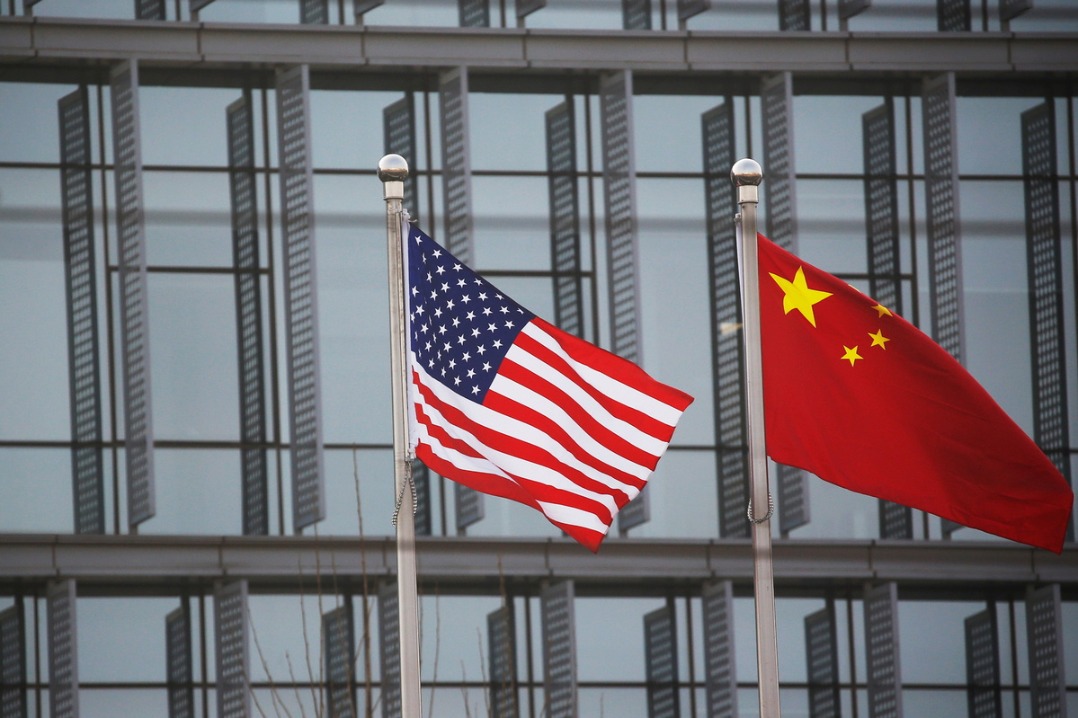
China, the United States and the Soviet Union were compelled to set aside cultural differences and even ideological rivalries in order to defeat two common adversaries: Nazi Germany, whose genocidal project ravaged an entire continent, and militaristic Japan, whose imperial ambitions wrought devastation across East and Southeast Asia. The lesson is plain: when the threats facing humanity transcend borders, so too must the response.
That realization crystallized in the months between victory in Europe and victory in the Pacific. On June 26, 1945, while Allied troops were still fighting on the Asian mainland, delegates from 50 nations gathered in San Francisco to sign the United Nations Charter. Its preamble still resonates with almost prophetic clarity: "We the peoples of the United Nations determined to save succeeding generations from the scourge of war …" The UN Charter was ratified on Oct 24, 1945, and the UN began the vast and unfinished task of turning the hard-won unity of wartime into a permanent framework for peace.
During the succeeding decades, the UN has proved to be a precious form of global governance. While the organization has faltered, it has nevertheless provided a forum in which the failures of the international community can be named, documented and, one hopes, not repeated. The UN therefore remains a symbol of humankind's capacity to learn from tragedy and to institutionalize that learning.
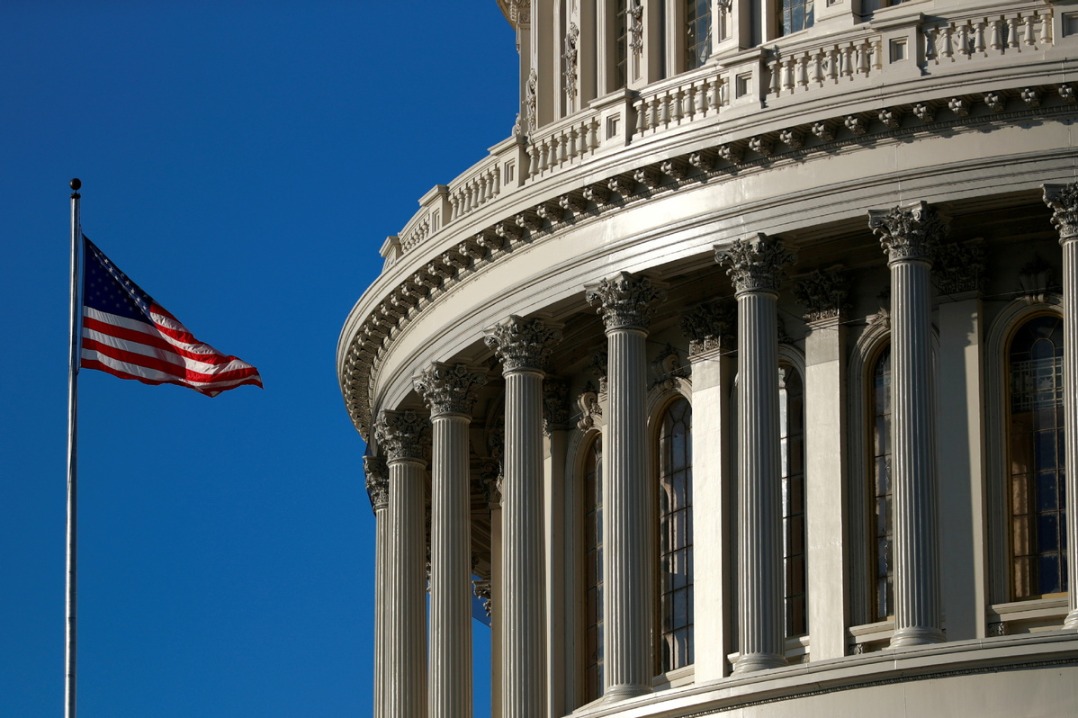
Yet the geopolitical landscape of 2025 is a very different one from that of 1945. The bipolar Cold War has given way to multipolar interdependence. But climate change, artificial intelligence, cyber conflict, nuclear proliferation, pandemics and pervasive inequality are challenges of a kind that the original drafters of the Charter could scarcely imagine. Amid such complexity, one hears renewed voices advocating a retreat into narrow national interest and unilateral action. US President Donald Trump's "America First" doctrine exemplifies this impulse.
But unilateralism is precisely what the Charter was designed to transcend. Article 1 commits members "to develop friendly relations among nations based on respect for the principle of equal rights and self-determination of peoples, and to take other appropriate measures to strengthen universal peace".
To preserve the Charter's relevance, we must do more than recite its clauses: We must be willing to update the institutional hardware through which they are implemented.
In that context, it is heartening that new initiatives have begun to emerge outside the traditional Western policy sphere. China's Global Development Initiative, introduced in 2021, seeks to refocus multilateral attention on the UN 2030 Agenda for Sustainable Development; the Global Security Initiative, unveiled in 2022, urges the pursuit of "common, comprehensive, cooperative and sustainable "security; and the Global Civilization Initiative, proposed in 2023, calls for mutual learning among cultures as an antidote to the "clash of civilizations" narrative. These ideas do not claim to supplant the UN. Rather, they aim to supplement and enrich the existing architecture by highlighting development, security and cultural dialogue as interlinked pillars of stability.
Commemorations must be more than ceremonial. To lay wreaths at Normandy or pay respects in Nanjing, then return to business as usual, would be a hollow tribute to the dead. The moral obligation that flows from 1945 is to ensure that geopolitical rivalry never again escalates into global cataclysm.
Where, then, do the next steps lie?
First, we must insist that sovereignty and international solidarity are not opposites. Countries can pursue national revitalization while acknowledging that species-level challenges require pooled resources and pooled authority.
Second, we must enlarge the circle of stakeholders. Cities, corporations, universities and civil-society networks possess analytical and financial capacities that sometimes eclipse those of medium-sized states; their structured participation in UN deliberations would revitalize otherwise stale negotiations.
Third, we must match rhetoric with resources. Promises made at multilateral summits must be underwritten by credible domestic legislation; otherwise, summit declarations dissolve into the fog of diplomatic verbiage that citizens rightly distrust.
Finally, we must demonstrate that multilateralism can adapt rather than ossify. The path is narrow to modernize without fragmenting, to innovate without erasing hard-won norms, and to share responsibility without diluting accountability. The stakes, however, could not be higher. Should we fail, the warnings of history are unambiguous. Should we succeed, the peace secured in 1945 will not merely be remembered; it will be reimagined and renewed, a living testament that progress — even in a turbulent world — is within humanity's grasp.
Honoring the sacrifices of World War II requires more than nostalgia. It demands that we finish the project begun when China, the US, the Soviet Union, the United Kingdom and De Gaulle's France stood shoulder to shoulder: the construction of a cooperative order capable of averting catastrophe.
The UN remains the cornerstone of that order. Reform it — yes. Reinforce it — certainly. But above all, we should refuse to abandon it. For if we allow unilateralism, nationalism, complacency or cynicism to prevail, we risk condemning the succeeding generations to the very scourge the Charter vowed to banish. Eighty years ago our forebears decided that such a risk was intolerable. Our solemn duty, amid new perils and new possibilities, is to decide the same.
The author is a specialist in global affairs and sinology, and founder of the China-Europe-America Global Initiative. The author contributed this article to China Watch, a think tank powered by China Daily.
Contact the editor at editor@chinawatch.cn.