Engine of prosperity










The Belt and Road Initiative is consolidating its role as a driver for Eurasia's development in the face of US protectionism
The Belt and Road Initiative, launched by China in 2013, has established itself as one of the most extensive and dynamic international cooperation platforms of our time. It has blossomed into a network of physical and digital connectivity spanning Asia, Europe, Africa and Latin America.
To date, China has signed more than 200 cooperation agreements with more than 150 countries and more than 30 international organizations. The BRI has been incorporated into the final documents of major multilateral mechanisms such as the United Nations and APEC, reinforcing its legitimacy and reach. In Eurasia, its impact is particularly visible: rail corridors, ports, industrial parks and logistics platforms have shortened distances, reduced costs and opened up opportunities for more balanced development between core and peripheral regions.
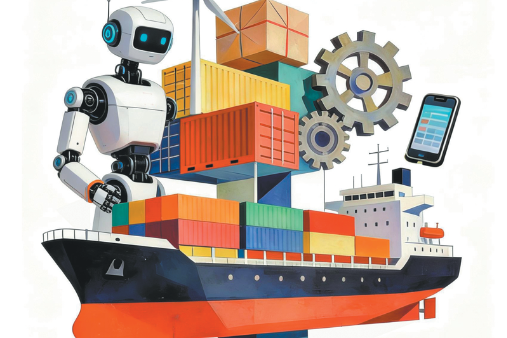
One of the BRI's greatest successes has been understanding infrastructure not only as a physical investment, but also as a catalyst for economic and cultural integration. The new rail routes connecting Chongqing with Duisburg (Germany) and Yiwu with Madrid (Spain) have drastically reduced transport times between China and Europe. This has not only promoted trade in manufactured goods, but also in agricultural products, consumer goods and high-value-added items that previously could not compete with maritime transport in terms of speed.
In Central Asia, countries such as Kazakhstan and Uzbekistan have found in the BRI a vehicle to diversify their economies, traditionally dependent on raw materials, toward light manufacturing, logistics and services. The construction of logistics parks in Khorgos in the Xinjiang Uygur autonomous region and Aktau in Kazakhstan has not only generated employment but also stimulated more resilient regional supply chains.
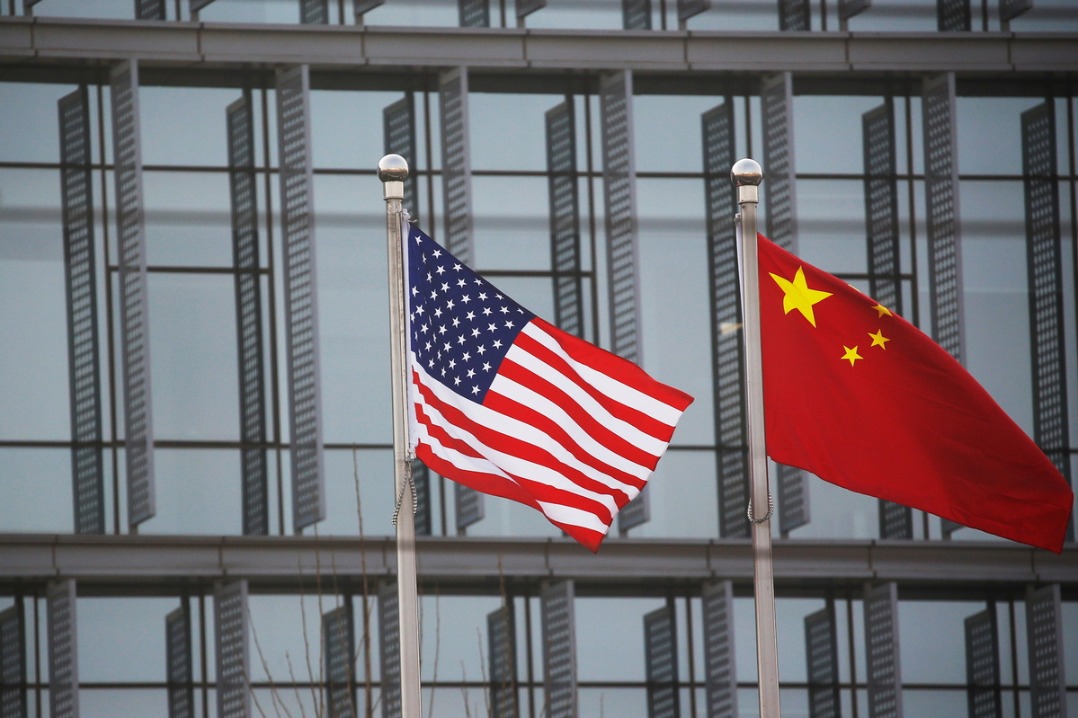
This push for connectivity and cooperation stands in sharp contrast to the current approach of the United States administration, which has intensified the use of its so-called tariff stick as an instrument of foreign and economic policy. Under this approach, Washington has resorted to unilateral tariff increases and the imposition of trade sanctions to pressure other countries and thus maximize its own economic interests, even at the cost of distorting international trade and destabilizing both global and regional value chains.
The figures are telling: the US has increased tariffs on hundreds of billions of dollars' worth of imports from China, the European Union and other strategic partners. These measures are having a double negative effect: on the one hand, for US consumers, they mean higher prices for goods ranging from electronics to processed foods; and, on the other hand, for global companies, they represent greater regulatory uncertainty and the risk that investments in international supply chains will become unviable.
Protectionism is not a new phenomenon in the economic history of the US — it already had similar, unsatisfactory expression in the 1930s with the Smoot-Hawley Tariff Act. In such an interconnected world, the consequences of its protectionism are amplified exponentially. Supply chain fragmentation is causing disruptions in the delivery of critical components, higher raw material prices, and reduced predictability for cross-border investments, discouraging long-term planning.
Unlike this defensive and exclusionary US strategy, the BRI presents itself as a win-win cooperation framework. Rather than imposing barriers, it seeks to reduce physical and technical obstacles to trade through investments in infrastructure, logistics integration and regulatory harmonization. Thus, partner countries can better leverage their comparative advantages, diversify their export markets and increase their connectivity with multiple economic hubs, without depending on a single dominant partner.
By integrating with regional organizations such as the Association of Southeast Asian Nations, the Shanghai Cooperation Organization, the Eurasian Economic Union, the African Union, the Gulf Cooperation Council and the Community of Latin American and Caribbean States, the BRI has fostered the coordination of trade and investment policies. This synergy helps reduce regulatory costs, harmonize standards and foster more fluid trade.
In Eurasia, the expansion of maritime routes open to the Global South offers inland countries — from Mongolia to Belarus — new options for exporting and importing without bottlenecks. This not only increases their resilience but also stimulates competition in transportation and logistics, reducing prices and improving efficiency.
For example, Eurasian rail corridors have allowed shipments between China and Europe to be delivered within 15-20 days, compared to six weeks for traditional maritime transport. This is key for industries such as automotive, electronics and fast fashion, where time-to-market is critical.
Beyond economic considerations, the BRI has fostered a steady stream of cultural, academic and tourism exchanges. Scholarship programs, cultural centers and city twinning foster mutual understanding and reduce the risk of tensions arising from mistrust or lack of contact.
In regions with historical conflicts or rivalries, cooperation on infrastructure and trade projects creates incentives to maintain stability. It's harder to break off diplomatic relations when there's a shared rail line, pipeline or port that generates tangible benefits for both sides.
In this context, the continuation of the Donald Trump administration's tariff policy, based on punitive measures and bilateral pressure negotiations, could be accelerating a reorganization of international trade. Many countries affected by the tariffs will seek to diversify partners and routes to reduce their dependence on the US, and the BRI appears to be an ideal platform for this. Its emphasis on connectivity and openness offers participants access to new markets, financing, and infrastructure, countering the restrictions imposed by US protectionism. If these trends persist, the BRI could consolidate its role as an axis of global economic integration.
The author is an economist and advisor at the Cátedra China Foundation, Spain. The author contributed this article to China Watch, a think tank powered by China Daily.
The views do not necessarily reflect those of China Daily.
Contact the editor at editor@chinawatch.cn.