



Joint efforts needed for stability, prosperity in South China Sea









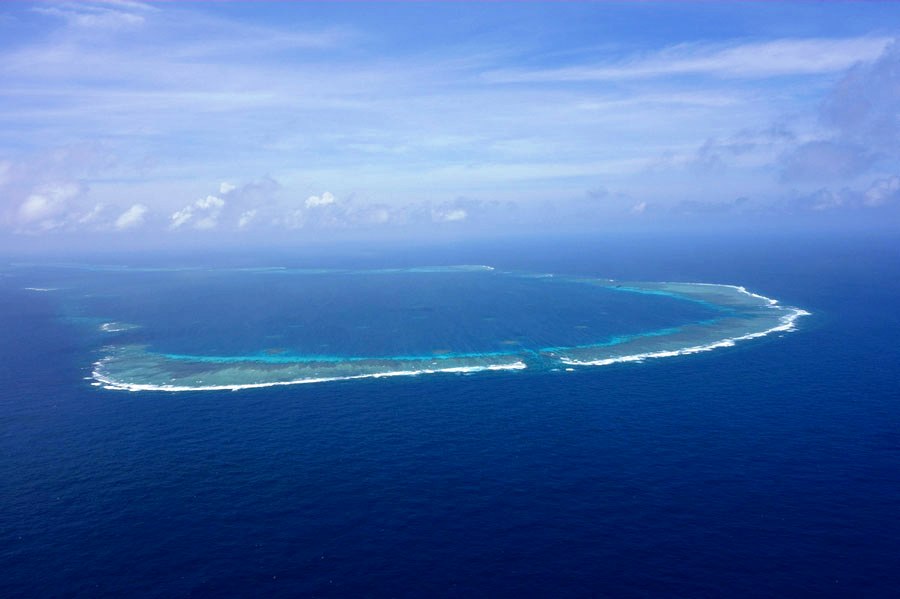
The Xinhua Institute, a think tank affiliated with Xinhua News Agency, released a series of reports expounding on the historical and legal basis of China's territorial sovereignty and maritime rights in the South China Sea on Thursday.
The think tank reports reveal the truth about external interference in the South China Sea issue, and call on regional countries to reject external interference, properly manage differences, and pursue common development through cooperation.
The timing and significance of these reports are self-evident. Today's international order is based on the outcome of World War II. The post-war international order reflects humankind's pursuit of peace and development, freedom and equality, fairness and justice, and must be maintained and carried forward.
China played a significant role in the joint fight against fascism and militarism in World War II, and resumed the exercise of sovereignty over the South China Sea Islands in accordance with international legal documents such as the Cairo Declaration and the Potsdam Proclamation. This is an integral part of the post-war international order.
This is not only the legitimate right of China as a victorious country, but also reflects the important basic principle of the UN Charter that the territorial integrity of any country must not be violated. China's sovereignty over the South China Sea Islands and its rights and interests in the South China Sea have sufficient historical and legal basis and have been widely recognized by the international community after the war.
However, in recent years, some non-regional forces have frequently stirred up tensions in the South China Sea in a bid to bolster hegemony, by spreading false narratives and flexing their military muscles. A few claimant countries, such as the Philippines, emboldened by external backing, have repeatedly provoked incidents for selfish gains.
Such acts deviate from the purposes and principles of the UN Charter, undermine the common aspiration of the international community for peace since World War II, and pose a blatant challenge to the post-war international order.
China is a firm defender of the post-war international order. While safeguarding its territorial sovereignty and maritime rights and interests, China also firmly upholds peace and stability in the South China Sea. China is well aware that peace is a necessary condition for development. The Asia-Pacific region has become the most dynamic growth engine of the world economy because it has enjoyed decades of peace and stability. Any attempt to bring conflict and chaos to the South China Sea runs against the fundamental and long-term interests of regional countries.
China's approach has been clear and consistent: disputes should be resolved through negotiation and consultation, differences managed through rules and mechanisms, and win-win results achieved through cooperation.
China has demonstrated a genuine commitment to friendship, unity and common development, which is evident by its signing of the Declaration on the Conduct of Parties in the South China Sea with ASEAN countries, and an array of efforts advancing consultations on a Code of Conduct in the South China Sea and offering tsunami early warning services to regional countries and promoting maritime cooperation.
Regional countries and the wider international community should revisit the original aspiration of establishing the post-war international order. By strengthening communication, coordination and cooperation, excluding external interference, and properly handling maritime differences, all relevant parties can work together with China to make the South China Sea a sea of peace, friendship and cooperation.





