



Design communities to support cognitively disabled









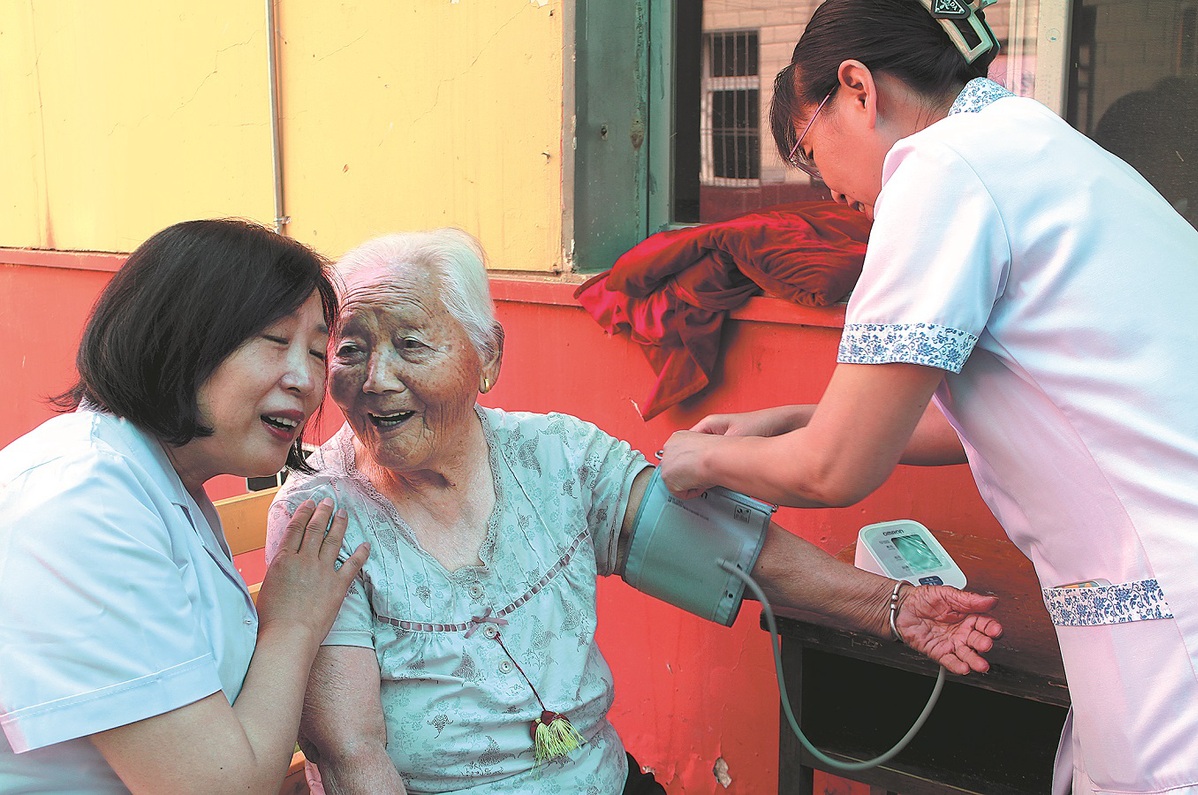
Editor's Note: As China's population ages, cognitive disorders caused by neurodegenerative diseases such as Alzheimer's and mental health conditions have become common. Cognitive disorders are in focus in many countries, and building dementia-friendly environments is now an important consideration in urban development. What is a dementia-friendly community? How can such communities be built? And how would this help an aging society in China? Dong Wei, a professor at the School of Architecture and Design at Harbin Institute of Technology, spoke with Science and Technology Review to answer these questions. Below are excerpts from the interview. The views don't necessarily represent those of China Daily.
The population with cognitive impairment is generally categorized into three stages: subjective cognitive decline, mild cognitive impairment and confirmed dementia, with significantly different needs at each stage.
Studies that suggest different requirements of different groups have certain limitations. On the one hand, there is a data acquisition bottleneck because research often relies on interviews with caregivers, which cannot accurately reflect the patients' own intentions. On the other hand, traditional questionnaires and observational approaches tend to overlook real-time emotional and physiological responses during environmental interactions.
So it is necessary to combine embodied experimental testing, physiological signal monitoring, and virtual reality technology to simulate real-life scenarios and capture unconscious behavioral preferences, thereby establishing a scientific map of needs.
By lowering the cognitive difficulty of the environment, establishing clear and recognizable guidance systems, providing risk-buffer zones and embedding flexible assistance mechanisms, community design can help individuals with cognitive disorders maintain autonomy and dignity in a low-intervention setting. In addition, overall community planning should encourage active social participation, where a friendly neighborhood atmosphere becomes an invisible "guardian", offering diverse informal support. In short, safety is the foundation, but empowered freedom is the essence of a high-quality life.
A dementia-friendly community evaluation system is not only a measure of the built environment's inclusiveness, but also a comprehensive assessment of social support and overall well-being. Taking into account both environmental construction requirements and the needs of people with cognitive disorders, such a system should cover aspects including physical safety, spatial navigation efficiency, social support networks, psychological well-being and sustainable operations. The system must balance scientific rigor with practical feasibility, with evaluation methods designed to be flexible and user-friendly.
The construction of dementia-friendly communities should evolve toward intelligence, connectivity and long-term interventions that integrate traditional community environments with smart technologies. In terms of technological integration, AR navigation glasses can provide real-time directional guidance, AI-based behavioral monitoring systems can analyze gait to predict wandering risks and achieve "imperceptible safety protection" and sensors can collect environmental usage data to dynamically optimize spatial design.
A "home-community-city" collaborative network can be established in spatial integration. Cognitive screening by community health centers, community-based elderly care facilities that offer cognitive training and city-level dementia-friendly parks should be embedded into 15-minute living circles, ensuring a tiered coverage of care resources. In terms of environmental interventions, diverse environments can help activate cognitive reserves and guide healthy behaviors, with long-term tracking of intervention outcomes. This shifts the focus from "symptom response" to "disease progression delay".





