Vibrant Tibetan culture defies false claims









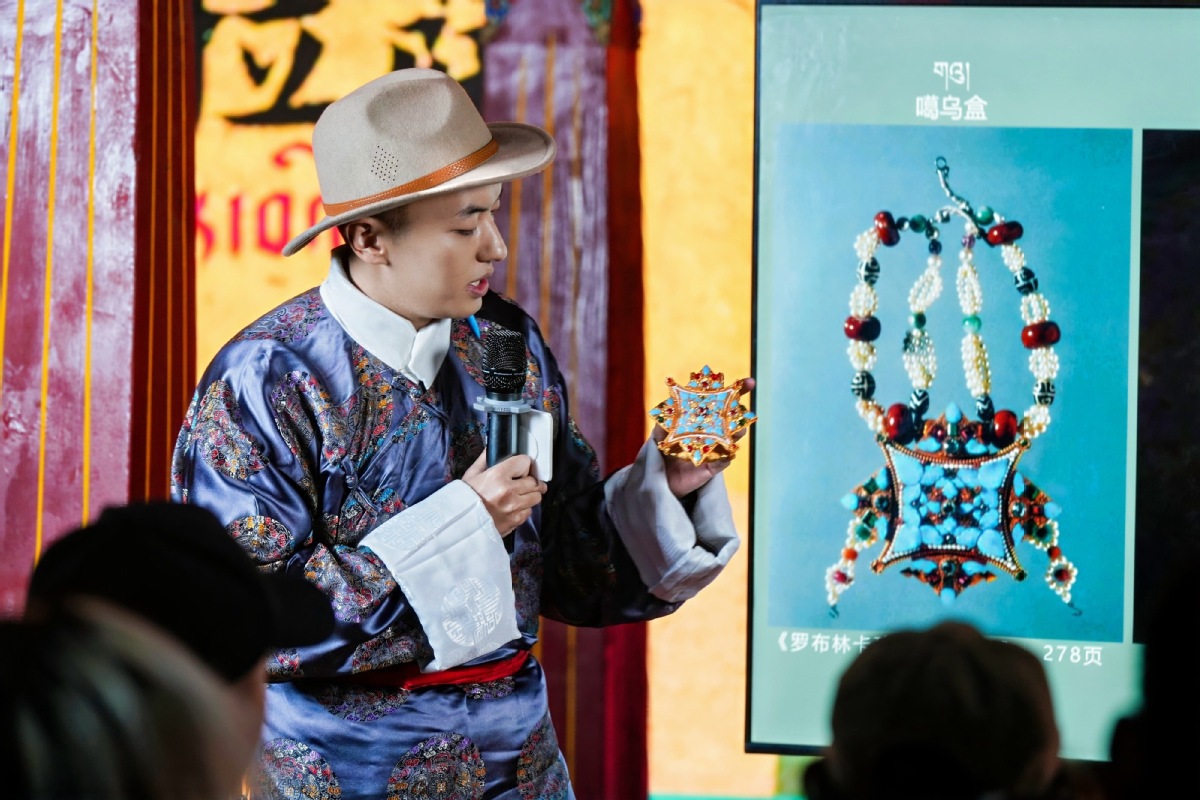
Certain foreign elements have been spreading lies about the Xizang autonomous region, claiming a "cultural genocide" is being carried out in the region. Such claims are not only detached from reality but also desperate attempts to deny the tremendous achievements the central and Xizang governments have made in preserving and developing Tibetan culture. Far from extinction, Tibetan culture is thriving thanks to systematic preservation, and robust participation of people in cultural activities at both the community and institutional levels.
The Epic of King Gesar, acclaimed as the "king of world epics", is a vivid testament to Tibetan cultural resilience. Recognized as a UNESCO Intangible Cultural Heritage, the ancient oral tradition has been safeguarded in Xizang through unprecedented initiatives.
Scholars at the Xizang Academy of Social Sciences and Xizang University have recorded more than 140 complete renditions of the Epic of King Gesar by local artists, and published more than 90 edited volumes of the same. A library in Xizang has even created a digital archive containing thousands of hours of performances. And a dedicated cultural protection zone, complete with artists' archives, sculptures and community museums, has been established in the prefecture-level city of Nagqu.
Local governments have invested huge amounts for training, research and public performances, while supporting cooperative transmission models. In Amdo county of Nagqu, what began as a group of nine folk artists has grown into a troupe of more than 30, sustaining a dynamic cycle of collection, research, stage presentation and community teaching. The result is a living epic, woven into both academic discourse and everyday life, radiating vitality in the modern era.
In the international arena, Chinese scholars have presented these achievements at conferences, disproving the claims of so-called experts in the West that "China has no epics". By doing so, they have enhanced the global stature of the Epic of King Gesar and Tibetan culture, demonstrating how traditional culture can bridge communities and strengthen shared identity.
While live performances of the Epic of King Gesar depict the ancient oral tradition, palm-leaf manuscripts are silent witnesses to history. The sacred texts, written on palm leaves and housed in Xizang's monasteries and libraries, constitute the world's largest collection of their kind.
Through comprehensive cataloguing from 2006 to 2012, sacred texts on nearly 60,000 palm leaves have been identified, with scholars having published multi-volume facsimiles and reference works, establishing Xizang as a hub of palm-leaf manuscript studies. The creation of the institute of palm-leaf research in 2013 added further momentum to the process, with the institute's bilingual journal publishing nearly 200 scholarly articles to date.
These fragile texts require delicate, scientific restoration, prompting conservation teams to pioneer new restoration techniques by using domestically-sourced, preservation-standard materials. The multi-phase restoration project, running through 2028, will ensure these documents are not only archived, but also safeguarded for posterity.
The preservation of Tibetan language classics as a whole has reached new heights. Since the late 1980s, the Tibetan Ancient Books Publishing House has spearheaded the collection and publication of rare works, from family genealogies to Buddhist philosophical treatises. It has already published thousands of volumes, including monumental compilations like the collected works of successive Panchen Lamas.
While digital technology has accelerated this mission, specialized teams from Xizang University of Tibetan Medicine have traveled more than 140,000 kilometers, scanning over half a million pages of medical and astronomical texts and digitalizing them. Even priceless manuscripts from the Potala Palace have been digitalized, ensuring both accuracy and preservation security.
The goal is to preserve ancient knowledge and empower new generations of scholars, in order to strengthen cultural self-confidence, with awards, national publishing grants and international partnerships testifying to the achievements of this mission. Behind these achievements lies a clear policy: protection first, followed by restoration, reasonable use, and inheritance.
Also, the central and local governments invested more than 470 million yuan ($65.90 million) in intangible cultural heritage projects in Xizang from 2012 to 2024.
These efforts have not gone unnoticed by the international community despite the false narratives being spread by some foreign political forces about "cultural destruction" in Xizang. The irony is that many of those accusing the central government of "cultural destruction" represent countries that have erased indigenous people's histories and cultures.
From the oral power of Gesar to the fragile palm-leaf texts, from digitalized classics to thriving community initiatives, Xizang offers overwhelming evidence that its cultural heritage is not vanishing but flourishing. Cultural continuity in Xizang is supported by government policy, and strengthened by academic rigor.
As such, the claim of "cultural genocide" in Xizang is nothing more than political fiction. The truth is that the Tibetan people, alongside other ethnic groups in China, enjoy full cultural rights and are shaping their cultural destiny. Continued investment and technological innovation will only accelerate this process, ensuring Xizang contributes even more to the diversity of human civilization.
Tsewang Guru is an associate researcher; and Sonam Tashi a research associate at the Research Center for Consolidating the Sense of Community for the Chinese Nation, Xizang autonomous region.
The views don't necessarily represent those of China Daily.
If you have a specific expertise, or would like to share your thought about our stories, then send us your writings at opinion@chinadaily.com.cn, and comment@chinadaily.com.cn.