Rising engagement
By formulating and implementing climate strategies, China is becoming matured in global governance









 SONG CHEN/CHINA DAILY
Global climate change governance is continuously evolving thanks to collective efforts by the international community to address climate challenges. Within this context, China's role has evolved unmistakably over the past three decades. Despite persistent debates among international actors regarding China's responsibilities, its role in global climate governance has undeniably matured, growing more proactive, ambitious and influential. This evolution is evident in two key aspects.
First, China has transformed from a cautious participant into a major contributor and a proactive actor in global climate governance. During earlier engagements in United Nations climate negotiations, China maintained a clear and measured stance. Over time, however, it has shown growing flexibility on specific issues while consistently strengthening its climate commitments. To fulfill its obligations under the Paris Agreement, China unveiled its enhanced Nationally Determined Contributions in 2020, which include: peaking carbon dioxide emissions before 2030 and achieving carbon neutrality before 2060; reducing carbon dioxide emissions per unit of GDP by more than 65 percent from 2005 to 2030; increasing the share of non-fossil energy in primary energy consumption to around 25 percent; expanding its forest stock volume by 6 billion cubic meters by 2030 compared to 2005; and achieving a total installed capacity of wind and solar power exceeding 1.2 billion kilowatts.
Nationally, China has formulated a long-term low greenhouse gas emissions development strategy and established a "1+N" policy framework to realize its carbon peaking and neutrality goals. It now boasts not only the world's largest and fastest-growing renewable energy system, but also the most extensive and complete clean energy industrial chain globally. It also leads the world in afforestation, contributing one-fourth of the planet's newly added green areas. By 2023, non-fossil energy sources accounted for 17.9 percent of China's total energy consumption, while coal use declined to 55.3 percent from 67.4 percent in 2013.Its forest stock volume was 19.49 billion cu m. As of late July 2024, combined wind and solar power capacity had reached 1.2 billion kW, 2.25 times the total installed capacity at the end of 2020 — achieving the 2030 target more than six years ahead of schedule.
Second, China has transitioned from a builder and a defender to a leader in global climate governance. The principle of common but differentiated responsibilities and respective capabilities remains fundamental to international climate action. China played a role in shaping this principle and continued to steadfastly uphold it. Moreover, the country has put forward a coherent vision for global climate governance to the international community.
Guided by the principles of win-win cooperation and equity, China's approach to global climate governance embodies the essential values and ethical standards required for an effective global system. China has consistently underscored the central role and authority of the United Nations Framework Convention on Climate Change, adhered to multilateralism, and facilitated both the adoption and implementation of the Paris Agreement. In April 2025, Laurent Fabius, president of the 2015 UN Climate Change Conference in Paris (COP21), observed that without the efforts of China and other nations, the Paris Agreement would not have been achieved.
China's role in global climate governance has evolved through two main pathways.
The first is role innovation. This is defined by two key elements: conceptual innovation and practical innovation.
Conceptually, China has introduced visionary ideas such as ecological civilization, the new development concept and the concept of building a community with a shared future for humanity. These principles have guided the country's responsible and purpose-driven engagement in global climate action.
On the practical side, China has integrated climate goals into its broader economic and social development strategies. Since the 12th Five-Year Plan (2011-15), the country has set binding targets to reduce carbon dioxide emissions and energy consumption per unit of GDP within its national development plans, outlining clear tasks, key sectors and major projects for climate mitigation.
And during the 14th Five-Year Plan (2021-25), China strengthened coordination between climate action and domestic environmental protection. The Ministry of Ecology and Environment issued guidelines to coordinate and strengthen climate and environmental planning, which provides a comprehensive road map, covering strategy, policy, institutions, pilot programs and international cooperation, to synergize pollution reduction and carbon emissions control, creating a coherent and effective approach.
The second is role coordination. China prioritizes communication and coordination with other developing countries to advance their collective interests in global climate governance. The G77 plus China grouping has formed a major negotiating bloc within UN climate talks. China has also driven substantial progress in South-South climate cooperation. By October 2024, it had signed 53 memorandums of understanding on climate change with 42 Global South countries, implemented nearly 100 mitigation and adaptation projects, conducted over 300 capacity-building programs, and trained more than 10,000 people from over 120 developing nations.
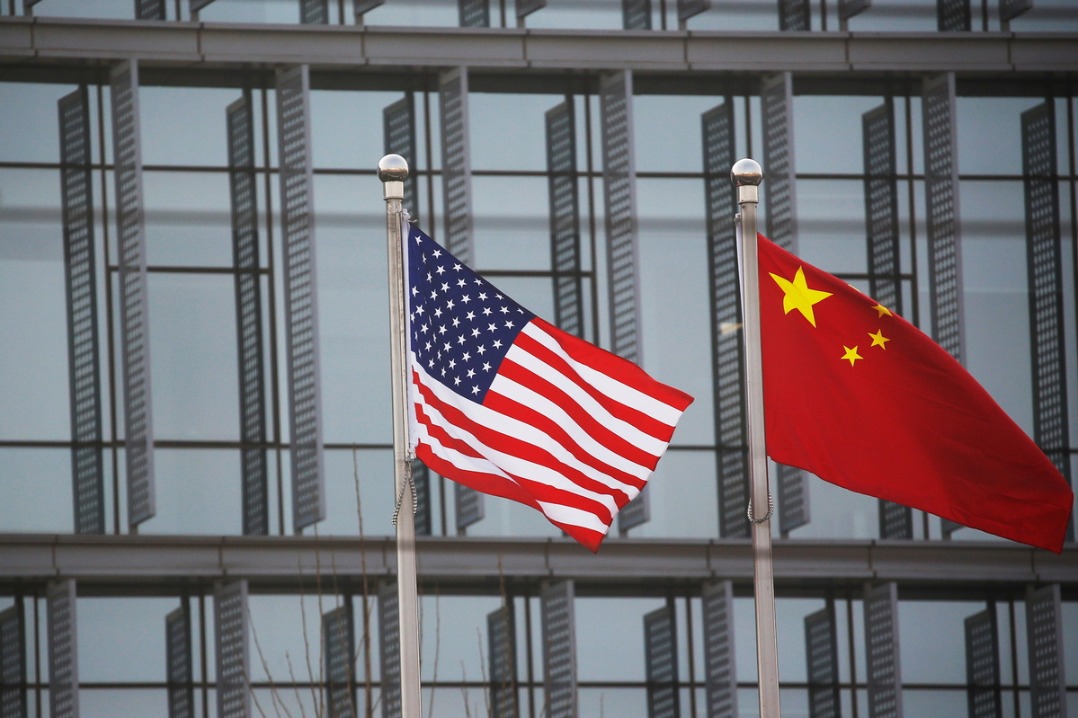
Alongside its cooperation with other countries of the Global South, China maintains bilateral dialogues with developed economies, including the United States and the European Union. Through sustained engagement, it has fostered mutual understanding, concluded joint statements and formed climate partnerships. This inclusive approach exemplifies its commitment to coordination.
In summary, China has consistently maintained its identity as a member of the Global South while deepening its involvement in global climate governance. Concurrently, it has assumed an expanding portfolio of roles, demonstrated increased responsibility, put forward more ambitious commitments and targets, and enhanced both its functional input and influence — reflecting a substantive evolution in its international stance.
Through deliberate role innovation, China has narrowed the gap between self-expectation and external expectations, while easing the inherent tension in its multifaceted responsibilities. By formulating and implementing science-informed medium- to long-term strategies, China has promoted synergies among economic development, environmental protection and climate action. These measures have strengthened its business structure and effectiveness, accelerated its role as a key actor and demonstrated how a Global South country can evolve into a leading force in global climate governance.
The author is a professor at the School of International Relations and Public Affairs at Fudan University. The author contributed this article to China Watch, a think tank powered by China Daily.
The views do not necessarily reflect those of China Daily.
Contact the editor at editor@chinawatch.cn.